Kendry Paez: From Prodigy to Question Mark at Chelsea
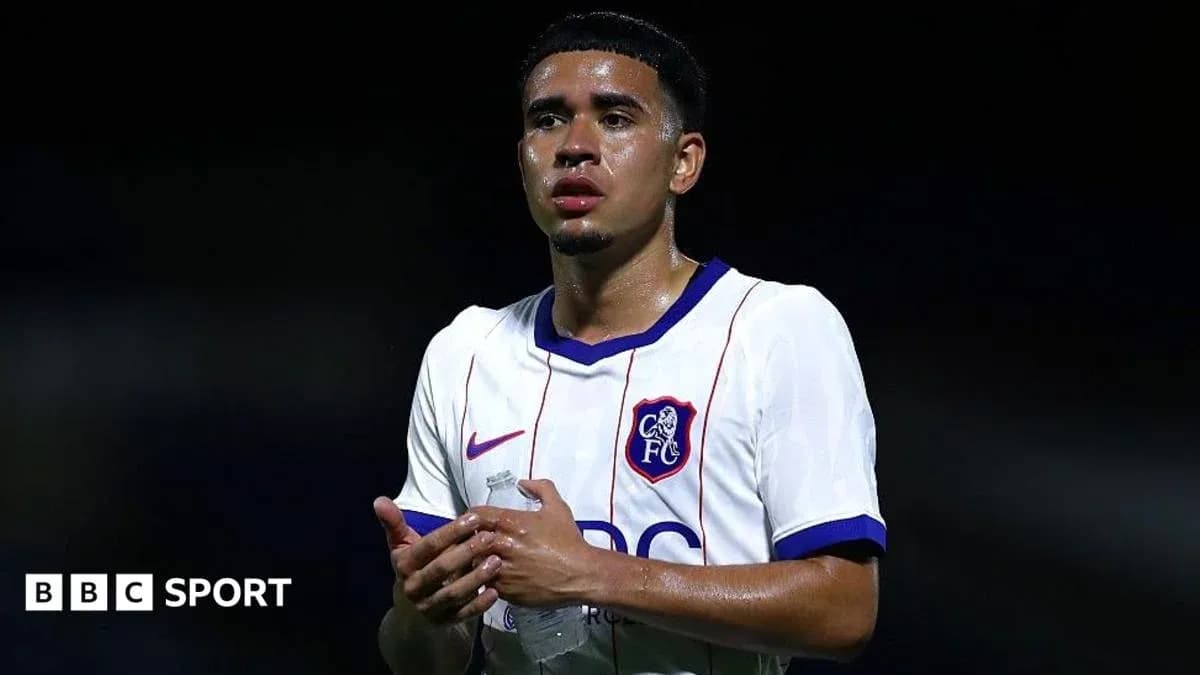
Kendry Paez pulled on a Chelsea shirt at last on Saturday afternoon. Not under the Stamford Bridge lights, not in front of a global audience, but away at Arsenal for Cobham Next Gen, the club’s rebranded Under-21 side. A 12th‑minute substitute in a 4-1 win, three years after a £17.27m agreement made him one of the most talked-about teenagers in South America.
The wait has felt longer than that.
In 2023, when Chelsea struck the deal with Independiente del Valle, Paez was 16 and already a phenomenon. He had broken records in Ecuador, dazzled in the Copa Libertadores and stepped into World Cup qualifying with the swagger of a player who thought the stage belonged to him. At Cobham, they planned for a future star. What they have now is a reclamation project.
From prodigy to question mark
Paez’s early years read like a wonderkid brochure. At 15, he became the youngest debutant and goalscorer in Ecuador’s top flight. Soon after, he was playing in the Copa Libertadores, South America’s answer to the Champions League, and looking like he belonged.
The milestones kept coming. At 16 years and 131 days, he made his second appearance for Ecuador and became the second-youngest South American to feature in World Cup qualifying, behind only Diego Maradona. A month later, he became the youngest South American to score in a World Cup qualifier, netting in a 2-1 win away to Bolivia.
By the time Chelsea moved, Paez had two international goals and 18 caps. The conclusion in west London was obvious: this was the next great attacking talent off the South American production line, a player to anchor a long-term project.
Chelsea did more than sign him. Before he could officially join after his 18th birthday, they brought him into first-team training sessions. They also stepped in off the pitch, arranging security for Paez, his family and the family of Moises Caicedo when violence escalated in Ecuador in early 2024. The club invested in his life as much as his left foot.
Then the story started to fray.
Loans, criticism and a stalled rise
On the pitch, his European education began promisingly. Sent on loan to Strasbourg, Chelsea’s sister club, he announced himself in France by winning September’s Young Player of the Month in Ligue 1. The talent was obvious. The consistency was not.
As the season wore on, then-manager Liam Rosenior’s tone shifted. “We expect more, clearly,” Rosenior said. “I’m tired of using the excuse of the player's youth.” It was a sharp line, and it cut through any protective bubble around Paez.
The numbers were underwhelming: one goal in 21 appearances. Despite the shared ownership links between Strasbourg and Chelsea, the loan was cut short. Instead of a full campaign in France, Paez was sent to Argentina, to River Plate, a club that treats pressure as a daily condition rather than an event.
If Strasbourg had raised questions, River added more. Sources in Argentina highlighted concerns over his attitude and pointed to a flat display in the Superclasico, a 1-0 defeat to Boca Juniors at the Monumental in April, as emblematic of the doubts. In the biggest domestic fixture on the continent, Paez drifted.
Soon after, River president Stefano Di Carlo publicly named him among 15 players training away from the first team. Inside the club, some felt he deserved more chances. The overall picture, though, was clear enough: the relationship was not working.
The loan ended by mutual consent. One goal, 14 appearances, 461 minutes. Another stop, another sense of something left untouched.
Ecuador’s golden boy under scrutiny
Back home, the anxiety has grown louder. Paez has 27 caps for Ecuador and played at this summer’s World Cup. He was built up as the country’s next great attacking leader, a symbol of a new generation alongside players like Estevao Willian at Chelsea.
Now, the tone has changed.
Michel Deller, owner of Independiente del Valle, spoke with a mixture of affection and concern to Hincha Amarillo. “He's like a son to us. We care about him deeply,” he said. “He's a good kid who's had a tough time and has made decisions that have complicated his life.
“We are always hopeful he'll show his exceptional talent one again but right now, it's up to him to decide what to do with his life.”
Those words echo around every discussion of Paez. The ability is not in doubt. The path is.
Chelsea and those close to the player do not entirely dismiss the criticism, but they push back against the scale of the alarm. Their view is that a teenager with more than 100 senior games and a rapid rise is entitled to turbulence. They argue he needs time – and a stable environment – to grow as both player and person.
A quiet night in Wycombe, a flicker of the old Paez
That search for stability has brought him back to Cobham. Back into Chelsea’s building, their routines, their standards. Back under their direct gaze.
In the EFL Trophy at Wycombe Wanderers on Tuesday, in front of 778 fans, there was a glimpse of why Chelsea were so determined to sign him. Cobham Next Gen were heading for defeat when Paez, largely peripheral as a right-sided No 10 in a system mirroring Xabi Alonso’s back three, suddenly snapped into life.
From a short corner, he whipped in an outswinging cross that Harrison Bettoni tapped in during added time. Another delivery in the dying moments caused panic in the Wycombe box as Chelsea hunted an equaliser. It did not come, but the quality of Paez’s left foot did not go unnoticed.
Up to that point, it had been a lonely night. Spanish-speaking and still adjusting, Paez stood slightly apart from many of his academy team-mates before kick-off. He joined the warm-up, but kept largely to himself. Introduced in the 62nd minute, he floated on the fringes of the game.
Then, for a few late minutes, the old electricity returned.
Not a lost cause, but a crossroads
Strip away the noise and the numbers remain striking. Paez is 19 and has already played 70 times for Independiente del Valle and more than 100 senior matches in total. He has scored in World Cup qualifying, featured at a World Cup, felt the heat of a Superclasico and the scrutiny of European football.
This is not a talent who has disappeared. It is a career that has veered off its ideal script.
At Chelsea, there is cautious optimism. Having him back at Cobham means they can control the environment: elite training, familiar faces, a clear structure. Family members were in the stands at Wycombe, another small but important sign of support around him.
The club also have practical reasons to keep him close. Fifa rules have blocked another overseas loan for now, with Chelsea already at their limit of six international loan slots. A domestic loan in England was explored but proved impossible under the regulations.
So Paez waits, and works.
Academy matches at Chelsea are heavily scouted by clubs across the English Football League and beyond. If he strings performances together between now and January, a first loan move within England becomes a realistic option. Alternatively, one of those six international loan slots may open up, giving him another chance abroad.
For now, the task is simpler: show enough, often enough, to remind people why Chelsea once saw him as a cornerstone of their future.
The hype has faded. The spotlight has dimmed. The stage, though, is still there. What Paez does with it over the next few months will tell us whether this is just an early detour or the moment a golden promise slips away.