Kawhi Leonard Returns to Toronto: Raptors Make Bold Move
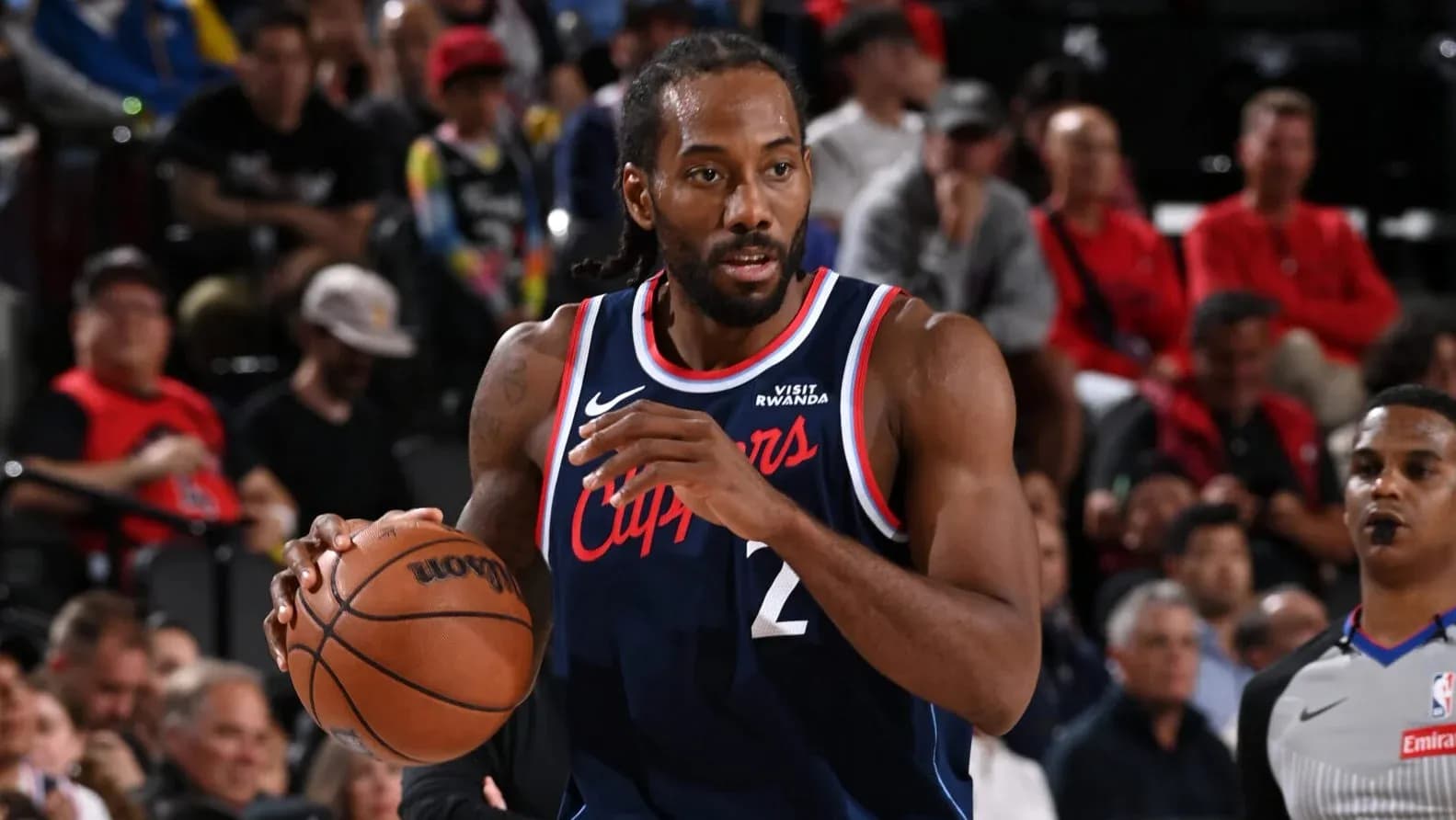
Kawhi Leonard is coming back to Toronto. Seven years after delivering the Raptors’ first championship and walking away in free agency, the franchise has circled back to the player who defined its greatest season — and paid a heavy price to do it.
On Monday, the Raptors finalized a blockbuster deal with the LA Clippers to bring their former Finals MVP home, sending out Gradey Dick and Brandon Ingram, two unprotected first-round picks, a first-round pick swap and two second-rounders.
That’s not nostalgia. That’s a franchise betting big that its window is opening again.
Raptors push their stack to the middle
Toronto didn’t sneak up on anyone this past season. They jumped 16 wins from 2024-25 and posted their best point differential in six years at plus-2.9 points per 100 possessions. They defended with edge, ran with purpose and looked, for the first time since 2019, like a team with a direction.
Now they’re trying to turn direction into contention.
The Raptors finished fifth in defensive efficiency, giving up 112.1 points per 100 possessions with an aggressive scheme that hounded ball-handlers, swarmed passing lanes and ran shooters off the 3-point line. It worked against most of the league. Against the best, it frayed.
Against top-10 offenses, that defense slipped to 12th, allowing 117.3 points per 100. In the first round of the playoffs, it was the 12th-ranked unit again. Good. Not terrifying.
Leonard doesn’t arrive as the same all-consuming stopper who once swallowed entire wingspans on the perimeter. But he’s still a plus defender, still strong, still sharp, and crucially, he defends without hacking. Last season he piled up 122 steals and 27 blocks while committing only 78 fouls. Among 378 players who logged at least 500 minutes, no one had a better combined steals-and-blocks to fouls ratio. Not close.
That matters for a team that couldn’t stop sending opponents to the line. Toronto ranked 23rd in opponent free throw rate, giving up 27.9 attempts per 100 field-goal attempts in the regular season. In the playoffs, that ballooned to 31.8. They guarded hard — and then bailed teams out.
Leonard changes that equation. He brings pressure without freebies.
There’s another defensive layer here. Jakob Poeltl, once a dependable anchor, has struggled to cover in space and just posted the worst rim-protection mark of his career. Opponents shot 63.9% at the rim with Poeltl as the last line. The coaching staff reacted in the postseason: Poeltl started all seven games, but rookie Collin Murray-Boyles logged 191 minutes to Poeltl’s 134.
A front line of Leonard, Scottie Barnes and Murray-Boyles would be undersized, but viciously switchable. Three long, physical forwards, all capable of guarding multiple positions, all willing to battle. Swapping Ingram for Leonard gives Toronto a real shot at not just staying in the top five defensively, but holding up better when the lights brighten and the opponents sharpen.
The closer they’ve been missing
For all that defensive bite, the Raptors’ season kept running into the same wall: half-court scoring, especially when the clock bled out.
They could fly. Toronto ranked third in the league with 28.6 transition points per game, feasting off the turnovers their defense created. But when the game slowed, their offense did too — sometimes to a crawl. Only the Indiana Pacers had a worse effective field-goal percentage in the final six seconds of the shot clock than the Raptors’ 43.3%.
That’s where Leonard walks in, almost tailor-made for their biggest flaw.
Over the last three seasons, Leonard has posted a 53.0% effective field-goal percentage in those late-clock situations, ninth-best among 131 players with at least 250 attempts. When possessions bog down, he doesn’t panic. He gets to his spots, gets to his pull-up, gets to the line. He manufactures shots when the playbook has already failed.
The contrast with Ingram is stark in isolation play, the purest late-clock test. Over the last three years, Leonard and Ingram rank among just 28 players with at least 1,000 isolations. The Clippers scored 1.07 points per chance when Leonard went one-on-one, sixth-best in that group. Ingram’s teams — the Pelicans and Raptors — managed only 0.99 points per chance, 24th out of 28.
Toronto has owned the league’s sixth-worst offense over the last three seasons. That’s a long drought. If they can keep running in transition the way they have, then hand Leonard the ball when the game grinds down, this group has a real path to its best attack since his original one-year cameo.
One of the playoffs’ cold-blooded killers
The Raptors don’t just get a late-game option. They get one of the most efficient postseason scorers the league has ever seen.
Among the 89 players in NBA history who’ve averaged at least 20 points over 10 or more playoff games, Leonard’s 21.5 points per game across 146 contests come with a true shooting percentage of 62.1%. Only Anthony Davis, at 62.2%, edges him — and Davis has played in less than half as many playoff games.
Since 2017, Leonard has gone up another level: 28.6 points per game on 63.2% true shooting across 71 playoff games. That’s volume and efficiency at a level very few have touched. He’s one of just five players ever to log at least three postseasons (2017, 2019 and 2021) with 25-plus points per game and a true shooting mark of 60% or better over at least 10 games.
Toronto’s offense in its seven-game loss to the Cleveland Cavaliers in the first round wasn’t a disaster. The Raptors scored 111.9 points per 100 possessions, slightly above the series average. But “slightly above average” doesn’t win series against better teams. Leonard’s history says he can tilt that math — not as a side piece, but as the primary engine.
He has already done it in this city once.
Clippers rip it down to the studs
On the other side of the deal, the Leonard trade feels like the final swing of a wrecking ball that’s been swinging in LA for months.
A year ago, the Clippers looked loaded with veteran names. They added Bradley Beal, John Collins, Brook Lopez and Chris Paul to a core built around Leonard, James Harden and Ivica Zubac. On paper, it was star-heavy, experienced, expensive. It was also the last gasp of an era.
Now, only Lopez remains from that seven-man group.
Paul’s return to LA barely lasted long enough to settle in. Harden and Zubac left at the deadline. Leonard is on his way back to Toronto. Beal and Collins are both unrestricted free agents and, at this stage, unlikely to be part of the next version of this team.
The numbers underline the scale of the reset. As of Tuesday night, with Kobe Sanders expected back, players under contract or committed for 2026-27 account for just 42% of the Clippers’ minutes from last season. No other team in the league is even close to that level of turnover.
Re-signing restricted free agents Bennedict Mathurin and Jordan Miller would nudge that continuity up to 52%, but even that would leave the Clippers with the second-lowest rate in the NBA, just above the Lakers.
Five months ago, this was a veteran-chasing, title-or-bust roster. In 2025-26, only 12% of their minutes came from rookies or second-year players, 24th in the league. Now the organization has spun almost completely in the opposite direction.
The plan from here is clear enough: build around Darius Garland and rookie guard Keaton Wagler, stack picks, and live with the growing pains that were once unthinkable in this locker room.
For seven seasons, the Clippers had the league’s fourth-best regular-season record during Leonard’s tenure. That made them the best team in basketball over that span that never cashed in with a championship. The bill for that near-miss era has arrived.
Toronto, meanwhile, is paying its own premium — not for what Kawhi Leonard was, but for what he still might be in a city that remembers exactly how far he can take a franchise.
The reunion is real. The question now is whether the ending will be, too.