Katie Taylor's Last Fight at Croke Park: A Legacy in Women's Boxing
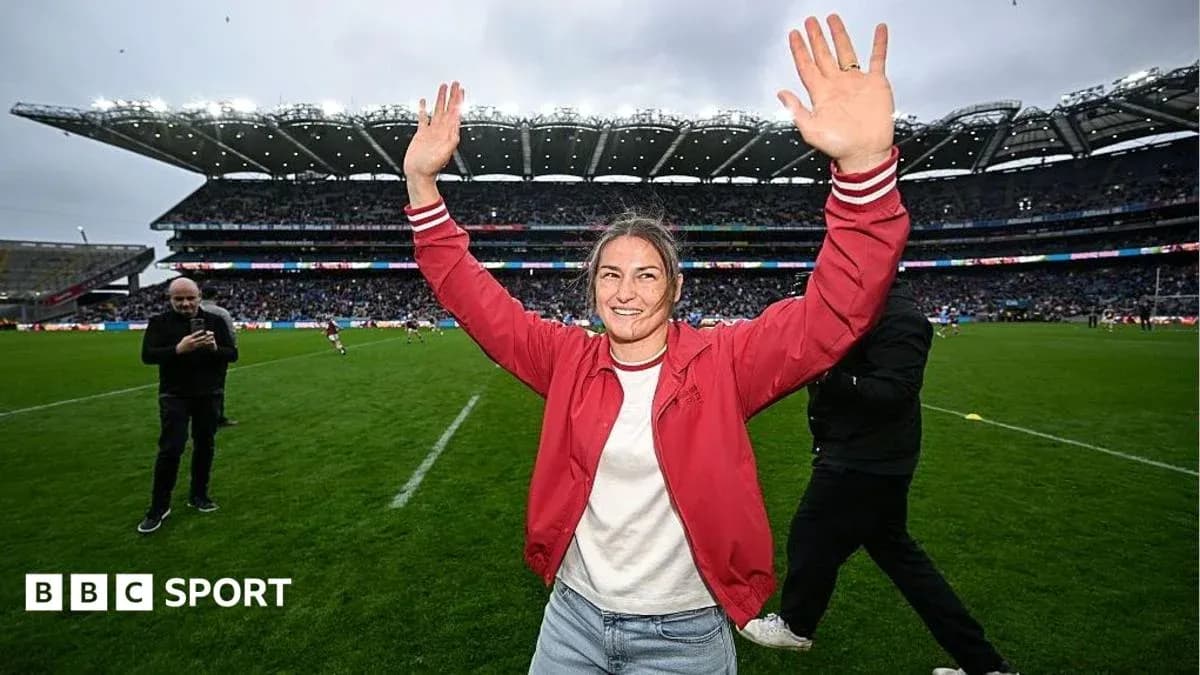
On Saturday night, Katie Taylor will walk alone into the roar of 82,000 at Croke Park, climb through the ropes and close the book on one of the most important careers in modern sport.
One last fight. One last belt. One last night as the undisputed light-welterweight champion, if she can get past France's Flora Pili on the most sacred turf in Irish sport.
It feels like a fairytale ending. It has never been one.
A letter from Bray
Before Olympic gold, before Madison Square Garden, before Netflix and trilogies, there was a 10-year-old girl in Bray who simply wanted to box and had nowhere to go.
Women's boxing in Ireland was unsanctioned. It did not exist at the Olympics. There was no professional ladder to climb, no blueprint to follow. Just a stubborn child and a closed door.
Somewhere in that dead end, Katie Taylor picked up a pen.
She wrote to Deirdre Gogarty, the Irishwoman who had left home, crossed the Atlantic and, in 1997, beaten Bonnie Canino in Louisiana to become Ireland's first female professional world champion, lifting the WIBF featherweight title.
"How did you do it when everyone tried to stop you?" the young Taylor asked.
Gogarty wrote back. Keep working. Keep showing your skills. "Somebody's going to say 'we've got to let this girl box'."
Years later, Gogarty would look back on that letter and shake her head in disbelief. The line that floored her was simple: "Maybe one day they'll let us box in the Olympics."
Had that letter never been sent, Taylor might still have fought her way through. But in a country that offered her no obvious way forward, Gogarty's reply was more than a fan mail answer. It was proof that escape was possible.
Forcing open the Olympic door
Fast-forward to the late 2000s and the International Olympic Committee still could not decide whether women's boxing belonged at the Games.
So they brought in Katie Taylor.
In Chicago, in front of sceptical officials, she became a living argument. Those showcase bouts were not exhibitions; they were demolition jobs on every excuse for keeping women out.
Her manager Brian Peters does not dress it up. "Katie won't say this, and I've been holding back from saying this, but single-handedly, Katie Taylor got women's boxing into the Olympics," he says.
London 2012 proved the point. Women's boxing made its Olympic debut. Taylor walked into a wall of sound in the ExCeL Arena and walked out with lightweight gold and a nation at her back.
That should have been the happy ending to an amateur story. It wasn’t.
Four years later in Rio, she lost a split decision in the quarter-finals. The title defence was gone, the aura dented, the Olympic run over in a blur of raised hands and disbelief.
"It was probably the worst year of my career," Taylor admitted later. "I needed a change. I needed a new mindset."
Had she won that second gold, the temptation to stay amateur, to ride the Olympic wave into retirement, would have been immense. Instead, the sting of defeat shoved her towards a professional scene that still treated women as an afterthought.
Reinvention or stagnation. She chose reinvention.
A DM that changed everything
Turning professional is one decision. Building the right world around it is another.
Brian Peters stepped in first, not with a grand plan, but with concern. "I only took her on not to see her end up with people who didn't know what they were doing," he says.
Then came the message that shifted the sport.
On 4 October 2016, Katie Taylor opened Twitter, now X, and sent a direct message to Eddie Hearn at Matchroom. Would he consider promoting her?
No entourage. No big negotiation team. Just a DM.
Hearn replied within 24 hours. He invited Taylor, Peters and her mother Bridget to a restaurant in London. He even borrowed his father's car to make the right impression.
The charm offensive landed. A month later, Taylor made her professional debut at Wembley Arena under the Matchroom banner.
In a business built on fallouts and fractured alliances, the core has not moved since: Peters managing, Hearn promoting, Ross Enamait training. Same faces, same circle, same trust.
"In a business full of egos, she's stayed loyal to everyone around her and remained the most humble person you could ever meet," Peters says.
If Hearn had ignored that DM, or if Taylor had drifted from that tight-knit team, the promotional machine that dragged women's boxing into the mainstream might never have turned over. No packed arenas. No headline slots. No sense of parity.
One message. A decade of momentum.
The night that changed the scale
By April 2022, Taylor had cleaned out lightweight. Undisputed champion. Belts stacked, legacy already secure.
She had already survived a razor-thin majority decision against Delfine Persoon at Madison Square Garden in 2019 to unify the division, a brutal night when many believed her invincibility had finally started to fray.
Back to the Garden she went, this time to face Amanda Serrano, a seven-division world champion with power, pedigree and a reputation that matched her own. This was not just another defence. This was a line in the sand.
Two women headlining Madison Square Garden for the first time. A sellout crowd of 19,187. A stage that had swallowed greats and exposed pretenders.
The fight delivered everything the hype promised and more. Taylor was hurt, rocked, dragged into deep water. Serrano surged. Taylor refused to fold.
After 10 savage rounds, the Irishwoman edged a split-decision victory in what many called the fight of the year.
If one judge had gone the other way, the narrative would have shifted. If the fight had fallen flat, the appetite for women's mega-events might have cooled. Instead, it lit a fuse.
The rivalry became a franchise. Their 2024 rematch, on the undercard of Jake Paul v Mike Tyson, pulled global audiences on Netflix. In 2025, Taylor sealed the trilogy back at Madison Square Garden, closing a series that had helped redefine what women's boxing could look like on the biggest stages.
Those nights were not just about belts. They were about scale. About proving that women could not only share boxing’s grandest platforms, but own them.
Croke Park or nothing
Now comes the final act.
By the time she beat Serrano in last year's trilogy decider, Taylor had already made up her mind.
"She actually retired that night," Peters reveals. "She said, 'We convincingly beat Serrano - where do we go from there?' I said I'll agree on one condition."
That condition was simple: Croke Park or nothing.
For Peters, there is no debate. "Croke Park – no disrespect to Wembley – is the greatest stadium in the world," he says. "You cut an Irish person and they'll bleed Croke Park."
So here they are. An 82,000-capacity cathedral, a farewell fight against Flora Pili, and a career coming full circle in the city that first embraced her.
Peters is adamant there will be no late twist, no Cameron trilogy, no comeback tours. "When Katie gives her word, that is it," he says.
Whatever happens on Saturday – whether she leaves as undisputed champion again or not – the verdict on her legacy is already in.
Katie Taylor did not just walk through doors. She kicked them open, held them wide and made sure an entire generation could follow.