Katie Taylor: The Journey of a Boxing Icon
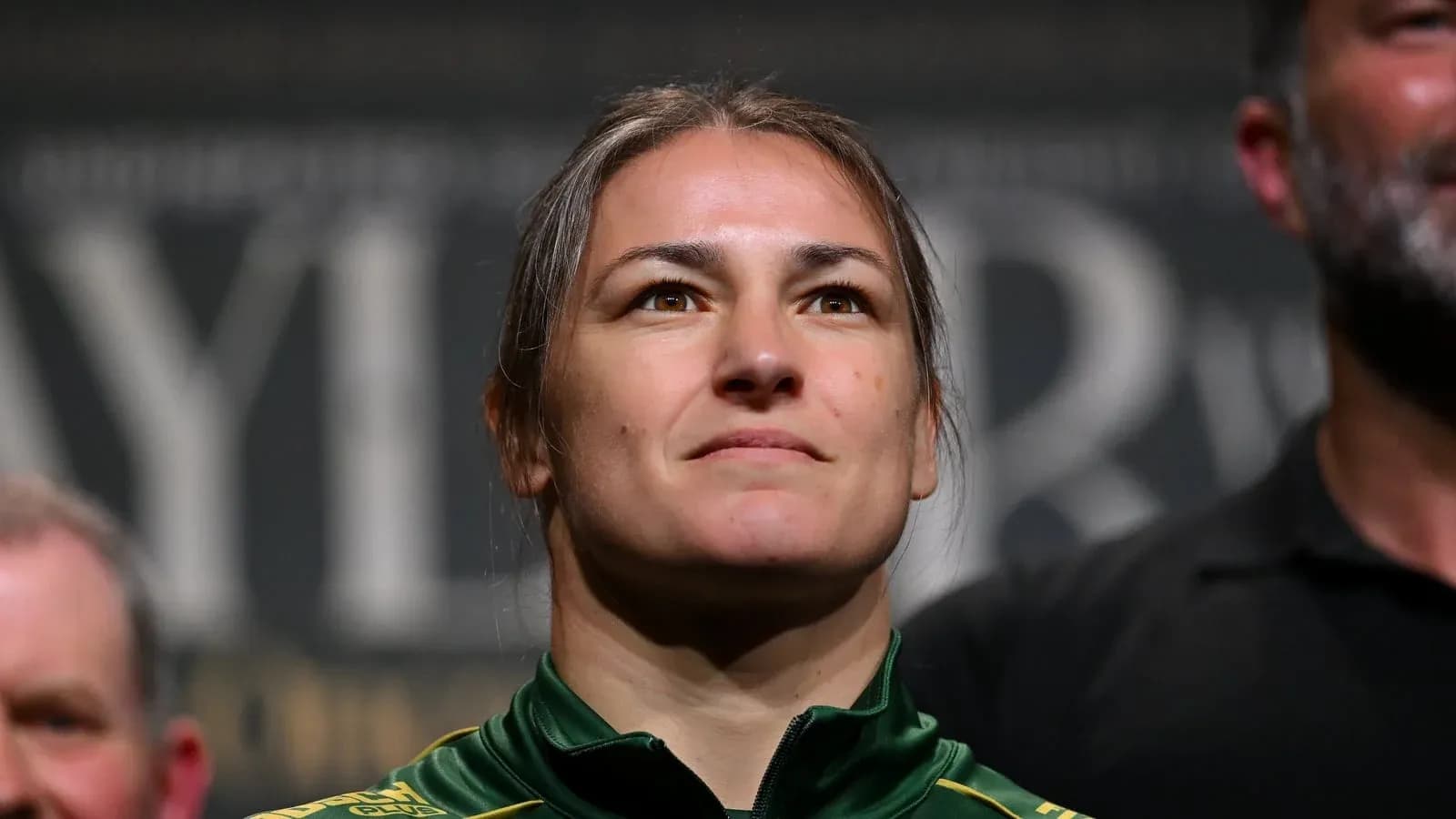
Katie Taylor once thought about walking away before the world even knew her name.
Long before the sold‑out Croke Park swansong against Flora Pili, before the Olympic gold, before Madison Square Garden and world titles, she sat with the idea that her dream might never be allowed to exist. Not because she wasn’t good enough. Because the sport she loved didn’t seem to want women at all.
A door slammed shut
In 2006, Taylor was climbing towards the summit of the amateur game when the International Olympic Committee unveiled the new events for the Beijing 2008 Games. Women’s sport was edging forward: the 3000m steeplechase, BMX, new fencing events, marathon swimming. A clear message that more space was being made.
Just not for women’s boxing.
The lobbying had failed. Organisers doubted the sport’s global pull. For Taylor, then in her early 20s and already obsessed with the idea of becoming an Olympic champion, the blow landed hard. Another four‑year wait, at least, before she could even try to chase that dream.
She admits now that this was the moment she came closest to walking away. The thought was simple and brutal: if women’s boxing couldn’t get into the Olympics now, would it ever?
From pretending to be a boy to carrying a nation
Taylor’s relationship with the sport had always been a battle against the limits placed in front of her.
When she first laced up gloves as a nine or ten‑year‑old in Bray, women’s boxing was not even a sanctioned sport in Ireland. To get bouts, she had to pretend to be a boy. That was the price of entry.
Those days feel distant now when she looks at the new generation: girls of 14 or 15, already five or six‑time Irish champions, moving through a system that once shut her out. She talks about them with obvious delight, about “remarkable” young talent and the excitement of watching their careers unfold.
The path she chose was not to shout about injustice, but to make herself undeniable. She decided early on that she would not talk her way into opportunities. She would fight her way into them. Let excellence do the talking. Let the ring be the argument.
Doors did eventually open. People watched her fight and could no longer dismiss the idea that women belonged in the sport. Behind her, a fiercely supportive family pushed, argued, and campaigned on her behalf. Even then, the road stayed rough.
There were nights when she truly believed women’s boxing would never make the Olympic programme. She was told it would be in Beijing, then heard it was out. That, she says, was the closest she came to quitting, the moment when the dream looked like a fantasy.
Instead of boxing in China, she ended up analysing it for RTÉ, wondering if her chance would ever come.
Four years. In the life of an athlete, that is an eternity.
London opens the gates
Beijing ended. The Games moved on. And then the tide finally turned.
A year after those Olympics, women’s boxing was added to the programme. Even then, the opening was narrow. While Paris 2024 would eventually feature six women’s weight classes, London 2012 had only three. Taylor’s weight, lightweight at 60kg, made the cut. It changed everything.
She seized it.
Taylor stormed to gold in London, and with it came the phenomenon that became known as Katie‑mania. It started even before the final. In her quarter‑final win over Great Britain’s Natasha Jonas, the noise inside the arena hit 113.7 decibels. For context, a jet engine roars at about 140.
That sound told its own story. Ireland had a new icon, and women’s boxing had its undeniable star.
From heartbreak to history
The support never left her side. It followed her from the heartbreak of Rio to the bright lights of Wembley and Madison Square Garden. It travelled across America as she stacked up professional world titles, fight after fight, city after city.
Now that same travelling army will pack Croke Park, a stadium whose boxing history has long been tied to Muhammad Ali’s 1972 bout with Alvin Lewis. Ali brought 18,000 people there. Taylor has sold out the place, 80,000 seats gone in minutes, smashing every cautious estimate.
For her, there was never any real doubt. In Ireland, she says, the public back their own, no matter the gender. The numbers prove her right.
She speaks about the response with a kind of stunned gratitude. Blown away by those 80,000 tickets. Proud of a nation that turns out like this for a female athlete and not convinced any other country would do the same.
A farewell on her terms
The list of places her supporters have followed her to reads like a fighter’s atlas: London, Wembley, Manchester, Leeds, Boston, Brooklyn, Dallas, New York. They were there before London 2012, there when Amhrán na bhFiann rang out in the ExCeL Arena, there through the pain of Rio, there again as she rebuilt and conquered the pro ranks.
Now they will be there at Croke Park for what she calls her last fight, a career closing where her story began – at home.
She wants a performance worthy of them. Not just another win, but something that feels like a career‑best on the final night. A full‑blooded finish.
Taylor knows she has not done this alone. She talks about a nation that has helped build female professional boxing by sheer force of support. You cannot have a pro career in a vacuum, she points out. You need people in seats, you need stadiums filled, you need a fanbase willing to cross borders and oceans.
Ireland did that for her. It turned up, again and again, and in doing so helped drag a whole sport into the light.
On Saturday, in a heaving Croke Park, the girl who once had to pretend to be a boy will walk out as the defining face of women’s boxing. The doors that were shut on her have been kicked open.
The question now is not whether the sport belongs on the biggest stages.
It’s who will be brave enough to follow the path she carved.