Katie Taylor's Historic Farewell at Croke Park
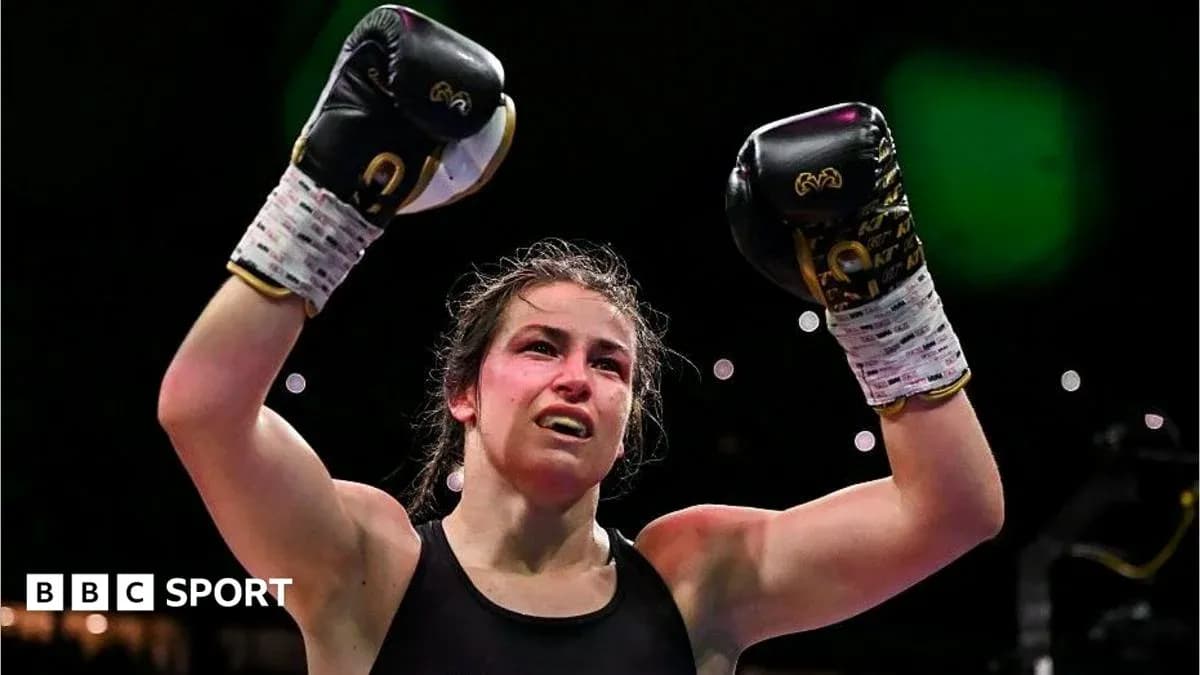
By the time the final bell sounded, Flora Pili didn’t rush back to her own corner. She went straight to Katie Taylor.
The 29-year-old challenger wrapped her arms around the Irish icon in the middle of Croke Park, a fighter who had just lost her unbeaten record but gained something far rarer: ten rounds under the brightest lights women’s boxing has ever known in this country, in front of 80,000 people, against a legend bowing out on her own terms.
The scorecards hadn’t even been read. It didn’t matter. The stadium was already in full celebration mode, convinced it had just watched Taylor become a three-time undisputed champion and close the book on a once-in-a-lifetime career.
A farewell written in noise and nerve
Long before the judges got involved, the atmosphere had made its own decision. As the tenth round began, Croke Park rose as one, a living, swaying tribute to the fighter who dragged women’s boxing from the margins to the main stage.
Taylor’s career clock was ticking down, but she refused to coast. Centre ring, she stood her ground as Pili came hunting for the only thing that could save her – a knockout. The challenger threw with urgency, trying to walk Taylor down, but the champion would not be shifted.
The “oles” rolled around the stadium as Taylor uncorked one more furious barrage, hands still sharp, feet still quick, timing still cruel. It felt less like a final round and more like a signature – the last flourish on a masterpiece.
Then the bell. No drama, no doubt. Just the long walk to the cards and the roar of a crowd that already knew.
Pili’s gamble, Taylor’s answers
Pili hadn’t come to Dublin to survive. She came to compete, to test herself, and for a brief spell she did just that.
In the seventh, she finally broke through. Stepping into range with purpose, Pili drove in body shots and then detonated a big left hook that drew a murmur from the stands. For the first time all night, Taylor looked a fraction rushed, forced to reset as Pili pressed.
The response was pure Taylor: clubbing counters, high output, no sign of panic. Still, that seventh round felt different. As WBC super-bantamweight champion Skye Nicolson put it on BBC Radio 5 Live, it was “probably the first round of the fight” where Pili really found success. A small victory on a huge stage, but a victory all the same.
Pili tried to build on it. She switched to southpaw in the ninth, searching for new angles, new problems to pose. Taylor shut the door. The Irishwoman beat her to the punch on the inside, snapping home a neat left hook and denying Pili the momentum she desperately needed.
By then, the pattern was set. Whenever Pili tried to trade on equal terms, Taylor’s speed and experience sliced through the exchanges.
Class tells as the clock winds down
The earlier rounds had already laid the foundation for Taylor’s control. In the sixth, her left hand became a problem Pili simply couldn’t solve. Taylor rammed in straight shots, then dipped to the body and whipped a right hook around the guard. Pili kept trying to answer, but the gap in speed and timing was stark.
“She can’t cope with the movement and speed of Taylor,” came the verdict at ringside, and it felt accurate. Pili’s spirit never dipped, but her options did.
In the eighth, the challenger showed more ambition, letting her hands go with greater freedom. She tried to punch with Taylor, to meet fire with fire, but she was a half-beat slower, a half-step behind. Taylor saw the openings first, hit the target first, moved away first.
Nicolson called it “an interesting round” and “harder to judge,” a nod to Pili’s improvement. Yet even in those tighter moments, Taylor’s authority lingered. The champion dictated when to engage, when to pivot off, when to reset the tempo.
All the while, the sense of occasion grew. Each second that slipped away was another second closer to the end of an era.
An ending worthy of the journey
By the time the tenth began, everyone inside Croke Park understood what they were watching. This was not just another title defence. This was the closing chapter.
The whole arena stood. Phones in the air, flags waving, voices hoarse. Taylor, as she has done for years, blocked out the noise and went to work one last time.
Pili, knowing the situation, chased the miracle. She marched forward, swung for the fences, tried to force the kind of chaos that can flip a fight on its head. Taylor refused to be dragged into desperation. She met fire with precision, not recklessness, answering each surge with combinations that reminded everyone why she has sat atop the sport for so long.
Then, in those final exchanges, the emotion broke through the technique. Every punch carried history. Every step echoed a decade of nights like this, built on the same relentlessness, the same refusal to yield.
The bell rang. Arms raised. Crowd erupting.
Pili, beaten but unbowed, stepped in for that embrace. A challenger acknowledging a champion. A fighter thanking the woman who gave her the biggest night of her life.
Katie Taylor walked back to her corner with Croke Park still singing, a three-time undisputed champion whose last act looked very much like her first: on the front foot, under pressure, delivering when it mattered.
If this is the end, it’s the kind of ending most fighters dream of and almost none receive. The question now isn’t what she has left to prove.
It’s whether boxing will ever see another career quite like this again.