Katie Taylor's Historic Farewell at Croke Park
On Saturday night, as Katie Taylor walks out for what is billed as her last dance, Croke Park will look and sound like nothing Irish boxing has ever seen. Eighty thousand people, a homecoming on a scale the sport here has never known.
Somewhere high in the Ard Chomhairle seats, one man will watch it with a perspective nobody else in the stadium can claim.
Paddy Doherty has been here before.
From Ali’s undercard to Katie’s farewell
The last time professional boxing came to Croke Park, Doherty was part of the show. It was 19 July 1972, the night Muhammad Ali fought Al “Blue” Lewis in Dublin, the only time “the greatest” ever boxed in Ireland.
Ali stopped Lewis in the 11th round. Earlier that evening, Doherty, a light-middleweight from Ballyshannon, Co Donegal, had finished his own business much quicker, stopping Welshman Bobby Ruff in the second round on the undercard.
That card drew 18,000 people. It felt huge then. A circus strongman from Kerry, Michael “Butty” Sugrue, had made the whole thing happen, hauling Ali and the boxing world to a city still scarred by one of the worst years of the Troubles. The Five Nations Championship had been abandoned that same year as Scotland and Wales refused to travel to Dublin. Sport was not immune from the politics or the fear.
Yet for a young Irish fighter, Croke Park under the lights with Ali on the bill was another planet.
“He tapped me on the head coming into the ring,” Doherty remembers of Ali at Croke Park, a tiny gesture that has lived with him for more than half a century. After the main event, the crowd surged towards the ring, barriers collapsing under the weight of people desperate just to get close.
“Most of the crowd came over the barrier into the ring. Even the security and the guards couldn’t keep them back, just to get to Ali.”
That was the last time a professional punch was thrown in Croke Park. Until now.
A knock on the door in Donegal
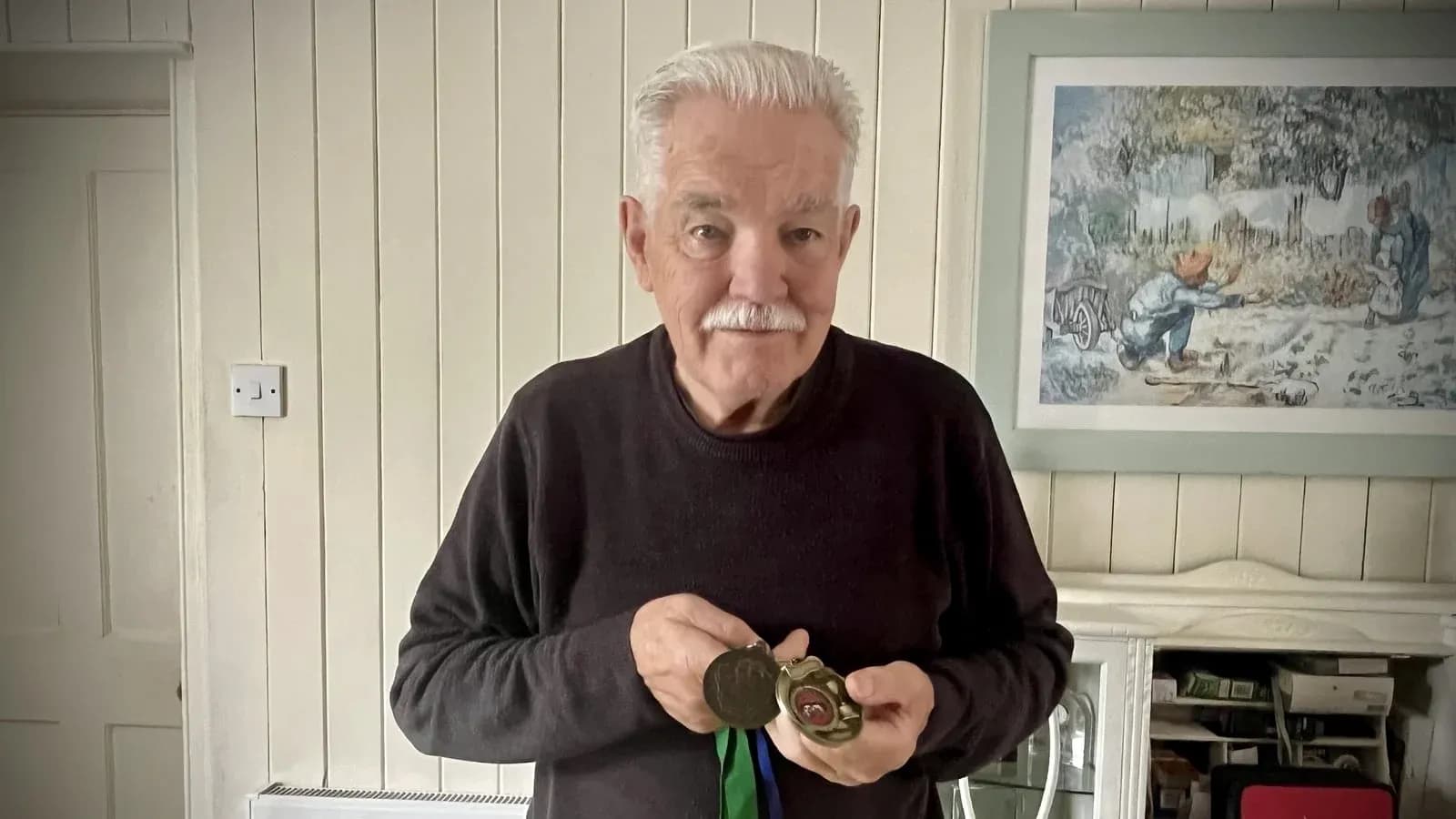
Doherty is 54 years removed from that night and long retired, his own career cut short in his 20s by injury. The journey that began in Ballyshannon at the age of 11 took him through Ulster and Irish titles at every level, juvenile to senior, then on to a Commonwealth Games bronze medal in Edinburgh in 1970. Eligible to box for Northern Ireland through his Fermanagh-born father, he became a prominent Irish international, winning 15 of 16 amateur bouts before turning professional and moving to London in 1971.
He had already shared a stage with Ali once before Croke Park, boxing on an undercard at the Royal Albert Hall in October 1971 when Ali faced Johnny “Gypsy” Frankham in an exhibition.
Those memories were filed away, part of another life, until the phone rang in Donegal and an unexpected visitor pulled up outside his house.
Doherty says he “couldn’t believe it” when Katie Taylor arrived at his home recently, accompanied by her long-time manager Brian Peters.
“Brian Peters called that he was in Donegal ... that morning, my wife said ‘Katie Taylor’s after coming in past the house’. I couldn’t believe it,” he said.
What followed was more than a courtesy call. It was a bridge between two eras of Irish boxing, one man who fought beneath Ali, and the woman who has dragged the sport into a new age.
“What she has done for Irish boxing all over the world (is remarkable). Out from that, she’s a real lady,” Doherty said.
Taylor and her team invited Doherty and his family as their guests for Saturday night. The man who boxed on the last professional card in Croke Park will sit in the best seats in the house for the next one.
“They invited the whole lot of us on Saturday night. It was a nice surprise. He (Brian Peters) said ‘I’ll see you in Croke Park’,” Doherty added.
Experience vs youth under Croke Park lights
The stage this time is even bigger. Professional boxing returns to Croke Park for the first time since that Ali–Lewis night, and it does so for the best-attended bout in Irish history. At its heart stands Taylor, the multi-weight world champion whose name has become synonymous with Irish boxing’s modern renaissance.
Across the ring will be Flora Pili, a 29-year-old French fighter who has yet to taste defeat. Youth, momentum, nothing to lose.
Doherty looks at the matchup and goes straight to the one thing Taylor has that cannot be manufactured.
Experience.
“If I’m talking to her before the fight, I’ll tell her, ‘if she keeps coming to her, to tie her up in knots ... let the referee do the breaking and get back for boxing’,” he said, offering the kind of simple, hard-earned advice that comes from decades of watching fighters burn themselves out in the wrong kind of fight.
He has seen enough of the game to know how rare Taylor is, and how unlikely it is that anyone will follow her path.
He is just as quick to praise the man in the background.
He believes what Brian Peters has done for boxing has been “fantastic”, from guiding Taylor’s professional career to helping deliver a night like this back to Croke Park.
A legacy that “will never be done again”
Doherty stopped boxing young, his own story closing earlier than he would have liked. Maybe that is why he speaks with such certainty about Taylor’s legacy and the scale of what she has achieved.
“I will be there (tomorrow night) for Katie Taylor; she’s so calm and nice ... a down-to-earth girl. What she’s done for boxing will never be done again,” he said.
On Saturday, as Taylor makes that long walk out in front of 80,000 people, the cameras will search for familiar faces in the crowd. Somewhere among them will be a man who once stood in the same stadium, under the same sky, on a night when Ali ruled the ring and Ireland was a very different place.
This time, Paddy Doherty will not climb through the ropes. He will watch, listen and measure the roar against the echo of 1972.
And he will know, better than most, just how far Irish boxing has travelled to get back here.