Katie Taylor's Croke Park Farewell: A Historic Boxing Event
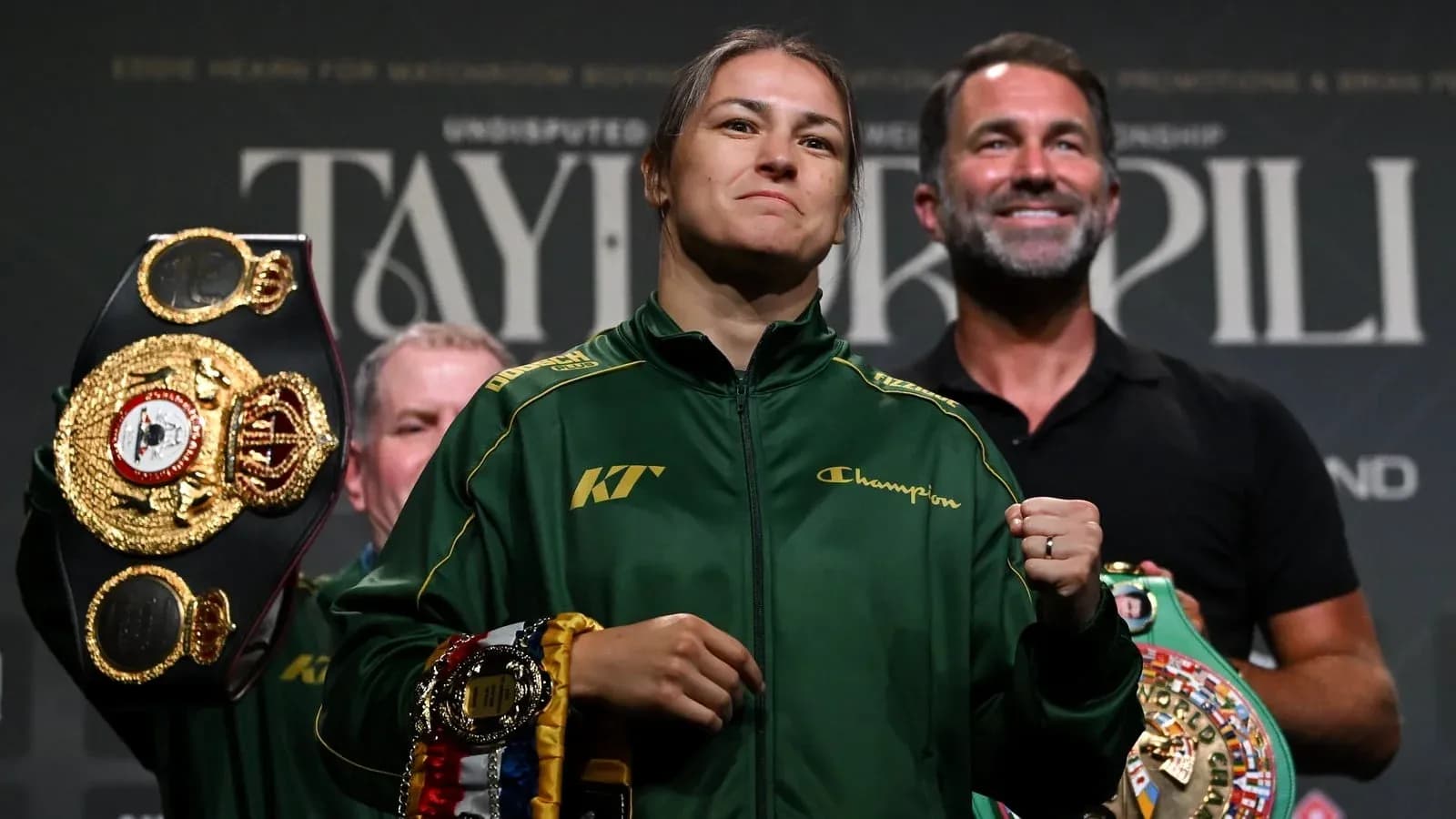
Four days out from Katie Taylor’s long‑promised Croke Park farewell, the mood around her camp is somewhere between businesslike and dreamlike. The logistics are done, the tickets are gone, and the misty-eyed stuff is starting to seep through the cracks.
Tuesday’s press conference felt like a sequel. Same cast, same lines, just a different stage: the Helix Theatre in DCU instead of the Hogan Stand’s plush surrounds. Outside, students drifted past in hoodies and headphones, barely glancing up. One of the greatest Irish athletes of all time was in their midst. Most didn’t seem to notice.
Inside, it was a different world. GAA regulars, more used to All-Ireland build-ups than boxing weeks, rubbed shoulders with Matchroom and DAZN staffers, their sharp suits and Cockney chatter marking them out instantly. Over it all, that familiar Croke Park soundtrack – the tin whistle-heavy instrumental that haunts the half hour before throw-in – played on loop, turning a university theatre into a dress rehearsal for Saturday night.
This time, there was one glaring change from June’s announcement. No tension about ticket sales. No whispered doubts about demand. No talk of “can we really fill it?”
They did. And then some.
Taylor will become the first boxer to headline at Croke Park since Muhammad Ali in 1972, a comparison Brian Peters is happy to flip on its head. In his eyes, it’s flattering company for Ali to be keeping. Back then, only around 18,000 turned up to see Ali fight Al “Blue” Lewis, a crowd so underwhelming that the GAA director general tore into the promoter for overpricing the tickets.
This time, half of the 80,000 seats vanished in pre-sale. The rest went in 17 frantic minutes on 28 July. No hand‑wringing. No scrambling. Just a straight sellout.
Before the live‑streamed top table show, 18 journalists were squeezed into a cramped dressing room to await Eddie Hearn. When he ducked through the door, he took one look around.
“Wow, blimey! This is small!” he laughed, the promoter forced into a space more like an underage dressing shed than a global fight HQ.
He was still buzzing from the ticket story, but there was a hint of regret in there too. Regret that Croke Park didn’t happen earlier. Regret that he’d let the doubts of others seep into his usually bombproof self-belief.
Hearn has been playful with Croke Park stadium director Peter McKenna in public – “Peter, me old mate, me old mucca!” – but he hasn’t forgotten the frostier negotiations and what he saw as a steady drip of negativity from the venue side.
“People can sort of deflate your spirit, which is quite unusual for me,” Hearn said. “They did deflate my spirit a bit over the years. They made me question whether we could do it or whether it would actually work.
“I’m disappointed with myself that I allowed that to happen because maybe we could have done it earlier.
“If Croker had originally gone, ‘Yes, this is going to be massive!’, we would have done it.
“But they was like, ‘Hmm... I dunno’. And it was like, well blimey, if they’re not sure, do we really want to be gambling with these costs?
“Listen, they [Croke Park] helped out as well, they were fantastic in the end.”
The promoter slipped easily into one of his favourite stories, rewinding to the days after Taylor’s bruising Rio Olympics. Taylor and Peters climbed the steps to Matchroom’s office and made their pitch. Hearn Jr, heir to Barry’s gift of the gab and love of a big occasion, saw something his father didn’t.
Barry Hearn, who brought Chris Eubank to Millstreet to fight Steve Collins in 1995 after being assured it was “just around the corner” from Cork Airport (“IT WAS ABOU’ AN ’OUR ’N A ’ALF FROM CAAAUK AIRPORT!!!”), was openly sceptical about Taylor as a commercial force.
“We decided to headline her in November [in 2016],” Eddie recalled. “I think we paid her – she’s still having a go at me about this – six grand for her debut. For a four rounder.
“Which at the time, in women’s boxing by the way, was a lot of money.
“I said to my Dad, I’m going to put Katie Taylor on last. And he’s like, ‘What? A women’s fight?’
“I was like, ‘yeah, dad, like she’s unbelievable. You’ve got to watch her.’
“He said, ‘No one’s interested in women’s boxing, son.’ It’s the same sort of thing Frank Warren would say – or anyone from that era. And he [Barry Hearn] watched her and went ‘oh my God!’”
That conversion moment has become part of the Taylor lore, wheeled out again this week. The build‑up, as so often in modern boxing, has the feel of a victory lap for the business deal as much as for the fighter. The language on stage owed more to “Art of the Deal” than “Rocky.”
Promoter Peter Aiken, sitting at the top table, deflected the praise for the sellout with a simple line: “She [Taylor] sold the tickets.” No one in the room argued.
Peters, less tearful than in June but just as animated, went further. He called Taylor the greatest Irish sportsperson of all time, pausing only to throw a playful nod in Roy Keane’s direction – “No disrespect to Roy Keane, you get a good second.” He then tipped Barry Keoghan for an Oscar for his role in the promotional video and announced, half in jest, that he’d arranged with “God almighty” for no rain after 5 o’clock on Saturday.
On stage beside them sat Flora Pili, the challenger, introduced to polite applause and little recognition. To most of the public, she might as well be “AN Other,” the anonymous name that fills team sheets and undercards. She wore dreadlocks painted in the French tricolour, a small act of defiance against the anonymity.
Pili knows Dublin. She boxed here as an amateur in 2017 at a low-key round robin tournament in the National Stadium, losing to Kellie Harrington and then to Italy’s Irma Testa. That version of her was raw, still learning. The one arriving at Croke Park is a 12-0 professional, an IBO super lightweight world champion since her last outing, the very belt Taylor vacated in late 2025.
Amid the back-slapping and the nostalgia, Hearn and others kept circling back to the same point: this is not a testimonial. “This is a real fight,” they repeated. The warning hung there, slightly at odds with the celebratory tone of the day.
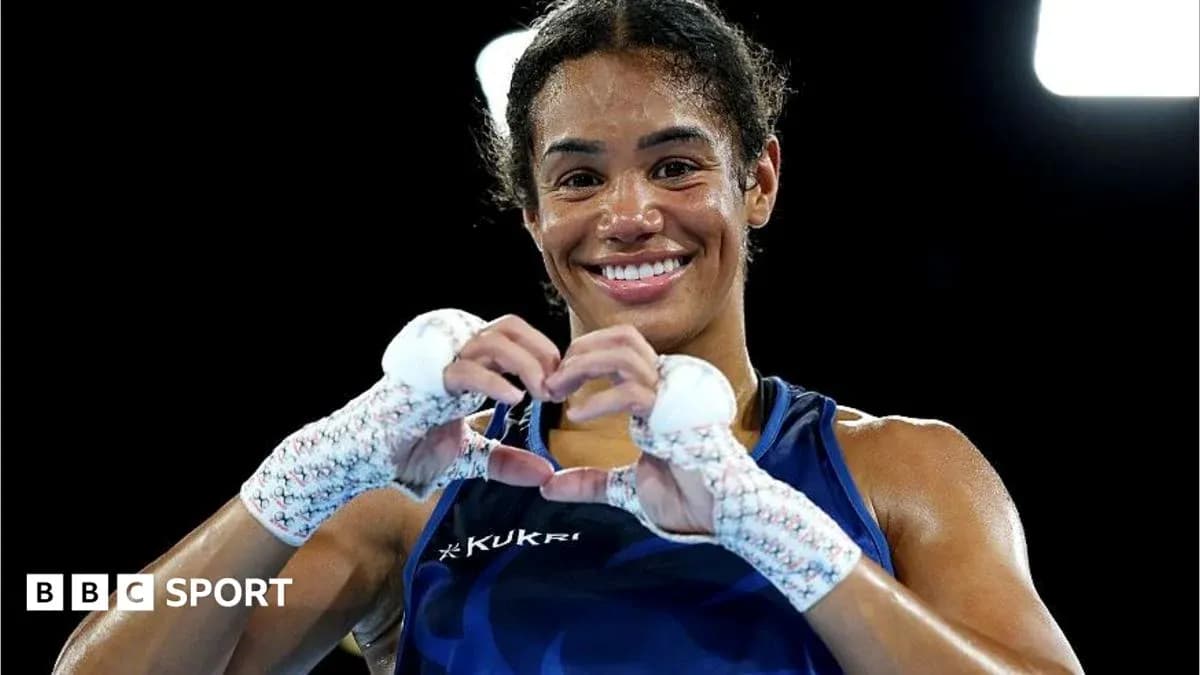
Taylor didn’t sit down with the written press, but when she spoke from the stage she went straight to the heart of what this night means to her. She thanked the Irish public again, marvelling at the idea of 80,000 people turning up for a female athlete and wondering aloud if any other country would do the same.
Then the guard slipped. She thought back to the early days, to the disguises, to the sniggers.
“I was walking into some boxing gyms as a young girl, being sniggered at and laughed at. Who’s this girl trying to be a boxer? I had to earn people’s respect along the way.
“I’m so delighted that these young girls coming through now don’t have to go through the same struggles and adversity that I had to go through. The door is actually opened for them.
“You walk into every boxing gym now and it’s packed with female fighters. That to me is the greatest part about this legacy.”
For once, the room fell quiet. The sales figures, the negotiations, the stadium wrangling – all of it faded behind that picture of a kid cutting her hair, hiding under a headguard, just to get a spar.
On Saturday, she walks out not as a gatecrasher but as the main event in a stadium that once doubted whether she could fill it. The question now is not whether she belongs on that stage, but how loudly Croke Park will roar as she leaves it.