Katie Taylor Ends Career on Top with Croke Park Victory
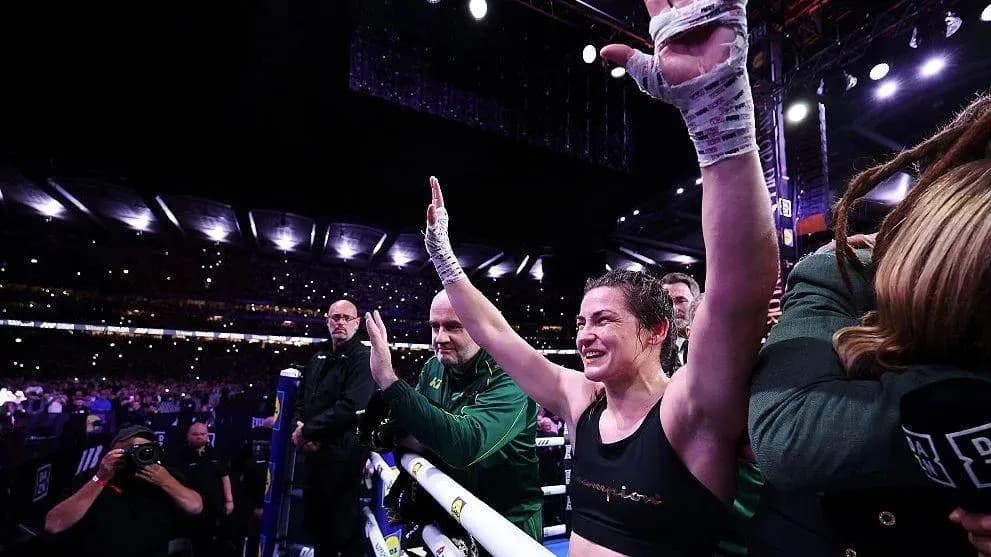
Katie Taylor walked away from boxing the way she lived in it – on the front foot, dictating the terms, and leaving everyone else scrambling to find the right words.
On a cool Dublin night at Croke Park, in front of more than 80,000 people, the Irish icon closed the book on a storied career with a points win over France’s Flora Pili, becoming undisputed light-welterweight champion in the process. One last title. One last roar. One last reminder of why so many in the sport now talk about her in the past tense with a kind of awe.
A final performance with familiar fury
From the opening bell, Taylor looked like a fighter determined to leave no doubt. Sharper, busier, and quicker to the punch, she repeatedly beat Pili to the target, stitching together the kind of crisp combinations that built her legend.
The pattern rarely changed. Taylor stepped in, let her hands go, and stepped away before the reply could come. When the fight moved into its final minute, the noise rose with every exchange. In the last 20 seconds, she uncorked a furious burst of punches, a trademark flurry that dragged the crowd to its feet and felt like a deliberate throwback to so many of her biggest nights.
Former world champion Barry Jones, watching on the Dazn broadcast, homed in on that closing sequence as the essence of Taylor. Those rallies. Those rapid-fire combinations. That refusal to coast to the finish line, even with history already in her pocket.
When the final bell rang, the result felt inevitable. The symbolism did not. Taylor removed her gloves and placed them in the centre of the ring – a simple act that said more than any speech could.
Ringside, American Mikaela Mayer watched that moment and saw a story being written in real time.
‘One of the best to ever do it’
The reaction from within the sport told its own tale. This wasn’t just another champion bowing out. This was a pillar of an entire era stepping away.
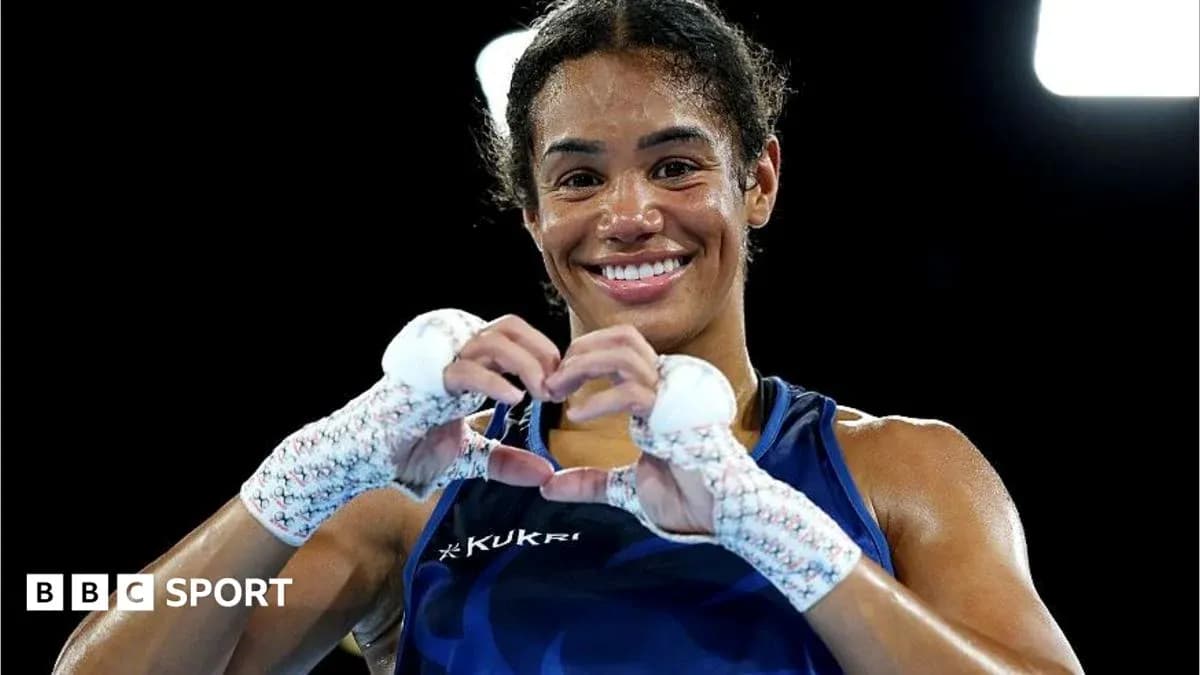
Unified lightweight champion Caroline Dubois, one of the brightest stars of the new generation, called Taylor “one of the best to ever do it” and thanked her for “paving the way,” adding a message of happiness and joy for whatever comes next. It was the voice of a fighter who grew up in the world Taylor helped create.
Claressa Shields, the self-styled Greatest Woman of All Time, kept it short and pointed. “Congrats Katie. Now ride off into the sunset. You deserve it all.” No argument came from anyone who had watched the last two decades unfold.
Super-featherweight champion Alycia Baumgardner called Taylor “a trailblazer who helped set the stage for all of us,” adding: “What a legacy. It’s been a privilege watching your journey from the beginning.” That word – trailblazer – has followed Taylor for years, but on this night it felt less like a label and more like a verdict.
The numbers alone are staggering: 26 wins from 27 professional bouts, Olympic gold, and three undisputed reigns across two weight divisions. Yet the tributes made clear that her impact ran beyond medals and belts.
An Irish original
Croke Park was always the dream. Taylor had spoken for years about wanting to fight there, to bring her career home in the most literal sense. On Saturday, the stadium finally became her stage, with Westlife performing before the main event and a sea of green, white and orange framing every punch.
Former world champion Carl Frampton tried to explain the bond between Taylor and the Irish public and landed on something close to reverence. He pointed out that she has never seemed comfortable with the trappings of fame, never looked like someone who enjoys the media spotlight, yet somehow commands a level of adulation rarely seen in the sport.
“Katie Taylor is different, she’s special and there will never be another one like her,” he said. In a country steeped in fighting history, that is no small statement.
Tony Bellew, the former cruiserweight world champion, went further still when reflecting on the scale and style of her exit. “I don’t think in all of my years of watching this game, I have seen an exit as beautiful, amazing and fitting,” he said. For Bellew, she leaves as “the greatest champion ever,” a fighter who walked away as an undisputed champion on her own terms – an almost unheard-of luxury in boxing.
The contrast with so many faded legends was stark. No slow decline. No sad encore. Just a clean break, made at the summit.
Gloves down, legacy intact
When Taylor finally stepped away from the ring, the images lingered: the gloves resting on the canvas, the crowd refusing to sit, the sense that a chapter in the sport’s history had just closed with a full stop, not a comma.
Bellew was adamant there is “no way” she returns to competition, though he fully expects her to remain close to the sport, mentoring younger fighters and offering guidance from a position they all recognise as earned, not given. In his view, she will “sail off into the sunset” but never truly disappear from boxing’s landscape.
That, perhaps, is the measure of her standing. For Dubois, Baumgardner, Mayer and the rest, Taylor is both past and present: the standard they grew up watching and the foundation on which they now build.
She dreamed of Croke Park. She filled it. She wanted to leave as a champion. She did. She aimed to change what was possible for women in the ring. Look around the divisions and try to argue she didn’t.
The final bell has gone. The echoes of it will hang over women’s boxing for years.