Julio César Chávez Jr. Dominates with First-Round TKO in Puebla
Julio César Chávez Jr. needed less than a round to remind Puebla why his surname still fills arenas.
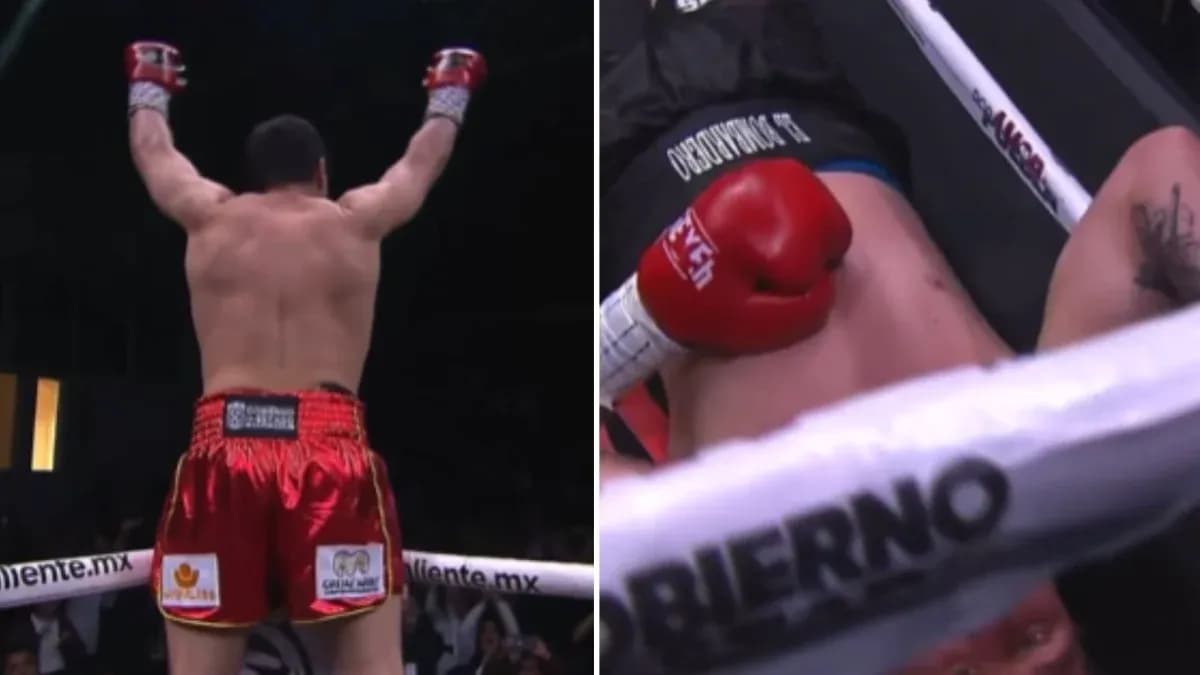
On Saturday night at the Miguel Hidalgo Gymnasium, under the lights and the weight of his own history, the “Son of the Legend” tore through Colombian veteran Jeison Troncoso in a ruthless, 2-minute 59-second demolition that felt less like a contest and more like a statement.
A First-Round Assault
From the opening command, Chávez Jr. walked forward with intent. No study round, no cautious jabs to measure distance. He went straight to the body, pounding Troncoso’s midsection and ripping combinations upstairs that immediately forced the Colombian back.
Troncoso tried to survive behind a high guard, shuffling along the ropes, hoping to buy time. He never got it. The Mexican’s pressure didn’t just close the ring; it closed the fight.
The turning point came with a vicious left hook. Troncoso staggered into the ropes, his legs betraying him as the crowd roared. Sensing a wounded opponent, the Sinaloa native stepped on the gas, unleashing a heavy combination that crashed through what was left of Troncoso’s defense and sent him to the canvas.
He didn’t beat the count. He couldn’t.
In the final second of the opening round, the referee waved it off, ruling a technical knockout after deciding Troncoso was in no condition to continue. One round. One clear message.
Old Name, New Momentum
For Chávez Jr., this was more than a highlight-reel finish on home soil. It was his third straight victory, a streak he had not managed since that 2010–2012 stretch before Sergio “Maravilla” Martínez took his undefeated record and his world title.
That context matters. For years, his career has been defined as much by what he failed to become as by what he once was. In Puebla, he fought like a man determined to rewrite that script.
The numbers keep stacking up again. With this win, he moves to 56 victories in the professional ranks, 36 of them before the limit. The power is still there. The timing, at least on this night, was sharp. And the motivation? As he has liked to underline with the phrase “old are the hills,” the questions about age and decline are fuel, not a burden.
Questions About the Opposition
Not everyone left the night convinced.
While the crowd in Puebla celebrated the emphatic knockout, analysts and specialized outlets such as Mediotiempo were quick to point to the level of opposition. Troncoso, they argued, offered far less resistance than expected, his limited defensive tools making the quick finish almost inevitable once Chávez Jr. applied pressure.
That criticism hangs over the performance. A brutal win, yes, but against how stern a test?
Inside Chávez Jr.’s camp, the tone is different. They see value in the rounds of preparation, the camp rhythm, the chance to execute under the lights. Every appearance, they insist, is a planned step: rebuild confidence, sharpen power punching, and move steadily toward opponents with a higher profile and stronger credentials.
The debate is clear: is this resurgence real, or simply a carefully managed run?
Eyes Back on a World Title
What cannot be denied is that the knockout in Puebla fits neatly into the broader plan for the second half of his career. After years away from the sport’s main stages and from the major international spotlights, Chávez Jr. is piecing together something he hasn’t had in a long time—consistency.
Three wins in a row. A violent finish that will circle through highlight packages. A name that still resonates across Mexico and beyond.
Those elements open doors. They help secure dates with world-ranked contenders, the kind of fights that will answer the only question that really matters now: is Julio César Chávez Jr. climbing back toward a genuine title run, or is this just the last bright flare of a famous name?