
Jude Bellingham: From Football Star to Fashion Icon
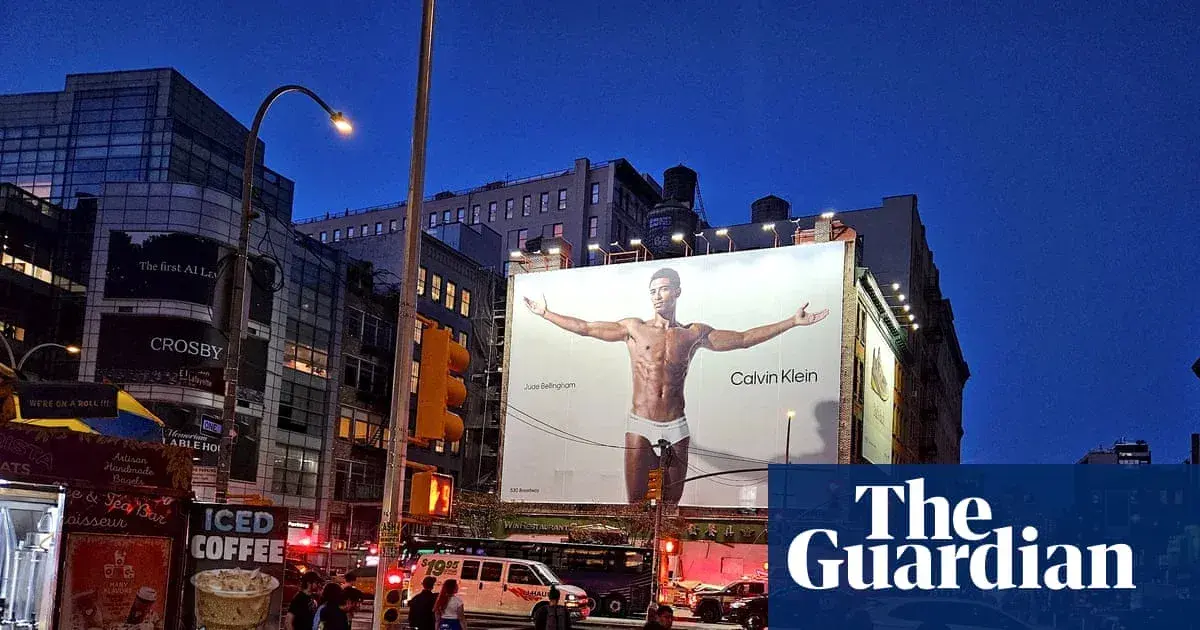
On Sunday, Jude Bellingham will walk out in an England shirt to face Spain. Yet, as the teams line up, a different image of him will be flickering in the minds of many watching: not the midfield general in white, but the Calvin Klein frontman towering over Soho and Times Square in little more than branded waistband and sculpted confidence.
At 23, Bellingham is doing more than riding a wave. He is building an empire.
From midfield metronome to global billboard
The blueprint is familiar. David Beckham drew it in thick ink two decades ago, turning a stellar career into a global brand that long outlived his final whistle. Since retiring in 2013, Beckham – alongside Victoria – has evolved into a commercial juggernaut, this year joining the billionaire bracket.
Bellingham’s path runs along similar lines, but on fast‑forward.
This month’s Calvin Klein campaign, with the England star in underwear and, at times, striking his signature Christ the Redeemer pose, has detonated across two continents. Billboards in London and New York have become tourist attractions in their own right, with passersby stopping to take selfies beneath a 40-foot Jude. A particularly prominent installation in Soho, New York, has underlined something significant: after this summer’s World Cup, Bellingham is no longer just a European phenomenon. He is a US celebrity, too.
The numbers back it up. Fashion data firm Launchmetrics reports that within 48 hours, the Calvin Klein campaign generated $35.8m (£27m) in media impact value – a metric designed to put a price on social-media noise. The fashion platform Lyst says searches for Calvin Klein underwear jumped 25% once the images dropped. For the brand, the bet has already paid out.
Football first, fashion second
Strip away the billboards, and the foundation remains the same: Bellingham is an elite footballer at the peak of his powers. That, says public relations consultant Mark Borkowski, is the engine driving everything else.
“Bellingham is an exceptional sporting talent, and his brand value is understandably enormous,” Borkowski says. “But fashion doesn’t create that value, football does. Fashion merely provides another means of exploiting it.”
The distinction matters. Without the Champions League nights, the England performances, the relentless consistency, the underwear campaign would be just another glossy shoot. Instead, it becomes an extension of his on‑field authority, a translation of sporting dominance into cultural capital.
The making of a modern brand
Behind the scenes, Bellingham’s rise has been carefully choreographed. His mother, Denise, a former HR executive, serves as his personal manager, anchoring a close-knit team that has so far been selective rather than scattergun.
The portfolio is already heavyweight: Adidas, Kim Kardashian’s Skims, Louis Vuitton and now Calvin Klein. High-end, high-visibility, tightly curated. The message is clear – this is not a player cashing in on anything that moves. This is a brand positioning itself at the top shelf.
There is also the sense that the Bellingham story is becoming a family business. His younger brother, Jobe, 21 and in the England squad for the first time this month, is being quietly ushered into the spotlight. The question hangs in the air: will he follow Jude into similar campaigns, turning “Bellingham” from a surname into a commercial dynasty?
Beckham echoes, modern twist
For Daniel-Yaw Miller, whose SportsVerse newsletter has become required reading in the industry, the Beckham comparison is no accident.
“It’s very intentional,” he says. “What [Bellingham is] doing is aimed at the higher tier of the market but at the same time, a big part of his personality is very relatable.”
That relatability is crucial. Bellingham’s appeal is not only built on trophies and talent. He is a heart-throb, with the kind of looks that, in another timeline, might have seen him fronting a boyband rather than a midfield. British Vogue has leaned into that, making him the first footballer to appear solo on its cover and slipping a pull-out poster into the issue like it’s 1999 again.
“It helps that he’s incredibly good-looking,” Miller adds, with the bluntness of someone reading the market as it is, not as purists might wish it to be.
A wider shift in the game
Bellingham is not an outlier in working with fashion. He is the most visible point of a broader trend.
Bukayo Saka and Son Heung-min fronted Burberry’s autumn campaign. Kylian Mbappé aligned himself with Christian Dior. Declan Rice appears on the cover of GQ this month. Top-level footballers are no longer just endorsing boots and energy drinks; they are stepping directly into the worlds of luxury and lifestyle.
“The earnings that they can get during their football career are obviously huge,” says Miller. “But what sets them up for life beyond that is being brands and businesses in their own right. It’s not only just a money thing. It’s about cementing a legacy and securing their profile in the game long term, commercially and culturally.”
In other words, the modern superstar is not just playing for medals. He is playing for permanence.
Not everyone is buying it
For all the hype, there is dissent. Felicia Pennant, editor of the football-and-fashion magazine Season, looks back to Beckham’s heyday and sees a different level of risk.
If Bellingham is following the Beckham model, she argues, the original was bolder. Beckham posed for The Face in 2001 covered in (fake) blood. He became the subject of art, including work by Sam Taylor-Johnson. The images were strange, provocative, occasionally unsettling.
“Beckham was the subject of art and he was the art rather than selling the art,” Pennant says. “I think what Jude’s doing feels quite transactional … there’s nothing that directional about anything he’s done so far.”
It is a sharp critique. Where Beckham blurred the lines between sport, fashion and contemporary art, Bellingham’s projects so far sit more comfortably in the realm of high-end commerce: slick, aspirational, undeniably effective, but tightly controlled.
The echo chamber risk
For Borkowski, the next phase is the most dangerous. The higher the profile, the louder the chorus around a young star – and the less anyone wants to say no.
“Fame surrounds exceptional young athletes with people whose livelihoods depend on telling them how wonderful they are. That can become a very dangerous echo chamber,” he warns. “The football makes the myth. The business can preserve it. But hubris can destroy both.”
That is the tightrope Bellingham now walks. On one side, a career that could define a generation for England and his club. On the other, a brand already striding across fashion capitals and magazine covers.
On Sunday, against Spain, the noise will fall away and the focus will narrow to 90 minutes and a ball at his feet. The myth still starts there. The question is how far – and how carefully – he chooses to stretch it beyond the touchline.





