José Mourinho's Most Beautiful Defeat: The Iconic Night at Camp Nou
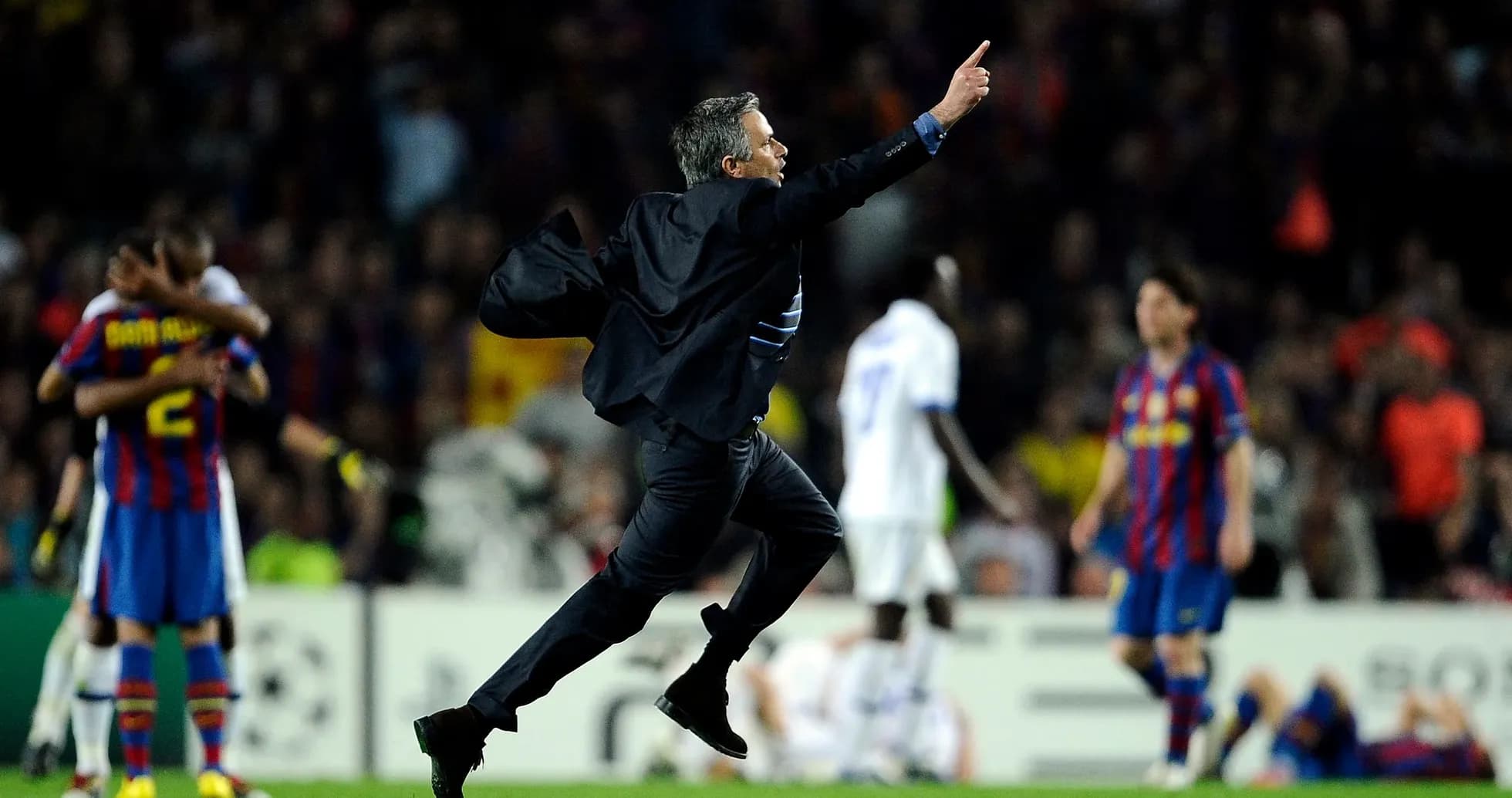
On 28 April 2010, José Mourinho walked into the Camp Nou with a two-goal cushion and walked out with a defeat he would later cherish for the rest of his career.
Inter Milan arrived in Barcelona eight days after a 3-1 first-leg victory over the defending European champions, a Barcelona side widely seen as untouchable. The task sounded simple on paper: protect the lead. In reality, it meant surviving 90 minutes against Lionel Messi, Pep Guardiola’s passing carousel and a stadium that usually swallows opponents whole.
Mourinho chose a plan that bordered on defiance. Stop Messi, choke the spaces, suffer. Inter’s approach was unapologetically pragmatic, the kind of tactical trench warfare that splits opinion and wins trophies. For an hour they had to do it with 10 men.
Thiago Motta’s red card – harsh in the eyes of many – tilted the pitch even more steeply towards Julio César’s goal. Barcelona, with a numerical advantage for 60 minutes, poured forward. The noise rose, the pressure mounted, the ball rarely left Inter’s half. Yet the scoreboard barely moved.
Guardiola’s team could find only one breakthrough. A 1-0 win on the night, not enough over two legs. Inter’s defensive block, drilled and disciplined, held the line. Messi, the man around whom the entire plan revolved, found himself crowded, smothered, forced into areas where the damage was manageable.
When the final whistle went, the tension snapped.
Mourinho sprinted onto the Camp Nou turf, index finger thrust into the air, a solitary gesture that screamed defiance and vindication. He celebrated wildly with his players in front of a furious home crowd. The image became instantly iconic: the outsider who had come to the cathedral of Guardiola’s Barcelona and survived.
Some in Catalonia took it badly. The sprinklers came on, soaking the celebrating Inter contingent, as if to wash away the scene and hurry the visitors off the pitch. The water only added to the theatre. Inter stayed. Mourinho stayed. The party carried on in the spray.
Weeks later, Inter finished the job in Europe. A 2-0 win over Louis van Gaal’s Bayern Munich in the final wrapped up the Champions League and completed a historic treble. The “most beautiful defeat” in Barcelona had been the gateway to immortality.
Years on, that night still follows Mourinho. It shapes how people talk about him, how they measure his career, how they understand his footballing creed: control the opponent’s strengths, embrace the suffering, win the war even if you lose the battle.
The pull of that past remains strong enough that even journalists try to tap into it. In Madrid, Tancredi Palmeri summed up the scale of the challenge in a simple mobile phone video as he prepared to present Mourinho with a gift.
“The mission is very difficult. It is almost impossible to present Mourinho with a gift here,” Palmeri said. “It is difficult, but we will try.”
The mission did not fail. Mourinho accepted the present, visibly pleased, shook Palmeri’s hand and walked out of the press conference room with a smile that suggested he still enjoys the game around the game as much as the one on the pitch.
Now the story loops back on itself.
On Tuesday, Mourinho’s current club Real Madrid face his former club Inter on the opening matchday of the new Champions League league phase. The narrative writes itself: the coach who conquered Europe with the Nerazzurri still chasing the same prize in white.
For all his history in the competition, there is a gap in his Real Madrid record. During his first spell in the Spanish capital, from 2010 to 2013 after leaving Milan, he never managed to lift the trophy that defines the club. Semi-finals, drama, controversy – but no European crown.
This summer, at 63, he returned to Spain’s record champions for a second stint, stepping back into a club where the demand for the Champions League is relentless and non-negotiable.
Inter gave him his “historic miracle.” Real still owes him his.