
José Mourinho's Return to El Clásico: A New Era for Madrid
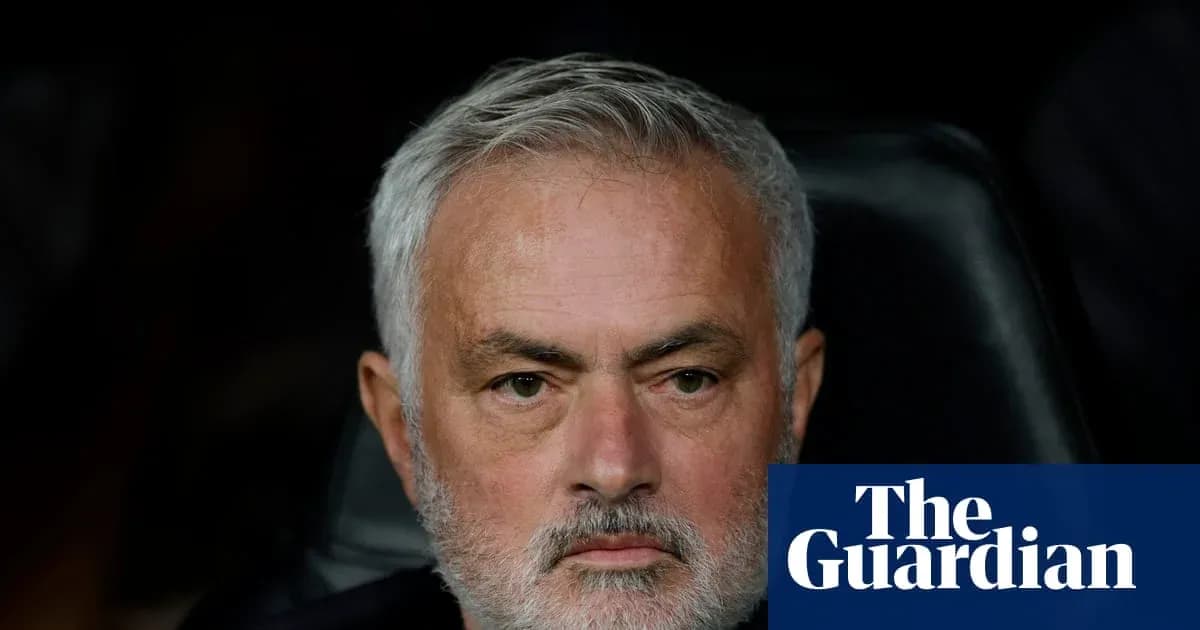
José Mourinho has done the por que?, waved the printout and skipped the press conference – and he’s only been back three months. The Real Madrid manager has already hit the greatest hits of his own mythology without yet walking into a clásico. That changes on Sunday night.
He returns to the stadium where this all really began for him, three decades ago, as Bobby Robson’s sharp, ambitious translator. He last walked into the Camp Nou in 2013 as the most notorious coach in the sport. Now he comes back as something else again: the man charged with trying to bring down Barcelona.
Once, he said: “Today, tomorrow and always, Barcelona in my heart.” He also said he would only ever go to Real Madrid to destroy them. The twist is that Madrid now want him to destroy Barcelona. Sentiment and rivalry, all knotted together.
“The clásico is just another game in the championship but to say it’s a game like any other would be to lie, totally unreal,” Mourinho said on Wednesday. Few people alive understand that better. On the other side of the divide, Barcelona’s newest phenomenon is relishing the collision. “I love the needle,” Lamine Yamal said. “The Mourinho-Guardiola era, I loved all that. That’s football. Sport is serious but I want a show and we have more fun.”
He will get his wish. Mourinho almost guarantees it.
Old wounds, new stage
Europe has moved on since Mourinho last prowled this touchline in Spain. Madrid, in particular, have gone stratospheric. Decima finally arrived, and then the 11th, 12th, 13th, 14th and 15th European Cups followed in a blur. A decade of continental dominance, largely without Barcelona in the frame.
There has not been a European clásico since 2011, when Pep Guardiola had just called Mourinho the puto amo, the “fucking master”, and Mourinho responded with his infamous por que monologue. That night he accused UEFA of favouring Barcelona, of stacking the deck. It was pure Mourinho: grievance as fuel, conspiracy as tactic.
And yet this week, everything has bent back towards this fixture. Champions League ties have felt like dress rehearsals for the only game that really matters. Even with Barcelona in Paris, the rivalry sits at the centre. It always does with Mourinho. It is his origin story here.
The day he signed for Madrid in 2010 was the day he lifted the Champions League with Inter. The real audition, though, had come in the semi-final. He sprinted across the Camp Nou turf, finger raised, celebrating Inter’s resistance as if he owned the place. Madrid, watching from afar, were relieved: Barcelona had been denied the chance to win the European Cup at the Bernabéu. More than that, they had just been shown how to stop a team that looked untouchable.
Florentino Pérez took note. As Mourinho left the Bernabéu that night in the president’s car, his players heading back to Milan with the trophy, the message was simple: do that here.
Pérez had already lived through the galácticos’ failure and walked away once. He returned in 2009 to find Barcelona ruling everything. They had the spine of Spain’s World Cup winners – six starters in the 2010 final – and a footballing ideology Madrid could not match. Pérez wanted a reset, a war, a man who would dominate the dressing room and the discourse.
“This year’s galáctico is José Mourinho,” he declared.
It worked, and it didn’t. Madrid fought back. They won a league title with 100 points, a Copa del Rey, a Supercopa. They bloodied Guardiola and then outlasted him. Of the four trophies Guardiola failed to win at Barcelona, Mourinho took three from him. Yet by the time Mourinho left, the relationship had turned poisonous. The enemies were no longer just in Catalonia or Nyon; they were inside Valdebebas.
Mourinho would later call those “three intense, almost violent years”. Pérez, though, never quite let go. He has always been drawn to Mourinho’s combativeness, his refusal to bend. After each subsequent European triumph, the president picked up the phone to tell him: you started this.
Madrid need a fighter again
The parallels now are hard to ignore. Madrid have gone two seasons without a trophy. In the first of those, Barcelona walked away with a domestic treble, wrapping up the league with two weeks to spare and battering Madrid four times, scoring 16 goals. Last season, they sealed the title with three games left, clinched via a clásico that underlined a gulf in class and conviction. Madrid’s internal fractures played out in public.
Spain then won the World Cup with eight Barcelona players in the squad. Madrid’s only representative, Marc Cucurella, did not even arrive at the club until after the tournament had begun.
If this is not a crisis, it is close enough for Pérez. The answer, again, was Mourinho. Time has smoothed the edges of his reputation; nostalgia has airbrushed some of the chaos. What remains is the idea of a man with the authority to impose order, and the appetite to fight everyone. Especially Barcelona.
Pérez’s furious public tirade in May – full of campaigning, conspiracy, politics and paranoia – sounded like a prelude to Mourinho’s return. When it comes to the Negreira case, Madrid can point to more than just shadows. Barcelona paid José María Enríquez Negreira, then vice-president of the referees’ committee, more than €7m between 2001 and 2018. Barcelona deny corruption, insisting he worked as an adviser, but the scandal has become the cornerstone of Madrid’s rhetoric.
It is a remarkable shift from the days when the two clubs stood shoulder to shoulder on the Super League. The temperature rose again when the league president compared Madrid’s TV channel to Joseph Goebbels’ propaganda. The environment Mourinho walks into is ready-made for him.
Whether the current complaints about refereeing have any merit is one question. Whether the language of constant conspiracy does is another. Every mistake, and even decisions that are not mistakes at all, now arrives wrapped in insinuation. The tone is permanent outrage.
Mourinho said on arrival that he was older and calmer. The evidence so far suggests the fire never really went out. After defeat to Betis, he went straight back to por que? The answer that night was simple: that is the rule, and the decision was correct. After losing to Atlético, he marched in with a printout. Then came the night he did not appear at all.
He had sprinted on to the pitch to embrace Vinícius Júnior after the Brazilian scored against Villarreal. VAR intervened. The goal was ruled out. Vinícius was sent off for pulling Nathan Saliba’s hair and hit with a four-game ban. That suspension rules him out of the clásico.
Mourinho skipped the press conference to avoid talking himself into his own suspension. Protect the clásico at all costs. Protect himself for it too.
A team, or the illusion of one?
For a while, the football did not match the noise. When Barcelona made it 11 wins from 11 in the league last Saturday, scoring at will and averaging more than four a game, the title felt close to done. They were flying, carried by Lamine Yamal’s brilliance. Madrid, already beaten twice, looked flat. Mourinho’s team appeared stuck in familiar patterns: cautious, fractured, lacking fluency.
The previous Wednesday, Madrid had pulled off another of those comebacks that seem to defy logic, turning 3-1 down at Roma into a 4-3 win in the final seven minutes. It felt like chaos more than construction. Was there anything sustainable in that?
It turns out there was at least a hint. In those closing minutes, Arda Güler was on the pitch. Yan Diomande was on the pitch. Fede Valverde played at right-back. Vinícius did not play at all.
The template was there, hiding in plain sight. Mourinho saw it, or perhaps finally trusted what he had already seen. He went back to that structure and Madrid hit Sevilla for four on Sunday, three of them superb goals. They then put four past Leipzig on Wednesday, Diomande smashing in a stunning volley after Vinícius had gone off.
On the same night, Barcelona conceded four at the Parc des Princes.
Hansi Flick did not pretend otherwise: he prioritised the clásico over PSG. Rodri stayed out. Pedri and Raphinha were withdrawn early. Flick knows this game can set the tone for everything that follows. He also knows he has a problem at the back. Fifteen goals conceded already. Too many, as he warned his players.
Mourinho could not resist his own complaint. Madrid, he pointed out, have had a day less to prepare for the clásico – an argument softened by the fact that they played at home to Leipzig while Barcelona travelled to Paris. Still, the seed was planted: another example, in his mind, of how “they” stack the deck against Madrid.
Inside the dressing room, the message is simpler. “We need to cut the gap and we can only do that by winning,” Thibaut Courtois said of the six-point deficit. “We’re going with confidence.” The mood has shifted just enough to make belief plausible again. Defeat no longer feels inevitable. The title no longer looks like a procession.
“I had to get to know them,” Mourinho said on Wednesday night. “I’ve only been here 105 days; it’s not long.”
On Sunday, 105 days will feel like a lifetime. Or not nearly enough. The stadium he once crossed in celebration now waits for him again, older, louder, less forgiving. The rivalry that shaped him is back at the centre of his world.
If he really has started this new Madrid era, this is the night it will be tested.





