
John Setka Faces Penalties for Breaching Fair Work Act
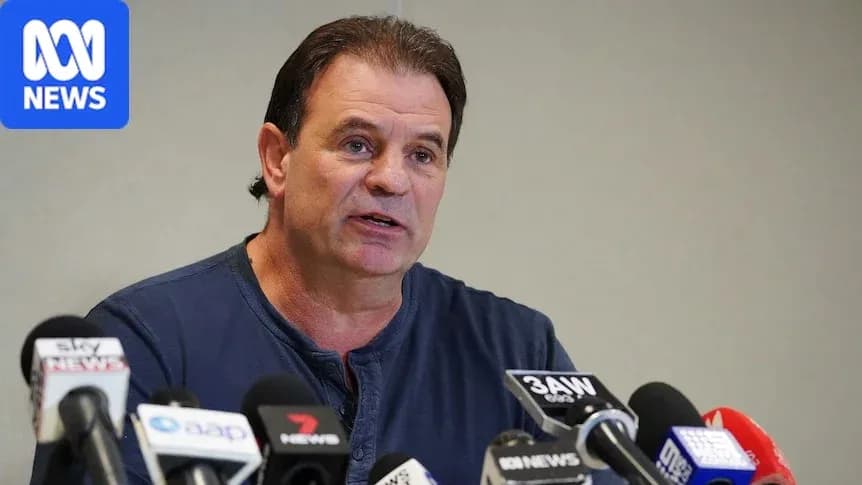
John Setka has admitted breaking workplace laws, but he is not backing down.
The former Victorian secretary of the CFMEU, long one of the most combative figures in Australia’s industrial landscape, now waits to learn how much that stance will cost him.
He faces a fine of up to $18,730 after conceding he breached the Fair Work Act by trying to pressure the AFL into sacking its head of umpiring, Stephen McBurney, in mid-2024. The financial hit could run far deeper, with the union refusing to indemnify his legal costs, leaving Setka personally exposed.
He did not appear in the Federal Court for Friday’s hearing. His barrister, Margo Harris, painted the picture of a man whose power has ebbed: retired, in the middle of a divorce, caring for his elderly mother. The message was clear – this is not the union warlord of old, and the penalty should reflect that.
A campaign that crossed the line
The case turns on a two-week burst of public attacks that blurred the line between industrial muscle and unlawful coercion.
At the time, Setka still led the CFMEU. He took to social media, fronted press conferences, and spoke to newspapers, radio and television. The target was McBurney, now the AFL’s head of umpiring but formerly the Australian Building and Construction Commissioner, a regulator who had taken the union to court more than 50 times between 2018 and 2023.
The court heard that Setka warned the AFL it would pay heavily if it kept McBurney in the job.
"This is going to cost the AFL a lot of f**king money. I hope it's worth it," he said in one instance.
"Projects without our full co-operation are going to be a f**king misery for them. They will regret the day they ever employed him."
The Fair Work Ombudsman alleged those demands were unlawful because they were made in retaliation for McBurney’s lawful work as ABCC commissioner. On Friday, barristers for both Setka and the CFMEU admitted the conduct breached the Fair Work Act.
Harris tried to blunt the force of the case by arguing that Setka had not "deliberately" orchestrated a public crusade, suggesting his comments flowed from questions put to him rather than a calculated media blitz.
"There’s a range of deliberateness. It’s not a question of being pregnant or not pregnant," she told Justice John Snaden, arguing that Setka was responding in the moment rather than carefully plotting a campaign.
FWO barrister Marc Felman was having none of it.
"There can be no question that this is a media campaign," he replied, stressing that no one forced Setka to give interviews or post online.
The tone of those appearances left little doubt about his hostility. At one press conference, Setka labelled McBurney a "zealot" who "hates unions" and "hates workers in general". On social media, he shared a mock “(Not) Wanted Dead or Alive” poster featuring McBurney’s image.
Felman told the court the breaches were "very, very serious". Calling for someone to be sacked from an AFL role is not new in Australian sport, he noted, but this case crossed into illegality because the demand was explicitly tied to McBurney’s past, lawful work as a federal regulator.
The AFL stood by McBurney at the time. He remains the league’s head of officiating and has umpired four grand finals.
A union trying to shed its old skin
While Setka fights to limit his personal penalty, the CFMEU itself faces a maximum fine of $93,900.
The union is now under administration, and its legal team pushed hard to convince the court that the culture which flourished under Setka is being dismantled.
Barrister Andrew White, representing the CFMEU, argued that the days of treating penalties as “the cost of doing business” are over. He said a sweeping clean-out had removed or prompted the departure of hundreds of officials associated with the Setka era.
"A new culture of lawful but robust unionism is taking hold," White told the court, urging Justice Snaden to moderate any penalty to reflect that shift.
The timing is delicate. The hearing unfolded just three days before Victoria’s Royal Commission into the state government’s “Big Build” projects begins, an inquiry already shadowed by allegations of corruption and criminal infiltration in the construction sector. Setka, who left the CFMEU weeks after his tirades against McBurney, is also facing separate criminal charges over alleged harassment of the union’s administrators.
For now, there is no verdict on the price to be paid.
Justice Snaden reserved his decision and will set penalties for both Setka and the CFMEU at a later date, a ruling that will say as much about Australia’s appetite for hardline union tactics as it will about one man’s willingness to break the law and refuse to apologise for it.





