
James McClean's Hometown Struggles and Unfolding Battle
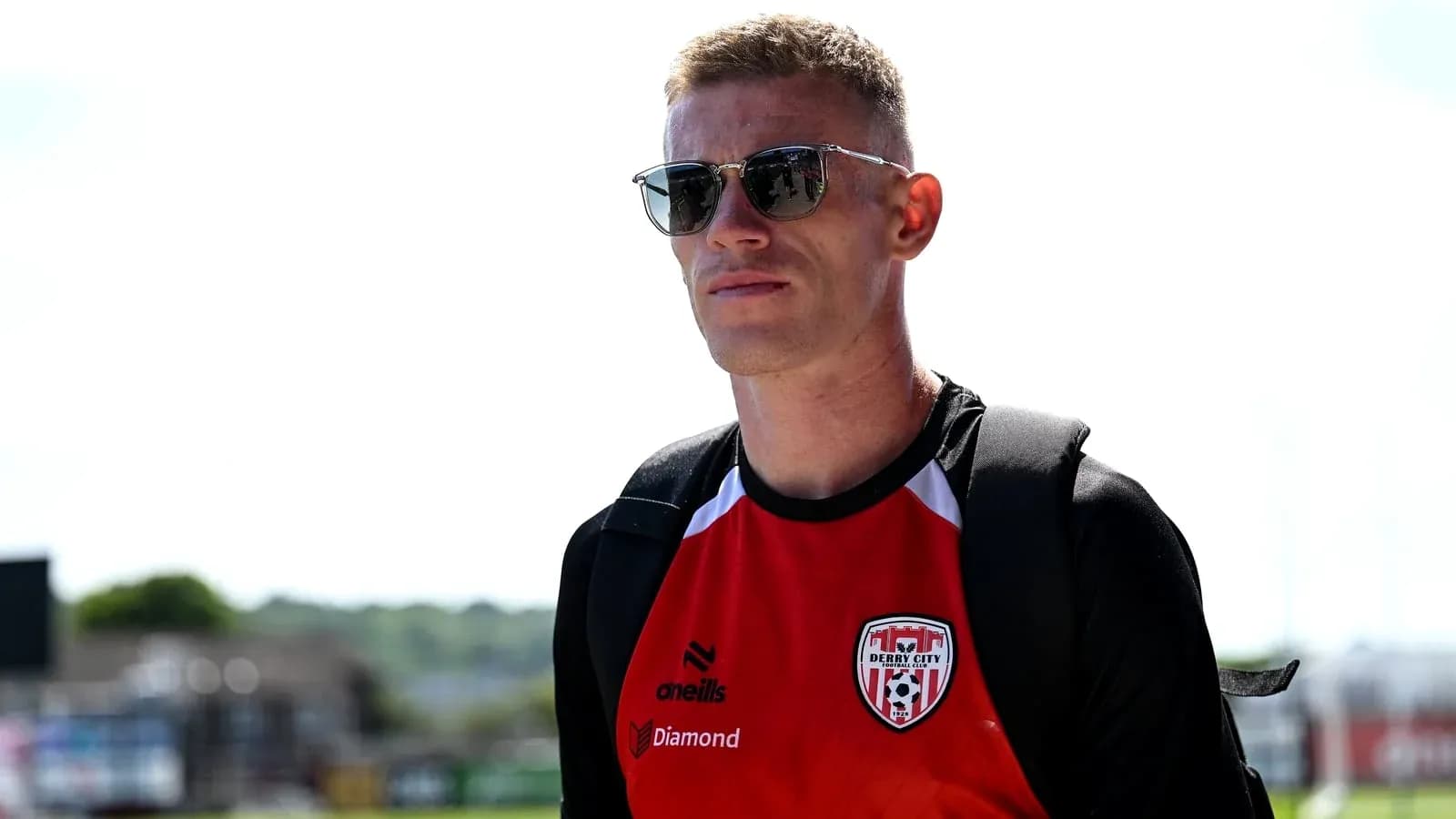
James McClean came home to Derry in January expecting a full-circle finish, a final act in front of his own people. Instead, the 103-cap Republic of Ireland international now finds himself on the outside, watching a club he loves move on without him.
He calls it "struggling". His wife Erin says it has become "a daily battle". The word fits.
A hometown return that turned sour
McClean’s second spell at Derry City was supposed to be emotional, not explosive. He left Wrexham to come back to the Brandywell, but he has not been involved in a matchday squad since early July. In the background, a dispute simmered and then boiled over.
He accused the Candystripes of an "incomprehensible" attempt to terminate his contract. The club pushed back, publicly distancing themselves from his comments and stressing they "do not reflect" Derry City’s core values or beliefs.
McClean later apologised for some of the more stinging remarks. It has not changed his footballing reality. Interim manager Mark Connolly has not used him. A player who built a career on relentless running is stuck in neutral, feeling, in his own words, "cast aside" and "made to feel like a leper" at the club he thought would never treat him that way.
"The one thing I have always loved doing, and all I have known, is playing football," he said on RTÉ Radio 1’s The Brendan O’Connor Show. "For a power to take that away from me wrongly, and unfairly, has been difficult."
A book, a backlash, and a misunderstood line
This is all unfolding as McClean releases his book, The Walls, written with ghostwriter Dan McDonnell. The timing has made his personal life public property again.
In the book, he reveals that he only discovered the identity of his biological father at around 10 years of age. He met the man, who had alcohol issues, just once. It is a raw detail, one of several, that McClean had kept largely locked away.
"I opened up on stuff that I never really spoke about privately, never mind publicly," he said. "What has happened over the last few days has made it really tough."
The storm broke over an interview with the Sunday Independent, where McClean explained why he would never seek therapy. The quote was stark.
"As a man, I see that as weakness. I don’t need to open up," he said. "I see it as a weakness that I’d have to speak to someone about my feelings; my emotions."
The reaction was instant and fierce. In a country where mental health is now openly discussed, McClean’s words landed like a punch. His own club issued a statement. Social media piled in.
On radio, McClean tried to pull the lens back and explain.
"That (the comment about seeking counselling as a weakness) was a screengrab, it was put out there and people jumped on it," he said. "My own club (Derry City) put out a statement that didn’t help in the slightest, but not one person reached out to me to say, ‘James, can you clarify what you meant?’"
He insists he was talking solely about himself and his own coping mechanisms, not making a blanket statement about therapy.
"I’m pretty sure nobody actually read the context of the article. If they had, they would have seen that I was solely speaking on my own personal experience. When you are going through difficult situations, people have their own ways and means of coping with that."
He goes to the gym. He leans on fitness and boxing, a growing passion as his football career winds down. That is his outlet.
"Any man or woman that needs to go to therapy to help themselves, I couldn’t commend them any higher," he said. "That’s not to say me going to the gym is wrong either because that works for me. I was solely speaking about me."
Then came the line that undercut his own earlier phrasing: "Me saying the word weakness, was probably my weakness in saying that, but I’m not going to apologise that I’m in a place where I feel I don’t need to go to therapy. That’s in a way what I’m getting bashed for."
Trauma, pride and a closed door
McClean has never been shy about confrontation. On the pitch, that edge drove him. Off it, he admits it has often dragged him into trouble.
"My biggest problem has always been social media," he said. "In the moment, when I feel attacked, it’s almost like auto-pilot, I go on the offensive to show nothing bothers me."
Erin, he says, sees something deeper.
"Erin has said I probably have trauma from my childhood that I have probably blocked out," he admitted. She believes therapy would help, especially around the unresolved issues linked to his biological father.
He still refuses to go down that road. That refusal, and the way he expressed it, has opened up another front in a year already packed with conflict.
Asked directly whether he agreed with his wife that he is struggling, McClean did not duck it.
"I am struggling," he said. "I’m struggling in my current situation because you go home expecting and being told one thing, and for that not to work out, and then to be cast aside and then made to feel like a leper in a place where you thought they would never do that to you…for that to happen is very tough."
The word "struggling" is doing a lot of work there. It covers the professional exile at Derry. It covers the public backlash. It covers the weight of a childhood that keeps being dragged back into the light.
A fighter without a ring
McClean has always framed himself as a fighter. From Derry to Sunderland, Wigan, West Brom, Stoke and back again, he carved out a career through sheer force of will. Now, with the ball taken away from him, he is looking for something else to hit. Boxing fills some of that void.
He talks in his book about his passion for the sport growing as his footballing days near their end. The gym is his refuge, the place where the noise stops and the work begins. It is also, in his mind, proof that he can handle things on his own terms.
But the reality is unavoidable: at 37, he is out of the Derry City team, out of favour, and locked in a stand-off with the club he once dreamed of representing again. The stands he used to thrill now watch a different team, a different story.
Derry City and James McClean remain at an impasse. One side has distanced itself. The other feels abandoned. For a player who has never backed away from a challenge, the question now is simple and brutal: where does he fight next?





