Jamal Murray's Evolving Role for the Denver Nuggets
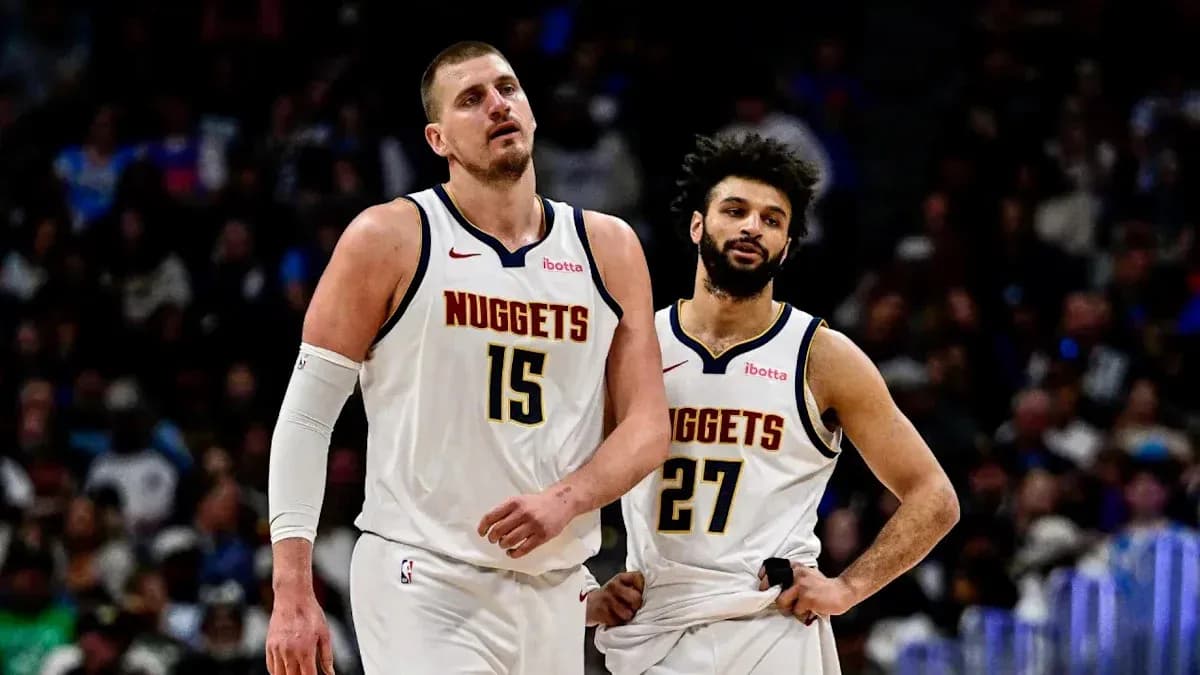
The Denver Nuggets don’t have forever.
Nikola Jokic is still the best fulcrum in basketball, but the edges of his prime are starting to come into view. Denver’s title window isn’t slamming shut yet, but you can hear the hinges creak. If the Nuggets are going to squeeze another championship out of this core, Jamal Murray has to deliver the biggest, cleanest version of himself in 2026-27.
The projections say he just might. They also say there’s a price.
A smarter Jamal Murray, not a louder one
Denver’s problem last season wasn’t accuracy. It was appetite.
The Nuggets took only 87.8 field goals per game in 2025-26, 26th in the league. They still finished first in three-point percentage at 39.6% and second overall from the field at 49.6%. In other words: when they shot, they were deadly. They just didn’t shoot enough.
That’s where Murray’s evolving role matters.
Basketball Reference’s per-36 projections for 2026-27, translated to his usual 35.4 minutes per night, paint the picture of a guard who shifts from pure scorer to full-scale organizer. The raw scoring dip is the headline. The nuance is everything around it.
With DeMar DeRozan now in the mix as another high-volume option, Murray is expected to surrender a slice of his scoring diet. His projected average drops from last season’s career-best 25.4 points on 18.1 attempts to 23.7 points on 17.5 shots.
On paper, that’s a step back. In reality, it’s more of a redistribution.
Denver is importing a career 21.1-point scorer in DeRozan, fresh from the Sacramento Kings. Someone has to give. Murray’s usage softens slightly, but the Nuggets gain another proven closer who can manufacture offense when Jokic sits or when defenses load up on the two-man game.
For a team that already shoots the lights out, that trade-off looks less like a sacrifice and more like balance.
Defense, boards, and the dirty work
The projections also hint at a Murray who leans harder into the parts of the game that don’t make highlight reels.
He’s expected to post 4.3 rebounds per game and 0.5 blocks, both the second-highest marks of his career. Those are small numbers in isolation, but for a point guard in a Jokic-centric system, they matter. Extra possessions, extra contests, extra traffic in passing lanes.
The steals tell the same story. Murray is projected to climb back to 1.1 per game, a sign that his work as a point-of-attack defender and lane gambler could tick up again. For a team that often relies on Jokic’s positioning more than traditional rim protection, guards who can disrupt the first pass are gold.
The efficiency is where his All-NBA case really starts to breathe.
Murray is projected to hit 42.1% from three, which would be the third-best mark of his career, and 47.9% from the field, also his third-best. Those numbers, on a contender, from a primary guard who can run offense and close games, are the kind that get noticed when ballots come out.
He doesn’t need more shots to look like a star. He needs the right ones.
From Jokic’s sidekick to full-time conductor
Denver’s offense has long lived through Jokic’s genius as a passer. At times, that’s also been its tell. When one man is the brain, the plan becomes easier to map.
This season, Murray’s playmaking load is projected to spike in a way that could change how teams defend the Nuggets.
His assist projection sits at 6.7 per game, which would be the second-highest of his career, just behind last season’s 7.1. That’s not a token bump. That’s primary-creator territory, especially on a roster stacked with finishers.
If DeRozan, Jokic, Aaron Gordon, Cam Johnson, and Christian Braun cash in at their expected efficiency, Murray has a real shot to surpass that 7.1 mark. His job becomes less about hunting his own pull-up and more about tilting the floor, forcing rotations, and feeding shooters and cutters who punish any mistake.
This is also where Denver’s depth chart matters.
Tyus Jones arrives as the secondary point guard, but he’s coming off a season with just 2.4 assists per game. His 7.3-assist campaign with the 2023-24 Washington Wizards shows he can run an offense, yet he still has to adjust to Denver’s system, Jokic’s rhythm, and the spacing demands of a contender.
Until he fully settles, the burden of organizing the Nuggets’ attack remains Murray’s. The projections reflect that. So does the pressure.
The ghost that won’t leave: turnovers
There’s one number on Murray’s projection sheet that won’t thrill anyone in Denver: 2.3 turnovers per game.
That would be a career high. It also sits well above the 1.7 average for point guards across the league.
For nine seasons, turnovers have been the recurring blemish on Murray’s profile. Even as he climbed to All-NBA Third Team status in 2025-26, that ghost stayed with him. High-usage guards who score and create are always going to live with some mistakes, but Denver’s margin for error in the West is shrinking.
The context is clear. When Jokic sits, Murray often becomes the lone offensive engine. He has to force the issue, probe, take risks. Some of those possessions end with a dagger three or a slick pocket pass. Others end in a live-ball turnover and a runout the other way.
The hope in Denver is that Jones’ presence stabilizes those non-Jokic minutes and chips away at the projected turnover spike. If Jones can reclaim something close to his Washington form as a steady table-setter, Murray won’t have to shoulder every high-wire decision.
But the numbers right now say the opposite: more creation, more responsibility, more chances for mistakes.
Can this version of Murray be All-NBA again?
Strip it all down, and the question hanging over the Nuggets is simple: can Jamal Murray play at an All-NBA level while changing who he is?
The projections outline a guard who scores slightly less, passes more, defends a bit better, and remains brutally efficient. They also warn of a ball-security issue that refuses to disappear.
If he trims the turnovers, if he embraces the conductor’s role next to Jokic and DeRozan, and if Denver rides that balance back into the heart of the title race, the All-NBA conversation will find him again.
The window is still open. How wide it stays may depend on whether Murray can turn those projections into something sharper, cleaner, and just dangerous enough.