
Jack Grealish Faces Pressure at Everton After Training Breach
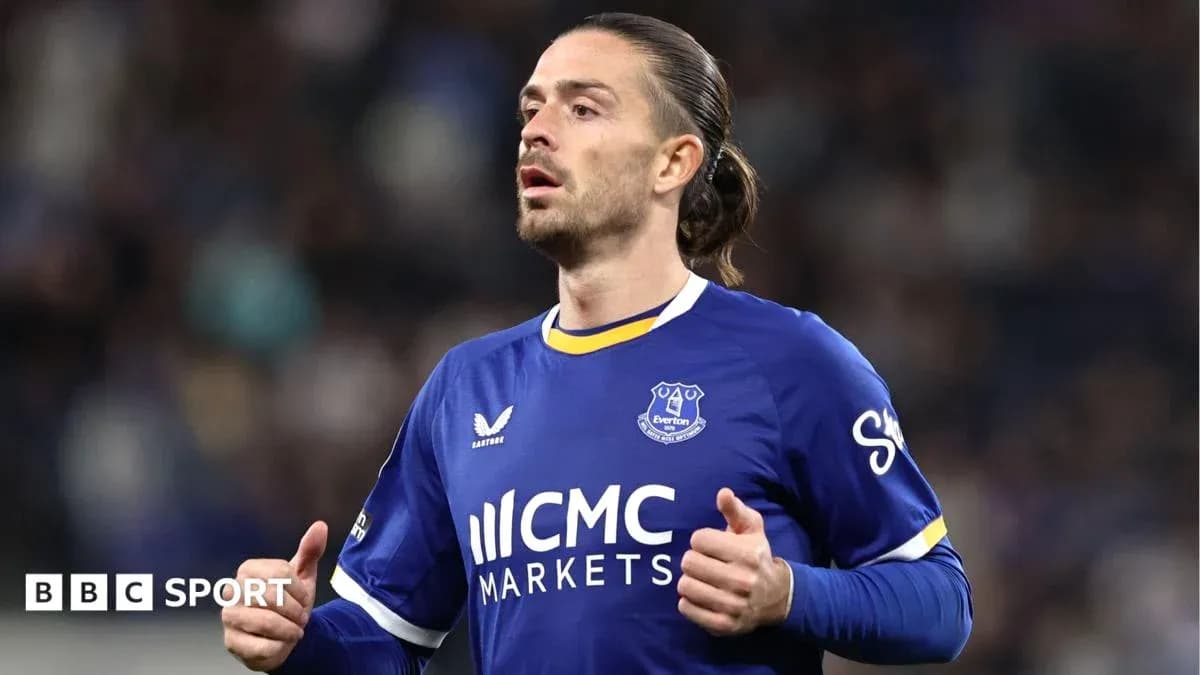
Jack Grealish’s white Lamborghini rolled back into Finch Farm an hour before the transfer deadline shut and, for a club trudging through a miserable summer, it felt like a jolt of electricity.
Here he was again, the £100m showman from Manchester City, the winger whose first loan spell at Everton had been cut short by a serious foot injury but had still left a trail of nutmegs, flicks and noise in his wake. Supporters crowded around the car park. Grealish stayed until the early hours, signing every shirt, leaning into every selfie. It looked and sounded like a homecoming.
It was more than that. It was a gamble.
David Moyes, stripped to a senior squad of just 18 players after a botched window and ownership uncertainty, needed Grealish to be both talisman and grown‑up. Grealish, frozen out at City in the final year of his contract, needed Everton to be his way back into the elite.
Now that fragile pact is under strain.
A breach, a statement, and a line crossed
When Everton’s team sheet for the Carabao Cup tie against Newcastle United dropped without Grealish’s name, the club did something it rarely does. It went public.
His absence, Everton said, was down to “a breach of club discipline”. The breach was simple and stark: he did not turn up for training on Monday.
For a player once billed as Britain’s first £100m footballer, a Treble winner with City in 2023, this is not a minor misstep. It is another jolt in a career that keeps veering between brilliance and self‑inflicted trouble.
Everton’s decision to spell out the reason before kick-off underlined the seriousness. This was not a quiet internal fine or a discreet omission. It was a marker.
Inside the club, this is not being dressed up as some final, melodramatic “Last Chance Saloon”. Moyes cannot afford that luxury. His squad is too thin, his margin for error too small, to exile a player of Grealish’s ability on a whim.
But the pressure has changed. The room for indulgence has shrunk.
Grealish has already held talks with senior figures at Everton. The message could not have been softer in tone or harder in meaning: there can be no repeat. Not with a manager like Moyes, a disciplinarian who trades in standards, not reputations.
The decision to punish him came from high within the club, with Moyes’ full backing. It leaves Grealish staring down a familiar crossroads, only this time with far less road ahead.
Everton shine without him
If Grealish needed a reminder of how quickly football moves on, he got it within 90 minutes.
Everton produced arguably their best performance of the season, beating Newcastle 3-1 to book a quarter-final at League Two Fleetwood Town, the side who had already dumped out Premier League champions Arsenal.
They did it playing with a tempo and dynamism that has often eluded Grealish this season. On the left flank, the role that would normally be his, 20-year-old Tyrique George brought a sharpness and directness that fit Moyes’ blueprint.
No goals. No assists. Eight appearances – two for City before the loan, six for Everton – and a tendency to slow the game down. That is Grealish’s statistical footprint so far this campaign. On a night when Everton’s attack finally crackled, those numbers looked even heavier.
Moyes, asked about the disciplinary call afterwards, chose his words carefully and kept his focus on the collective.
“You probably know I'm not going to give any details. It's a club decision and I support it. It's something I don't want to speak too much about,” he said.
“The one thing about Everton is that they have got real good values. All the players stand behind it and accept the values, on the pitch and off the pitch, and I think the players did a good job.
“It is a small squad, but we are doing our best to keep challenging. We are not accepting any excuses for anything and I think the players are doing a great job. There was a humility about us.”
He never mentioned Grealish by name. He didn’t need to. Every line about values, excuses and humility hung in the air with a clear target.
A bond tested
This is not a manager-player relationship built on convenience. When Grealish first arrived on loan in August 2025, he spoke about Moyes with genuine warmth.
“As soon as I spoke to the manager, I knew there was only one place that I wanted to go and that was Everton,” he said then.
On the pitch, that faith was rewarded until the foot fracture at Aston Villa in January halted his season. Off it, his decision to stay on Merseyside to complete his rehabilitation, rather than return to City and the Etihad Stadium, underlined how settled he felt.
Everton, for their part, did not rush back into this second loan. They weighed the injury. They weighed the finances. They weighed, quietly, the character. With owners The Friedkin Group stepping back from meaningful investment as they prepared to put the club up for sale, Moyes had to be sure.
He went back for Grealish anyway, trusting that the environment, the affection from supporters and the responsibility of being central to a stretched squad would anchor him.
That is why this episode will sting Moyes as much as it angers him. Grealish missed the defeat at Arsenal with what was described as “illness”. Days later, he failed to report for training. For a manager counting bodies, that is not just a breach of discipline; it is a betrayal of trust.
The complicated figure behind the headlines
Inside Finch Farm, the picture of Grealish is more nuanced than the grainy photos and social media storms often suggest.
BBC Sport understands there have been occasional time-keeping issues in the past, but nothing on this scale. On the training pitch he is generally regarded as a hard worker, someone who keeps himself in good condition.
He is hugely popular in the dressing room and among staff. “A lad with a heart of gold, kind and charming, who actually loves being here,” is how some describe him.
The evidence for that softer side is not hard to find.
Recently he donated £10,000 to a GoFundMe page for Everton supporter Leon Skapars, a 36-year-old father of three diagnosed with cancer. Skapars’ wife, Crystal, said: “In that moment, Jack gave our whole family something we desperately needed, hope. What he has done for our family is something we will never forget. It makes us feel incredibly emotional.”
He presented awards at the Daily Mirror’s ‘Pride Of Britain’ event, telling the audience: “Footballers are classed as heroes - but these are the real heroes.”
In April, he extended his role as principal ambassador to Special Olympics Great Britain for another three years, having first taken it on in 2022. To mark it, he welcomed five of the 10 Special Olympics GB athletes who had completed the London Marathon to Everton’s Hill Dickinson Stadium, giving them a VIP experience, a stadium tour and time with him pitchside.
At Everton’s own community hub, he is often one of the first to engage, spending time with the Everton in the Community Down Syndrome team. He frequently speaks about the inspiration he draws from his sister Hollie, who has cerebral palsy.
This is the Grealish those inside the club know: generous with his time, instinctively kind, comfortable around people who rarely see Premier League stars up close.
Old habits, new consequences
The other Grealish has never been far away.
In April, while still recovering from injury, he was photographed asleep at a Manchester rooftop bar, surrounded by drinks. It was not illegal. It was not even especially wild by footballer standards. But it was unwise in a world of ever-present phone cameras and for a player fighting to prove his professionalism.
Go back further and the pattern continues. In March 2020, he was fined by Aston Villa and issued a public apology after breaking lockdown rules during the pandemic to visit a friend. Later that year, in November, he admitted two counts of careless driving relating to incidents in which a Citroen van and a Mercedes were damaged.
None of these episodes define him in isolation. Together, they paint a picture of a footballer whose judgment sometimes lags behind his talent, whose off-field choices keep dragging his on-field gifts into the dock.
What makes this latest breach hurt those around him is that the character references remain overwhelmingly positive. Speak to people at Everton and they talk about warmth, generosity, a player who lights up rooms as well as games.
Yet for all the goodwill, the equation is changing.
Moyes is trying to drag a small, patched-up squad through a season that now holds the tantalising prospect of a trip to Wembley in the Carabao Cup. He cannot carry passengers. He cannot afford self-inflicted absences.
Grealish, 31 now, no longer has the safety net of youth or the glow of being the £100m novelty act. Failure at Everton – not just in terms of form, but in proving he can be relied upon – risks sending him sliding away from the Premier League’s top tier.
This is the point the story stops being about potential and starts being about legacy. Does Jack Grealish become the winger who finally married his talent to responsibility on Merseyside, or another cautionary tale of a career that never quite grew up in time?





