
Jack Grealish: From £100m Star to Everton Exile
As England folded in on themselves in Atlanta, sinking deeper and deeper towards their own penalty area while Lionel Messi toyed with them, the debate raged. Tactics. Shape. Mentality. Selection.
But as Thomas Tuchel’s side let a 1-0 World Cup semifinal lead slip into a 2-1 defeat to Argentina, one thought cut through the noise for anyone who watched Pep Guardiola’s Manchester City at full tilt in 2022-23.
They were missing a player who could take the ball, hold it, calm the storm and drag a team 30 yards up the pitch.
They were missing Jack Grealish.
From £100m centrepiece to absentee
Grealish’s journey from cult hero at Aston Villa to British-record signing at City was supposed to end with him as a defining figure of his generation. For a while, it looked like it might.
He arrived at the Etihad in 2021 as the £100m poster boy. The first season was bumpy, full of adaptation and scrutiny. The second was glorious. As City surged to a historic treble, Grealish became a crucial cog in Guardiola’s machine, not through outrageous numbers, but through control.
He took the ball in tight spaces, drew fouls, slowed games when City needed a breather and sped them up when they smelled blood. He gave balance to a side overflowing with firepower. When City were at their most complete, Grealish was usually on the pitch.
Now? Manchester City don’t have that version of him. England don’t either. Everton technically do — but they’ve won their last two games with him nowhere near the squad.
The fall from that high is not just stark. It’s jarring.
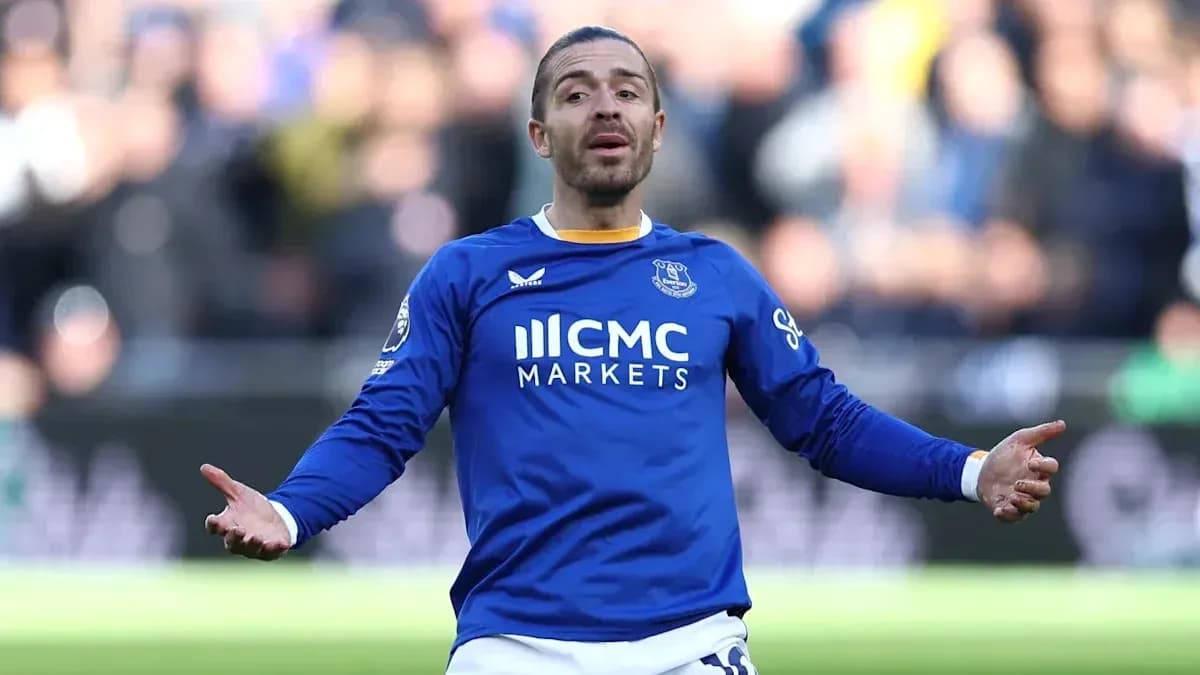
Everton’s invisible No. 10
The immediate story is simple enough on the surface. Grealish missed Everton’s 2-0 defeat away to Arsenal on October 24 with illness. Five days later, he was “unavailable due to a breach of club discipline” as David Moyes’ side beat Newcastle United 3-1 in the Carabao Cup.
He stayed out in the cold for Monday’s 1-0 league win at Newcastle. He will not feature when Coventry City visit the Hill Dickinson Stadium on Friday.
“Jack’s not available,” Moyes said before that game. “I wouldn’t give you the plan, but we will be working with Jack again soon.”
Pressed on whether Grealish was even at the club, Moyes shut the door.
“I would rather not answer your question. Right from the start, hopefully you picked up on my words. I said it was a club issue and it continues to be that.”
The message was clear: this was bigger than a manager’s whim. Everton’s hierarchy were involved. The shutters came down.
A familiar pattern
The picture around the disciplinary breach has emerged in fragments. Everton have kept their public line tight, but reports have filled in the gaps.
The issue, it is widely reported, stems from an unauthorised absence from training in the week after the Arsenal defeat. The detail fits a pattern that has followed Grealish for years: a footballer whose off-field social life keeps straying into his professional one.
On Monday, October 19, he attended the Pride of Britain awards in London. Reports in The Sun and the Daily Mail placed him later that night at Bam Karaoke Box in Victoria. He trained with Everton the next day, then watched Paris Saint-Germain vs. Barcelona in a Cheshire pub with teammates, including Jordan Pickford.
Wednesday was a scheduled day off. Footballers going out on their free time isn’t a scandal in itself. The Athletic reported that Pickford left the pub early. Grealish stayed.
This is not a new friendship. Pickford and Grealish are close away from the pitch. Back in March 2025, the pair were together at a social club when Grealish put £500 behind the bar for regulars, a small gesture that captured his “man of the people” appeal.
He has always seemed accessible in a sport that often feels distant and polished. No airs. No pretence. That warmth, coupled with his talent, has bought him time and understanding at almost every step.
But indulgence has its limits. Everton are discovering where theirs lie.
City, trust, and a body that wouldn’t cooperate
By the time of that March 2025 night out, Grealish’s relationship with Guardiola was fraying. Not because the manager stopped believing in the player, but because he stopped being able to rely on him.
Niggling injuries, minor absences, disrupted rhythm — they all stacked up. His minutes shrank. His influence faded.
The lazy version of his City spell casts him as a £100m misfire who caught fire for six months, then vanished. The truth is more nuanced. Even in those final two seasons, when Guardiola could get him fit and focused, City often looked better balanced with Grealish on the pitch. The problem was the “when”.
During an injury-hit stretch of the 2023-24 campaign, he helped keep their bid for a fourth straight Premier League title alive and played a key role in winning the Club World Cup. Then the cycle bit again. He drifted out of the frame, missed the FA Cup final defeat to Manchester United, and watched Euro 2024 from home.
The Real Madrid tie in February 2025 summed it up. Guardiola had barely used him in the league that year, then threw him in from the start against familiar Champions League tormentors. Grealish responded with a superb display, threading the pass that led to Erling Haaland’s opener.
Thirty minutes in, he went off injured. City lost 3-2. He started one more Premier League game all season, in a heavily rotated side against doomed Leicester City.
“Grealish’s problems haven’t been technical, tactical, or due to a lack of trust from [Guardiola], who clearly loves the player,” a source told The Sporting News that summer. “I think we all know that Jack’s issues have been of a different nature. And yes, it’s a shame.”
The word hangs heavy. Shame.
The rooftop photos in April — Grealish asleep at a Manchester bar while recovering from a foot injury — only deepened concerns. Inside Everton, there was no unanimous support for bringing him back on loan for a second season, even after Iliman Ndiaye’s move to City opened up the space.
Some saw opportunity. Others saw risk.
The Maresca reset that never was
At City, there was a brief hint of a reset. Enzo Maresca, Guardiola’s successor and one of his former assistants during the treble season, spoke warmly about Grealish in his first press conference.
“He has a big heart and is a very good guy,” Maresca said. He used him off the bench in the Community Shield defeat to Arsenal and the Premier League win over Bournemouth in August. Grealish responded by talking about how fond he was of Maresca.
It never felt like the start of a grand revival. More like a courtesy, a nod to shared history before the inevitable parting of ways. Grealish entered the final year of his City contract, out on loan again, his England career on ice.
The talent nobody doubts
What makes all this harder to reconcile is how unequivocally his peers rate him.
“D’you know how good Jack is?” Declan Rice asked in October 2024, after both scored in England’s 3-1 Nations League win in Finland. Rice has since become central to Arsenal’s title push and earned a place on the Ballon d’Or list. Grealish has not pulled on an England shirt since.
“You watch him in training and you watch him in games, he’s got something that’s really special as a football player. And I’m not just saying that because he’s one of my best friends in football.
The way he takes the ball under pressure and takes touches and relieves you of pressure as a team is just incredible. I’m buzzing for him because when we’ve got a Jack Grealish who’s happy and smiling and playing well, he’s a massive boost for England.”
Those words feel like they belong to another era now. Happy. Smiling. Playing well. All three have become distant reference points rather than current realities.
The question Rice posed — “D’you know how good Jack is?” — now turns inward. Does Grealish truly know? Does he respect that ability enough to protect it?
A career at a crossroads
Look at the bare facts. More than two years since his last England appearance. Loaned out for a second straight season. Final year of his City deal. Frozen out at Everton over a disciplinary matter the club will not fully air in public.
This is not a technical problem. It is not a tactical mismatch. It is not a manager who “doesn’t fancy him”.
From Villa to City’s treble, Grealish climbed to a peak that few English players reach. He walked into a dressing room with Kevin De Bruyne and, at first, looked overawed. Eventually, he belonged. Now he looks trapped in a loop of bad luck and self-inflicted setbacks.
Clubs, managers, teammates, even executives have kept offering him another chance, often with quiet reservations. They have believed that the player was worth the gamble.
Right now, the equation has flipped. Jack Grealish no longer needs people to convince themselves he is worth the trouble.
He needs to decide whether he is.





