
Jack Grealish's Disciplinary Breach at Everton: A Critical Moment
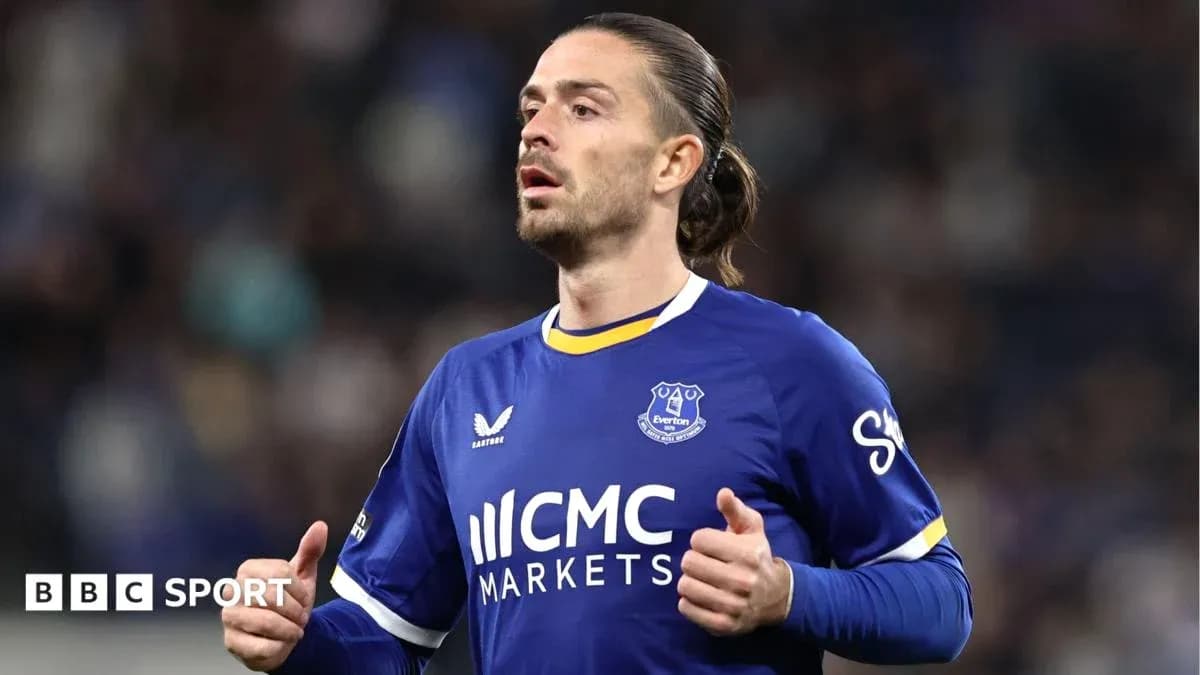
Jack Grealish glided back into Everton on deadline day in a white Lamborghini, an hour before the window slammed shut, and the mood around Finch Farm shifted in an instant.
Supporters gathered outside the training ground roared his arrival. Grealish, 31 now, grinned his way through the chaos, signing every autograph, posing for every selfie. When he finally left in the early hours, deal completed and fans satisfied, it felt less like a loan signing and more like a homecoming.
For a fanbase battered by a miserable summer in the market, this was a rare shaft of light. For Grealish, exiled at Manchester City in the final year of his contract, it was a lifeline.
Now that lifeline is fraying.
A breach that Everton chose to expose
Everton did not hide behind vague phrasing or “personal reasons” when Grealish’s name was missing from the squad to face Newcastle United in the Carabao Cup. They called it what it was: a breach of club discipline.
The detail was stark. He had simply failed to turn up for training on Monday.
For a player who once became Britain’s first £100m footballer when he moved from Aston Villa to Manchester City in 2021, it was a jarring, avoidable act of self-sabotage. Everton’s decision to go public before a ball had been kicked underlined the seriousness of the offence. This was not a quiet internal fine and a line drawn under it. This was a statement.
It also felt like a line in the sand for Grealish’s career at the top level. Fail at Everton, and the slide away from the Premier League’s elite begins to look inevitable.
The club do not see this as the mythical “Last Chance Saloon”. David Moyes cannot afford such luxury with a squad stripped back to 18 senior players after a botched window and owners The Friedkin Group edging away from meaningful investment as they look to sell.
But the margin for error has narrowed. Sharply.
Moyes’ anger, and a harsh lesson
Inside Finch Farm, Grealish has already sat down with the decision-makers. The message will have been blunt. No repeats. Not under Moyes.
The Everton manager is a strict disciplinarian, but he is also a pragmatist. He knows how thin his squad is. He knows how few match-winners he has. He also knows Grealish, and that is what will make this episode sting.
The pair bonded quickly when Grealish first arrived on loan in August 2025. Grealish spoke warmly then: “As soon as I spoke to the manager, I knew there was only one place that I wanted to go and that was Everton.” On the pitch, he became a key part of a side built around Moyes’ organisation and intensity until a foot fracture at Aston Villa in January abruptly ended his season.
Grealish chose to complete his rehabilitation at Finch Farm rather than return to City’s Etihad Stadium. It said everything about where he felt at home.
Everton, though, did not rush into a second loan. They weighed the injury, the finances, and, yes, his character before Moyes pushed again. He did so in the knowledge that his options were limited, and reassured by Grealish’s reputation as a hard trainer who generally keeps himself in good condition, even if there had been the odd issue with time-keeping in the past.
This week’s no-show was on another scale. Moyes’ fury will not just be about standards. It will be about sheer waste. This is a paper-thin squad that cannot afford passengers, cannot afford players ruling themselves out through needless ill-discipline.
A team steps up without him
If Grealish wanted a reminder of how quickly football moves on, he got it on the night he sat out.
Everton produced arguably their best performance of the season, beating Newcastle United 3-1 to book a quarter-final at League Two Fleetwood Town, the same Fleetwood who knocked out Premier League champions Arsenal in the last round. Wembley, suddenly, is not a fantasy.
Crucially, they did it with a different kind of energy on the left flank. Tyrique George, 20 years old and fearless, brought a dynamism and tempo that dovetailed with Moyes’ demands. It is the very area Grealish would have expected to call his own.
The contrast was brutal. While Grealish’s season so far has been underwhelming — no goals, no assists in eight appearances, two of those for City before he returned — George played with the urgency Everton have sometimes lacked when Grealish slows the game down.
Moyes refused to be drawn into a public dressing-down afterwards.
“You probably know I'm not going to give any details. It's a club decision and I support it. It's something I don't want to speak too much about,” he said, before pivoting firmly back to his squad.
“The one thing about Everton is that they have got real good values. All the players stand behind it and accept the values, on the pitch and off the pitch, and I think the players did a good job.
“It is a small squad, but we are doing our best to keep challenging. We are not accepting any excuses for anything and I think the players are doing a great job. There was a humility about us.”
He did not name Grealish. He did not need to. Every line about values, humility, no excuses, hung in the air.
The contradiction at the heart of Grealish
What makes this episode harder to swallow for those inside Everton is that it jars so violently with the man they see every day.
Grealish is hugely popular in the dressing room. Staff at all levels talk about him as “a lad with a heart of gold, kind and charming, who actually loves being here”. That is not PR spin. It is backed by actions.
Recently, he quietly donated £10,000 to a GoFundMe page for Everton fan Leon Skapars, a 36-year-old father of three diagnosed with cancer. Skapars’ wife, Crystal, spoke of what it meant: “In that moment, Jack gave our whole family something we desperately needed, hope. What he has done for our family is something we will never forget. It makes us feel incredibly emotional.”
He turned up at the Daily Mirror’s Pride Of Britain event to present awards and made a point of saying: “Footballers are classed as heroes - but these are the real heroes.”
In April, he extended his role as principal ambassador for Special Olympics Great Britain for another three years, having first taken on the role in 2022. To mark it, he hosted five of the 10 Special Olympics GB athletes who completed the London Marathon at Everton’s Hill Dickinson Stadium, giving them a VIP experience, a stadium tour, time on the pitch.
At Finch Farm, he is usually one of the first to engage with Everton’s community programmes, including spending time with the club’s Down Syndrome team. He often talks about the inspiration he draws from his sister Hollie, who has cerebral palsy.
This is the version of Jack Grealish that Everton know. The generous one. The engaged one. The one who feels at ease among them.
And yet there is the other side, the one that keeps dragging him back into headlines he does not need.
In April, he was photographed asleep at a Manchester rooftop bar, drinks scattered nearby. Nothing illegal, but hardly wise for a player in rehabilitation, in a world where every phone is a camera and every image a story.
Back in March 2020, he was fined by Aston Villa and issued a public apology after breaking lockdown guidelines to visit a friend during the pandemic. Later that year, in November, he admitted two counts of careless driving after incidents involving a Citroen van and a Mercedes.
The pattern is not of a villain, but of a man whose judgement strays just enough, just often enough, to cause damage.
Now or never
Strip away the noise and one reality remains: time is running out for Grealish to turn talent, popularity and good intentions into a stable, elite career.
He is not the 25-year-old who arrived at Manchester City as a £100m symbol of ambition, then helped deliver a Treble of Premier League, FA Cup and Champions League in 2023. He is 31, on loan, unwanted at his parent club, trying to reboot under a manager who values discipline as highly as flair.
He has already missed the defeat at Arsenal through what was described as “illness”. Now comes a public disciplinary breach, at a moment when Everton’s season has opened a door to Wembley and, potentially, a rare shot at silverware.
Inside the club, support for him remains strong. The character references, from coaches to canteen staff, are glowing. That is what makes this latest misstep feel so painful for those who have invested time and faith in him.
But football is unforgiving. The squad is small. The stakes are high. The patience, though not gone, is thinner than it was when that white Lamborghini rolled into Finch Farm to a hero’s welcome.
Grealish stands at a crossroads again, the path upwards narrowing with every misjudgement. The question now is not whether Everton still believe in the player they brought back. It is whether he can finally give them a reason to believe that this time, he will not throw it away.





