
Jack Grealish's Decline: From Manchester City Star to Everton's Gamble
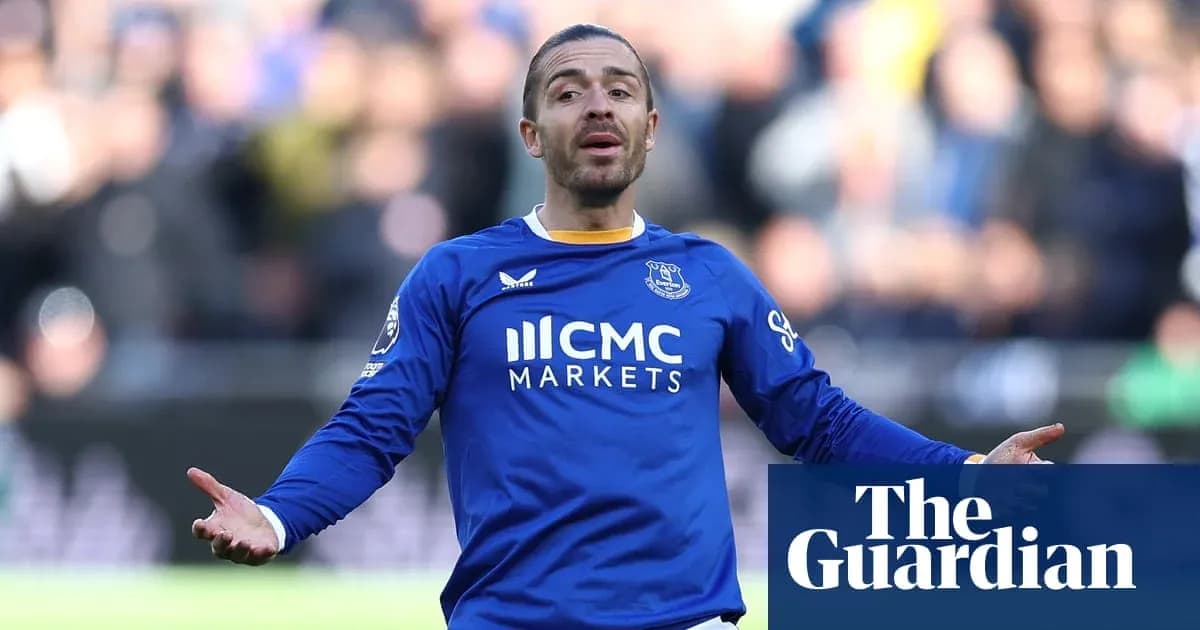
Three years ago in Istanbul, Jack Grealish started the biggest game in Manchester City’s history while Phil Foden, Julián Álvarez and Riyad Mahrez watched from the bench. He played all 90 minutes of a Champions League final and walked off a European champion because Pep Guardiola trusted him more than anyone else for that role.
Now, at 31, that trust feels like a distant memory.
From centre stage to the margins
The slide did not come overnight. Injuries bit, form wavered, and Grealish’s Premier League starts under Guardiola shrank to just 17 across the next two seasons. City, once willing to build a structure around his ability to draw fouls and dictate tempo, were ready to move him on in the summer of 2025.
Everton offered a way out. A loan, then another. A chance to play, to matter, to be the senior figure he is supposed to be with 39 England caps and a £100m price tag on his CV.
Six appearances into this season, that chance is already in danger.
Grealish was left out of the squad for Thursday’s Carabao Cup win over Newcastle after missing training on Monday. Everton did not hide behind vague language. There had been “a breach of club discipline”. It was public, pointed and deliberate.
For a player with his history, it also felt depressingly familiar.
The same old story
Grealish’s career has long run on a dual track: dazzling on the pitch, damaging off it. Breaking lockdown rules. A driving ban. Viral photos of him inebriated and out on the town. The image has stuck, however much he insists he understands the need for balance.
He has spoken openly about it. “People go: ‘He likes to go out, he likes to party,’ and I do,” he told Sky Sports last year. “I want to be able to live my life and enjoy myself but obviously there’s a time and a place to do that. Sometimes, I’ll be honest with you, I probably haven’t picked the right times.”
Guardiola tried to draw a line in 2021, dropping him for a match against Newcastle after he and Foden turned up for training in no fit state to work. The warning was clear. The lesson, it seems, only half learned.
Grealish knows his flaws. That is not the issue. The problem is what happens next, and what keeps happening again.
Everton’s gamble
When Everton first took him, it felt like a clever piece of business and a potential redemption story. By early December last season, he had scored winners against Crystal Palace and Bournemouth and put up six assists in 20 Premier League games. Not electric, but influential. Enough to suggest there was still a top-level player there if his body and focus held.
Then a foot injury in mid-January ended his season. Another stop-start campaign. Another year without reaching 30 league games – something he has not managed since 2019-20 at Aston Villa. For a player whose game relies on rhythm, that statistic should sting.
There were doubts at Everton about bringing him back this summer. The sale of Iliman Ndiaye to City turned those doubts into a calculation. They needed creativity and experience. Grealish could fill the gap. On paper, at least.
Enzo Maresca, who had him for pre-season at City, seemed ready to give him another shot at the Etihad. Grealish featured in the Community Shield and on the opening day against Bournemouth. The Italian clearly liked him as a character. “I still think that he’s a good boy, big heart,” Maresca said on Friday.
Affection, though, does not guarantee minutes. Or patience.
A talent running out of road
At his peak, Grealish is one of the most watchable footballers in the league. Socks rolled down, ball glued to his foot, defenders swiping at thin air or his shins. He wins free-kicks, creates chances, scores important goals and lifts a stadium in a heartbeat.
Those bursts have become too rare.
The next seven months will shape the rest of his career. At 31, he should be entering the phase where experience sharpens decision-making and extends his time at the top. Instead, his status is eroding. The label “£100m signing” and “treble winner” belongs to the past, not the present.
His City contract runs out at the end of the season. The incentive could not be clearer: prove he can still shine in the Premier League, prove he can drive Everton towards the cup success they crave, prove he is more than a memory of what he once was.
Right now, he has not done that. His career sits in limbo.
David Moyes was terse when asked about him on Thursday and gives little impression of a manager agitating to keep him beyond this loan. With a small squad to manage, losing a senior player for something avoidable is the kind of headache that tests a manager’s tolerance very quickly.
Loved by the crowd, questioned inside
Away from the pitch, Grealish remains hugely popular. In a game that increasingly keeps the public at arm’s length, he still stops for autographs, leans into the charity work, offers handshakes and selfies when others slip by with headphones on.
At Hill Dickinson Stadium he is mobbed on arrival and departure, and he rarely shrinks from it. He smiles, poses, talks, gives out the kind of warmth that makes supporters feel seen.
He pours energy into everyone else. The challenge now is whether he can direct some of that care towards himself.
“With me, I’m a big confidence player – I want to feel loved,” he once said.
The love he craves will not come from Moyes, or from any top-level manager, unless something fundamental changes. The clock on that change is ticking, loudly.





