Ireland's Ethical Dilemma in Upcoming Matches Against Israel
The squad list will land on Thursday, but this is no ordinary Ireland announcement. Normally, debate rages over form, fitness and the odd surprise inclusion. This time, the real scrutiny will fall on something far heavier: who is willing to play against Israel, and who is not.
Heimir Hallgrímsson will name his group for the upcoming fixtures, and on a purely football level it should be a moment of excitement. International caps still matter. For most professionals, pulling on that green shirt remains the pinnacle of a career. Yet the context around these games has twisted that pride into a moral test that should never have been dropped at the feet of individual players.
The Football Association of Ireland board has stepped back. By choosing to fulfil the fixtures, it has pushed the ethical burden downwards. Each player must now decide whether to take the field against a nation accused of genocide. That is an impossible ask. It is also a dereliction of leadership.
Sport does not float above politics. It never has. Stadiums, shirts, anthems, flags – all of it lives inside the real world. To insist that football can somehow stay untouched by a war being waged in full view is to close your eyes by choice.
The scale of Israel’s assault on Palestine, and the backing it receives from western powers, has led many to use the word genocide. Some point to legal processes still under way and argue that the charge is not yet proven in court. But legal judgments take years. Lives are being lost now. Those calling for a boycott argue that the evidence of a deliberate, sustained campaign of terror already meets the moral threshold of that word.
When institutions confront something of this magnitude, they are expected to lead. Genocide is not another line on a disciplinary code; it is the gravest of international crimes. Faced with that, the starting point should be simple: you do not play. You do not lend your badge, your anthem, your broadcast window to a state accused of such crimes while the horror continues.
Last November, the FAI board sounded like it understood that. It formally asked Uefa to ban Israel. The move drew praise. Here, finally, was an association prepared to put principle before points and prize money, to say that no team should be placed in this position.
That resolve did not last. Once Ireland were drawn to face Israel, the moral stance began to fray. The fixture list arrived, and with it, a retreat.
The FAI’s choice sits inside a broader pattern. The Irish Government’s long delay over the Occupied Territories Bill set a tone of hesitation and half-measures. Across sport, the picture is similar. The GAA has refused to cut ties with Allianz, despite criticism of the insurer’s links and accusations surrounding complicity in what protesters describe as genocide, accusations Allianz rejects. Lines that once looked clear have blurred under commercial and competitive pressure.
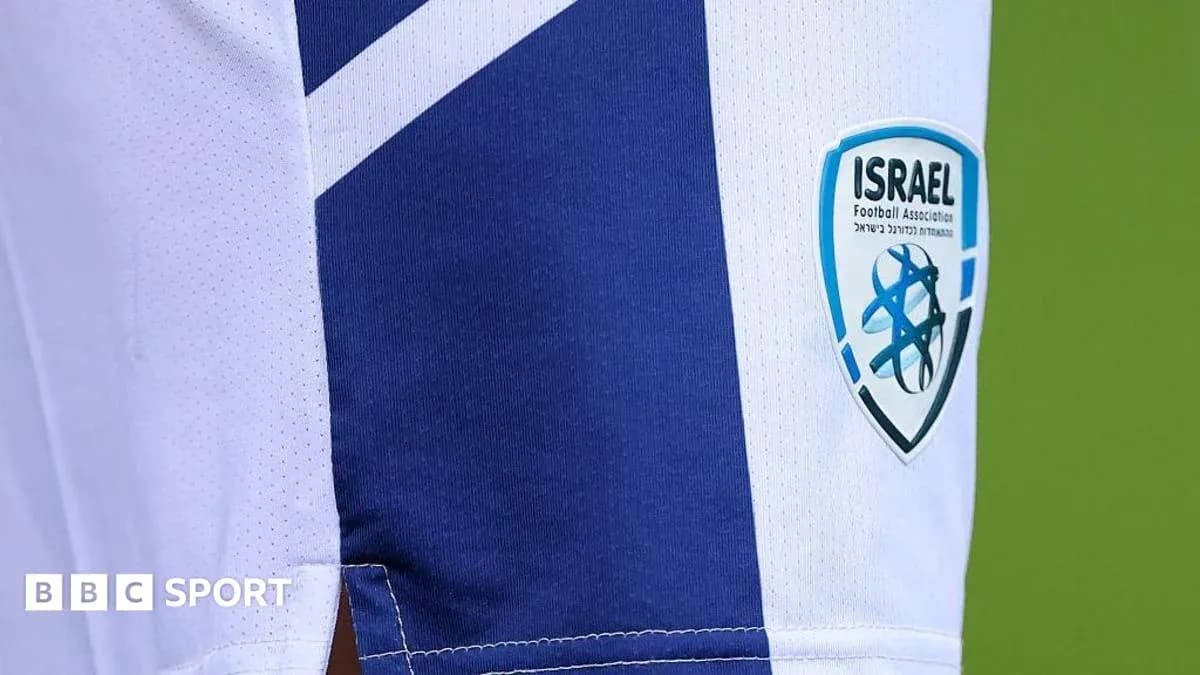
Yet it is football that offers Israel the most visible stage. When Ireland line up on September 27th and October 4th, the world will not remember the scoreline for long. The act of playing is the result that matters. Once the whistle blows, there is only one side that can truly claim victory, and it will not be Ireland.
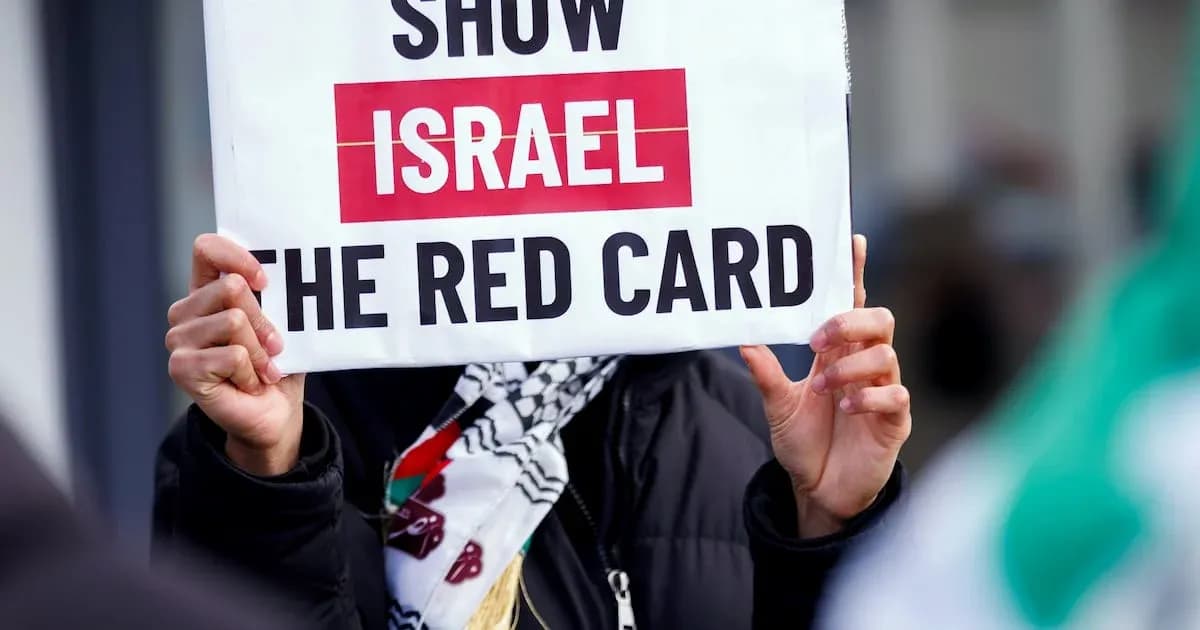
Protesters have marched, lobbied, written, and spoken. They have argued that no qualification campaign, no ranking points, no broadcast deal can justify normalising a game against a state accused of such brutality. They have not won. The board has held its ground. The fixtures stand.
Government has not filled the vacuum. It has failed repeatedly to match its rhetoric on human rights with decisive action on this conflict. That failure gives cover to sporting bodies desperate for a way to justify carrying on as usual. The FAI has taken full advantage of that cover.
When asked, Taoiseach Micheál Martin backed the games going ahead and chose to talk about football. He spoke of a “rejuvenation” in the Irish team, of a “journey ahead,” of how they had “been doing very well so far” and how the country wished them well. It was the language of form charts and optimism, dropped into a conversation about whether Ireland should share a pitch with a nation accused of genocide. The mismatch was jarring.
Now the countdown is almost done. Within days, Ireland will be asked to chase goals, points and prize money against Israel. The players will be told to focus on the game. Many will try. Some may not be able to. All of them will carry the weight of a decision that never should have been theirs.
The lesson is stark. When institutions step back from principle, they do not remove politics from sport. They simply pass the hardest choices to those with the least power to make them.
For Irish football, and for those who lead it, the question will linger long after the final whistle: what was the price of playing these games, and who will be asked to pay it next time?