Ipswich Town Faces Liverpool: Can They Overcome Old Trafford Setback?
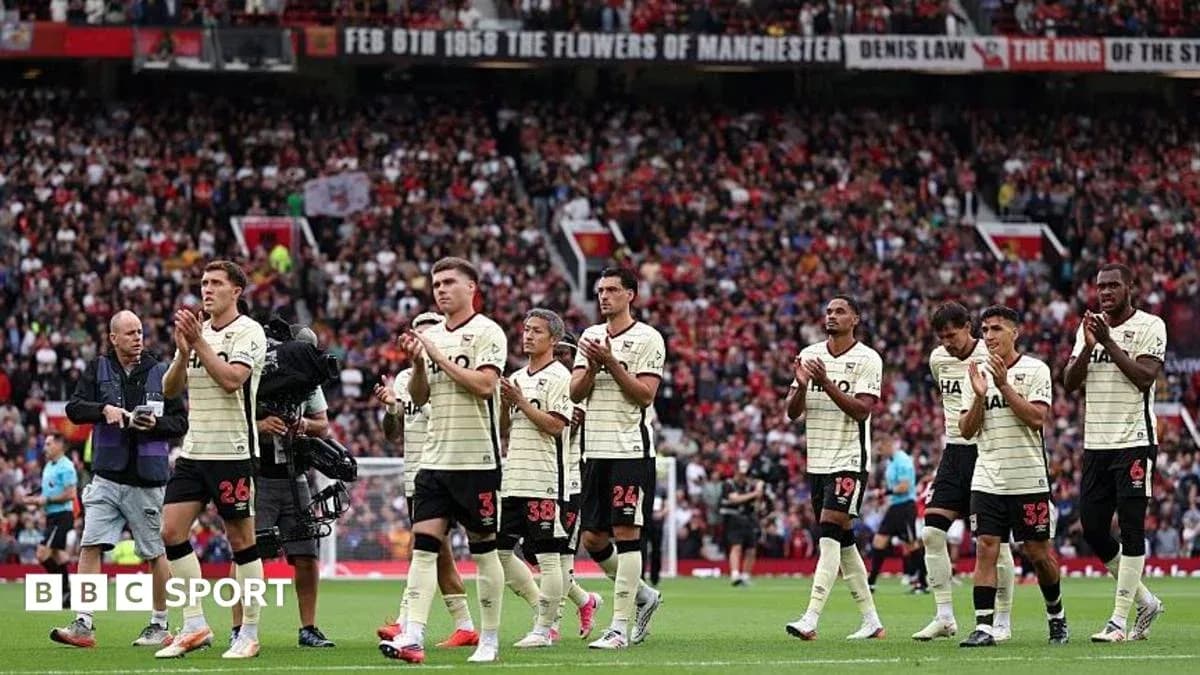
The Premier League does not wait for anyone. It punishes hesitation, exposes fragility and, as Ipswich Town discovered at Old Trafford, it can turn a promising afternoon into a brutal lesson in the space of an hour.
Just before half-time on Sunday, Ipswich were close to doubling a lead they fully merited against Manchester United. They were bold, organised, and playing with the kind of conviction that had the home crowd restless. Another precise move, another clean finish, and United might have been staring at a crisis.
An hour later, Ipswich had shipped five goals.
The turnaround was savage. The second United goal, highly controversial and arguably decisive, ripped at Ipswich’s composure. The structure that had looked so assured began to fray, and the game slipped away with a speed that will concern Gary O'Neil far more than the scoreline itself.
O'Neil was right to defend his team’s intent. This was no parked bus, no damage-limitation exercise. Ipswich tried to play, tried to attack, and for long spells they did both very well. They carried a threat. They had “great moments”, as the manager put it.
But he was just as accurate when he pinpointed emotional discipline as a glaring issue.
This is not a new problem. In their last stint in the top flight, Ipswich’s biggest failing was not technical or tactical; it was psychological. Too many games followed a familiar, damaging pattern: early control, a sense of momentum, then a setback… and collapse. Matches that could be managed became matches that ran away from them.
Old Trafford hinted at the same fault line. One blow, then another, and belief drained too quickly.
That is the habit Ipswich must break if they are to survive, never mind thrive, at this level. The season is young, the table still meaningless, but the warning signs have come early enough to be acted upon. When the temperature rises and decisions go against them, they cannot afford to retreat into frustration or self-pity. Not in this league. Not against this calibre of opponent.
The timing of the next fixture could hardly be more demanding—or more revealing.
Liverpool come to Portman Road on Friday night. Under the lights, with the cameras on and the noise rising from the stands, Ipswich will have the chance to show whether Old Trafford was a one-off wobble or the start of a worrying trend. Home support will matter. Portman Road can be a difficult place to visit when it snarls and roars in unison, and Ipswich will need every decibel.
They will also need their new faces to step into the glare.
Deadline-day signing Zian Flemming arrives with something tangible behind the promise: 11 Premier League goals last season for Burnley is not a headline figure at the very top of the division, but for a player in a struggling side it is a serious return. It suggests a forward who understands the rhythm of this league, who can find pockets of space and punish lapses when the pressure is on.
If Ipswich can feed him, he can hurt teams. That is where Julio Enciso and Abdul Fatawu come in. Both have settled quickly, both carry energy and invention, and both must now turn neat touches into end product. The service into Flemming, the speed of Ipswich’s counters, the accuracy of their final ball—those details will decide whether they can land punches on Liverpool rather than simply absorb them.
Because Liverpool will come swinging.
Ipswich are likely to be facing an attack built around players whose transfer fees each broke the nine-figure barrier. That kind of firepower does not just threaten; it intimidates. The challenge for Ipswich is not to shrink from it. Their decision-making in transition, their timing when they step out from their shape, will be critical. Pick the wrong moments to go forward and Liverpool will pounce on the spaces. Pick the right ones and Portman Road will feel the surge.
There could also be a fascinating subplot in midfield.
World Cup winner Exequiel Palacios is in line for a full debut, and if he starts, the narrative writes itself: Palacios against Argentina team-mate Alex Mac Allister, and across from his old Bayer Leverkusen colleague Florian Wirtz. These are players who know each other’s habits, strengths, and weaknesses. The duels in that central third—when to press, when to drop, when to take the extra touch—will shape the tempo of the night.
For Ipswich, the history books offer both encouragement and a reminder of the scale of the task. They have had their moments at Anfield this century, snatching results in one of English football’s most intimidating arenas. At Portman Road, though, it has been more than 40 years since they last beat Liverpool. That statistic hangs over the fixture, a measure of how rarely the stars have aligned.
Yet the first 40 minutes at Old Trafford showed what this Ipswich side can be when they play with clarity and courage. They pressed intelligently, used the ball well, and looked every inch a Premier League team. Replicate that level of control, maintain it beyond the first setback, and the drought against Liverpool does not have to continue.
The Premier League will not get any kinder. The question now is whether Ipswich can harden their edge, hold their nerve, and turn promising spells into defining nights. Friday will tell us a lot.