
Igli Tare on Rafael Leao's Decline at Milan and Gomez Deal Failure
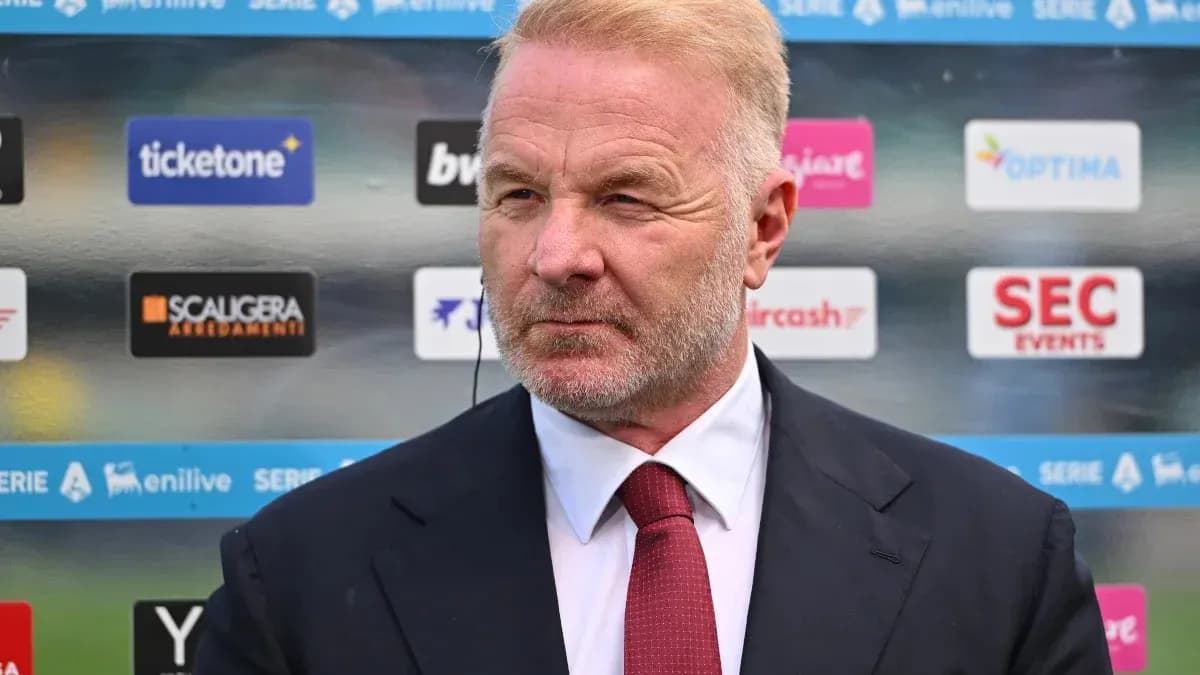
Igli Tare has painted a stark picture of Rafael Leao’s final months at Milan, admitting the Portuguese star’s priorities had shifted away from football long before his move to Galatasaray, and revealing how a late twist in Liverpool’s plans killed a deal for Joe Gomez.
Tare, appointed for the 2025-26 season and sacked in May along with Max Allegri, CEO Giorgio Furlani and Geoffrey Moncada after Milan missed out on the Champions League, spoke candidly on Sky Sport Italia’s “Calcio Unplugged” podcast about a year that unravelled on and off the pitch.
“Football was no longer a priority” for Leao
From the outside, Leao still looked like Milan’s crown jewel: a match-winner on his day, a marketing magnet, under contract until June 2028 and theoretically at the heart of any rebuild. Inside Milanello, Tare says the reality was more complicated.
“I had only known of Leao from the outside, but when I got the opportunity to get to know him in person, I thought he was an extraordinary guy,” Tare said. “I really cared for him very much as a person. However, he was the player we all expected more from. I think football was no longer a priority for him. That's how to read the situation.”
The club had already decided it would not match the wage demands required for a renewal. The relationship never turned toxic, but the direction of travel was clear. Milan were open to selling. Serious buyers never truly materialised.
Leao’s world had grown far beyond the pitch. He released a rap album last year, pushed deeper into music and fashion, and built a life that did not revolve solely around training sessions and matchdays.
“I think he was focused more on his life outside of football, so music, fashion, things like that,” Tare explained. “I never doubted his love for Milan, you could tell he suffered at not performing consistently, he had a lot of fitness problems, so always had the handbrake on.
“I tried to have more individual meetings with him than any other Milan player, and every time I got the sense he wanted to do more. But wanting to is sometimes not enough.”
The image of Leao trudging off at San Siro against Atalanta in May 2026 — shoulders slumped, face drained — now looks less like a bad night and more like the closing scene of an era. Talent was never the issue. Rhythm, health, and above all, focus, were.
Milan and Leao eventually found a way out with Galatasaray late in the transfer window, long after it had become obvious a clean break suited everyone. The club did not cash in early, though. That chance, Tare insists, never truly came.
“No concrete offers ever arrived for him,” he revealed. The market buzz around Leao never hardened into the kind of bid Milan needed. The separation came late, not because Milan hesitated, but because nobody stepped up in time.
Allegri’s late tactical switch and the Gomez near-miss
Leao’s slow-motion exit played out against a backdrop of chaos in the 2025 summer window. Milan had built a recruitment plan for one system. Allegri tore it up with five days to go.
“It was difficult for us because we decided to change system five days before the end of the transfer window,” Tare said. The move from a 4-3-3 to a three-man defence changed everything. Profiles, priorities, the type of defender required — all flipped at the worst possible moment.
“Going from a 4-3-3 to a three-man defence made it hard for us to find someone of that level in five days.”
The pressure finally told in the centre-back market. Milan thought they had their solution. First, they were beaten to Manuel Akanji, who chose Inter, helped by the fact Milan were out of the Champions League. Then came the blow that really stung.
“We were a bit unlucky, first because Manuel Akanji went to Inter as we weren't in the Champions League, then we had an agreement with Liverpool for Joe Gomez,” Tare said. The deal, from Milan’s side, was ready. The Premier League defender, experienced and versatile, looked tailor-made for Allegri’s new back three.
Then Crystal Palace and Liverpool failed to close Marc Guehi’s move. Everything collapsed in an instant.
“When Marc Guehi's move from Crystal Palace to Liverpool collapsed at the last minute, Liverpool pulled out,” Tare revealed. “We had been waiting only for that move for us to sign the paperwork.”
One domino refused to fall, and Milan’s entire defensive plan scattered. With the clock ticking and the risk of being left short at the back very real, Milan were forced into an emergency pivot.
“In order to avoid being without centre-backs, we signed Odogu at the last minute as a signing for the future.”
It was a move made out of necessity, not design. A long-term bet instead of the ready-made pillar Allegri had wanted.
For Tare, that summer window has become a case study in how quickly a project can veer off course: a star forward whose passion drifted towards music and fashion, a tactical reset with five days to spare, a Champions League miss that cost them Akanji, and a Gomez deal that died on someone else’s failed transfer.
Those decisions and near-misses now sit in the rear-view mirror. Their consequences, for Milan’s defence and for the legacy of Rafael Leao in red and black, will linger far longer.





