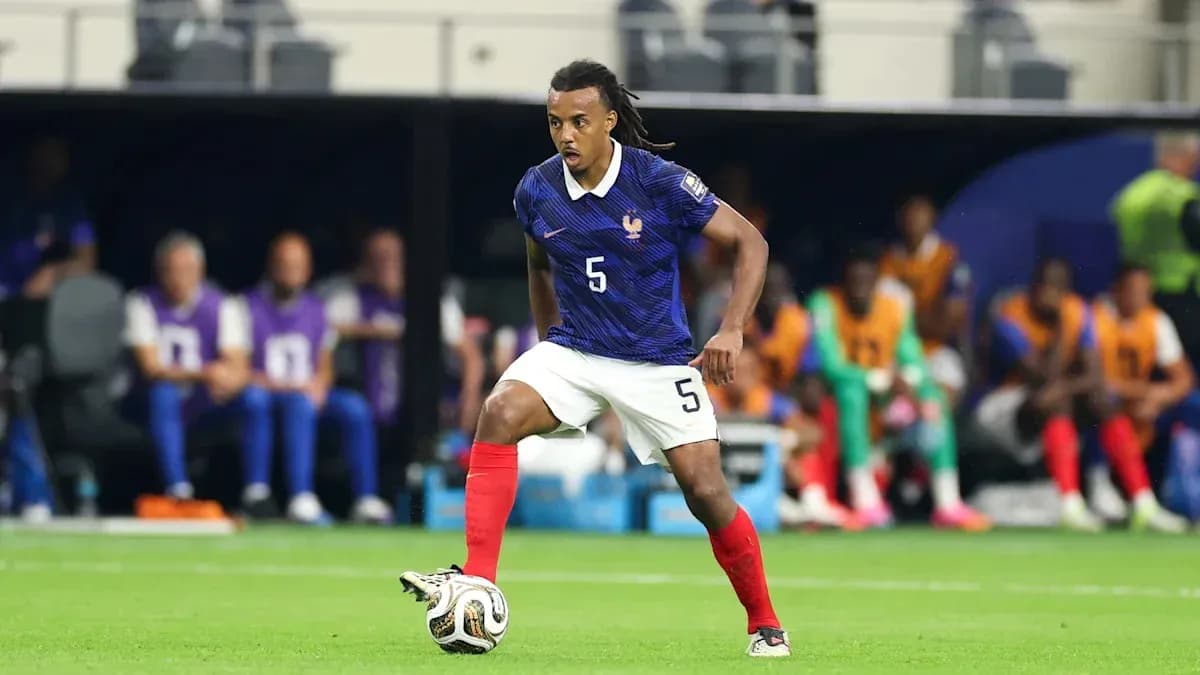
Ibrahim Maza: The Rising Star from Berlin to European Football
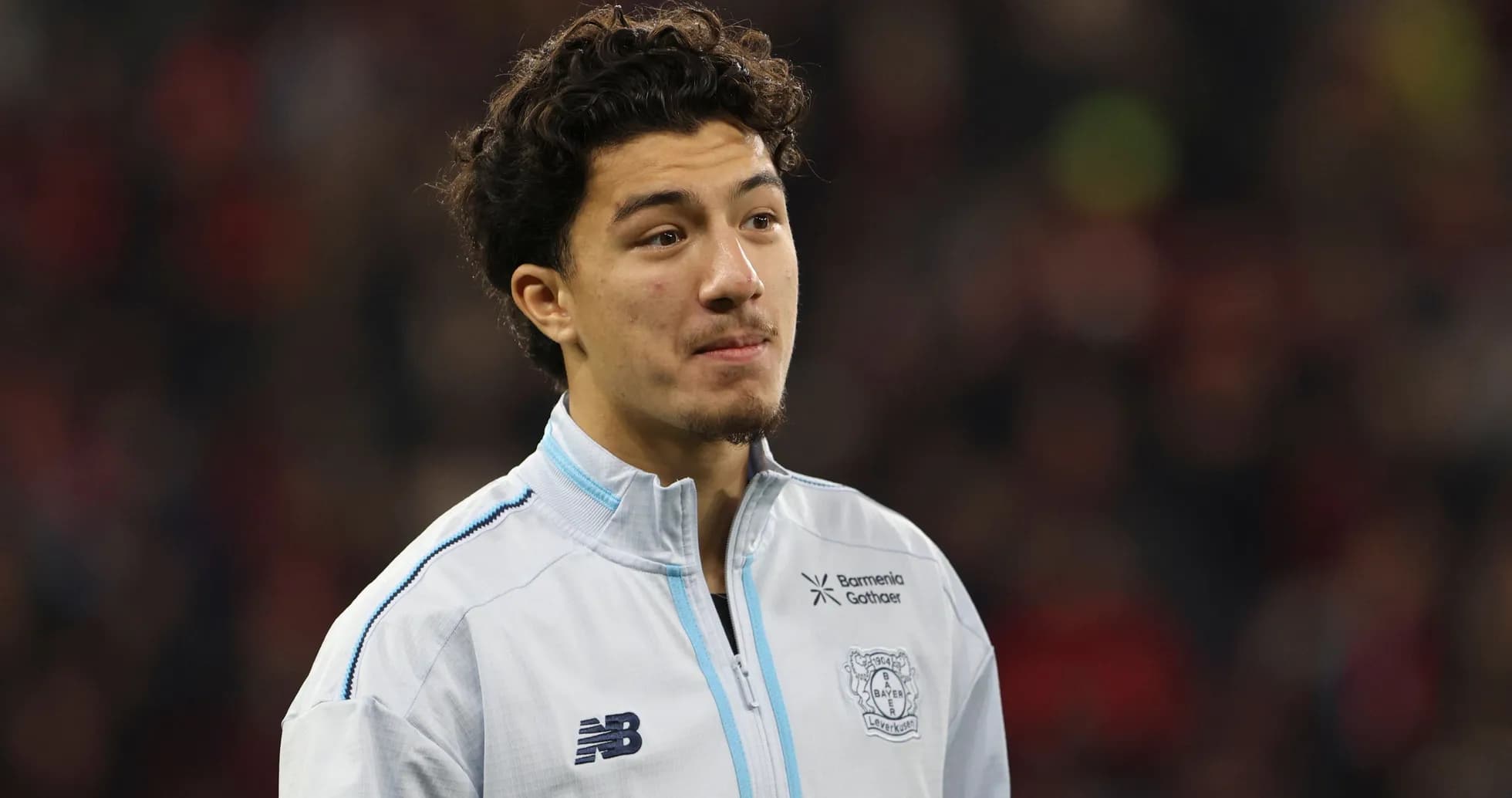
Ibrahim Maza talks about the ball the way some people talk about a childhood friend. "I feel good with the ball; we're good friends," he told RTL. "I try to be at one with the ball."
Watch him for five minutes and the words make perfect sense.
On Halloween against VfB Stuttgart, in a wild 4-2 defeat, the Bayer Leverkusen playmaker seemed to take on half a team at once. Tight spaces, no space, it didn’t matter. He twisted out of corners that weren’t there, rode challenges, kept the ball glued to his feet. DAZN commentator Jan Platte reached for the highest shelf of comparisons: "If Ronaldinho had been in the stadium, he would have come down and given him his crown. That was unbelievable."
It sounded over the top. It didn’t look it.
The artist who decided to work
The story starts far from the Champions League lights, on Berlin’s informal pitches, where touch is currency and embarrassment is public. Maza grew up there, fusing street flair with a stubborn streak that would end up defining him as much as any trick.
Technique alone doesn’t explain him. Nor does the elegance. He is a playmaker who tackles, a No. 10 who sprints back. "An artist who doesn't work isn't worth that much on the pitch," he says. It’s not a slogan. It’s a scar.
At Hertha BSC’s academy, that lesson was hammered home early. Pal Dardai, the club icon who coached him at under-16 level, saw the gift and the danger in equal measure. The message was blunt. According to Dardai, he told the teenager: if you carry on being this lazy, you won’t achieve anything at all.
Maza had joined Hertha at ten, but he wasn’t one of the golden boys. When he reached the under-17s, he didn’t walk into the team as a future star. "He didn't come into the under-17s as the sought-after top talent," recalled Oliver Reiß, now Manchester City’s under-21 coach, who had him in his second under-17 year.
Still, something caught the coaches’ eyes. Early that season, Reiß and assistant Oliver Schröder noticed the odd detail in training sessions, the touches that didn’t look like anyone else’s. "We noticed that he somehow did different things with the ball," Reiß said on the Denkfabrik Nachwuchsfußball podcast. Maza wasn’t yet a guaranteed starter for the biggest games, "but it was clear relatively early on that he had something special."
For a long stretch of that under-17 season, he watched from the bench. Bence Dardai, now at VfL Wolfsburg, and Noel Aseko, now at Eintracht Frankfurt, attracted the headlines. Maza slipped in behind them, waiting, sharpening. Only in the second half of the year did he become a regular.
Reiß, though, saw a trait that mattered even more than the stepovers. Resilience. He’d worked with dozens of gifted youngsters. When the game flowed, they looked destined for the top. When it didn’t, they vanished. Maza was different. "What we really liked about him was that he managed to combine being a good footballer with having that resilience," Reiß explained. Even on bad days, when others let "the game happen to them," Maza refused to drift. He fought back into matches that seemed to be slipping away.
That refusal to accept the script became his trademark.
From nearly-man to Hertha’s great hope
The turnaround came quickly. Under Reiß, Maza made what he later called his "biggest step forward." The coach moved up with him into the under-19s, and this time there was no slow burn. Maza became a regular immediately and, almost overnight, the boy who hadn’t been a headline prospect turned into Hertha’s much-hyped academy jewel.
Eighteen months after struggling for minutes in the under-17s, he was on a Bundesliga pitch. In April 2023, still only 17, he made his top-flight debut in a 0-2 defeat to Bayern Munich. It should have been the launchpad. Hertha’s relegation that season seemed to offer an open door in the 2. Bundesliga.
Instead, his knee gave way. A meniscus injury stalled everything, keeping him out when the club needed new blood most. Another test of that resilience he’d been praised for.
He came back. He stayed. Over the next year and a half he established himself in Hertha’s first team, a rare bright spark in a club fighting its own chaos. Then, in 2025, the call he had been waiting for arrived.
Leverkusen put €12 million on the table and asked a 19-year-old to help fill the void left by Florian Wirtz’s move to Liverpool FC. It was a brutal comparison for any teenager, a weight that could have crushed him. Maza didn’t pretend it didn’t exist; he just refused to let it rule him.
"I try never to let outside pressure get to me," he told RTL. "Whether people say I have to do this now or should have done this or that. I'm very aware myself of what I have to do on the pitch, and I already put a certain amount of pressure on myself, but it's still within healthy limits."
He sounded calm. He played even calmer.
Messi notices, Europe watches
The first months at Leverkusen were about adaptation: new teammates, new expectations, Champions League football. The learning curve was steep, but he climbed it quickly. By the end of his debut season, he had become one of Bayer’s key figures in both Bundesliga and Europe, dictating tempo, slipping passes between lines, arriving late in the box.
His performances in 2025/26 earned him a Kopa Trophy nomination, the award for the world’s best under-21 player presented at the Ballon d’Or ceremony. The list of voters matters there. So does the detail that Lionel Messi, holding a ballot in his hands, put Maza in his top three alongside Barcelona’s Lamine Yamal and Pau Cubarsi.
"To be chosen by Lionel Messi is, of course, a great honour," Maza said. "It gives you an extra dose of motivation when someone like Messi says you've got something."
The question came next: Ballon d’Or one day? "That has always been a dream of mine," he replied.
Dream or not, the numbers back up the ambition. Now in his second season at Leverkusen, Maza has become the heartbeat of Xabi Alonso’s midfield. In 14 appearances so far, he has already produced eight goal contributions – four goals, four assists – and looks less like a prospect and more like a finished product still improving.
Which raises the obvious issue. Can a player with Ballon d’Or aspirations stay at Leverkusen forever?
His contract runs until 2030, but the rumours have long since outgrown the Rhineland. For weeks, reports have linked him with a move worth tens of millions to one of Europe’s heavyweights, with Paris Saint-Germain at the front of the queue. The French champions are said to rate him as highly as Messi does.
So does Deniz Undav.
“Go to Paris, mate”
After that Halloween show against Stuttgart, Undav reportedly walked over and delivered a very different kind of scouting report. "Go to Paris, mate, I don't want to play against you any more!" the VfB and Germany striker called out, according to Bild. Later, speaking on Sky, he added: "In Maza, Leverkusen have an outstanding player. He opens up space and wins duels."
It was half compliment, half plea. Undav would clearly prefer to be on the same side. That can’t happen with Germany, even if Jürgen Klopp continues to call him up. Maza took another path.
He wore the DFB badge from under-18 to under-20 level, but just over two years ago he chose Algeria. Born in Berlin to an Algerian father and Vietnamese mother, he grew up in a home where three flags could have hung on the wall. Three national teams, three routes.
"I love all three countries and, in the end, made my decision for various reasons, those are private," he said earlier this year.
Emotion played its part: summers and family visits in Algeria, a different rhythm, a different sense of belonging. The football calculation was just as clear. Germany’s depth in his position is brutal. Florian Wirtz and Jamal Musiala are only two years older and already entrenched. Algeria, by contrast, offered him the chance to grow into a central figure quickly.
"I wanted to be able to play for a senior national team as early as possible and make as many appearances as possible for the national side as a professional," he told Bild. The plan was simple. It has worked perfectly.
“Mazadona” and the world stage
In October 2024, six weeks before his 19th birthday, Maza made his debut for Algeria. Since then he has collected 24 caps, not just as a squad player but as a pillar in midfield.
His breakthrough on the international stage came at the Africa Cup of Nations in Morocco around the turn of 2025 to 2026. Algeria leaned on him, and he responded, emerging as one of their standout performers. One Algerian outlet dubbed him "Mazadona" in a nod to Diego Maradona – a nickname that would be ridiculous for most, but feels like a wink of appreciation for the way he dribbles through traffic and carries a team up the pitch.
Last summer, he took the next step again, starting regularly at the World Cup. Algeria reached the round of 32 before Switzerland ended their run with a 2-0 win. The group stage, though, brought the kind of night every kid imagines: Messi, Argentina, the anthem, the handshake.
Argentina won 3-0. Messi scored a hat-trick. The gulf between the eight-time Ballon d’Or winner and the young pretender was obvious on the scoreboard. Yet when Messi later filled out his Kopa Trophy ballot, Maza’s name appeared. In a way, that said enough.
A crown still to be claimed
From Berlin’s cages to Hertha’s benches, from a meniscus injury to Leverkusen’s midfield, from the DFB youth ranks to "Mazadona" in Algeria, Ibrahim Maza has built a career on talent sharpened by defiance. He doesn’t just glide through games; he wrestles them back when they tilt away.
Now, with PSG circling and Europe paying attention, the next decision looms. Stay in Leverkusen and keep growing under familiar guidance, or step into the furnace of a superclub where the Ballon d’Or dream either accelerates or stalls?
Ronaldinho, in Jan Platte’s imagination, would have handed him a crown that night against Stuttgart. Messi has already given him something rarer: recognition. The rest of the story, the real coronation or the near-miss, will be written in the years to come – and it will depend on whether the artist in him can keep working as hard as the fighter always has.