
Heimir Hallgrímsson's Growth Mindset for Ireland Football
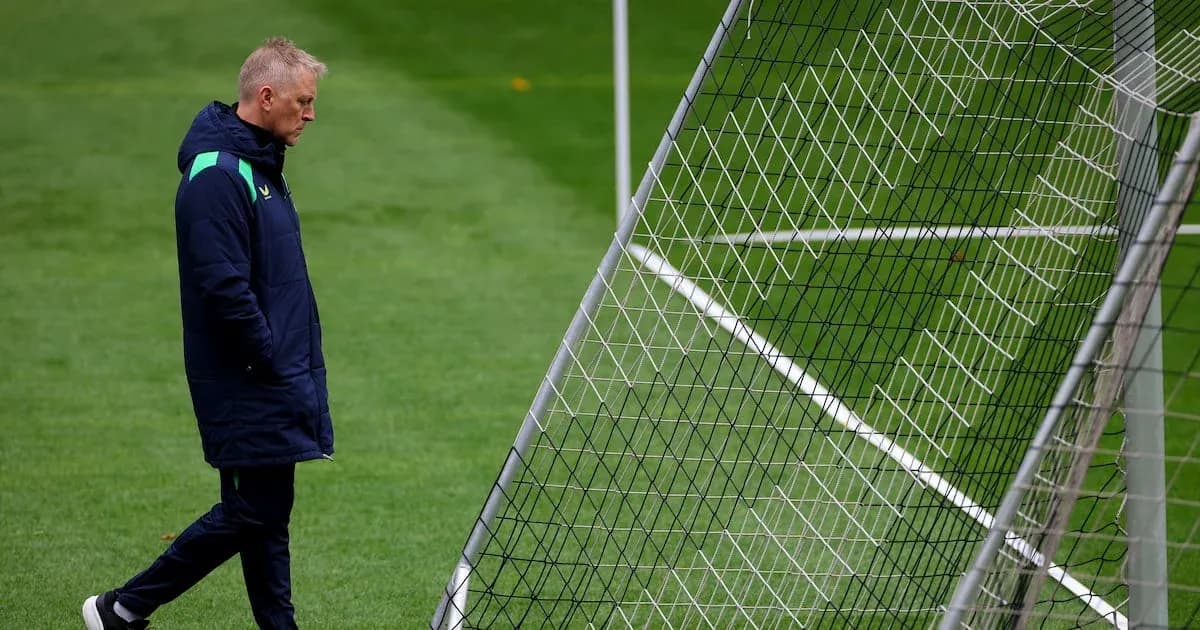
Heimir Hallgrímsson has spent most of his short Ireland reign being cast as the cool head in a country that prefers its football with a touch of melodrama. Logic in a land of lament. Data in a dressing room raised on destiny and doom.
The strain on that balance was savage around the Israel fixtures last month. Politics, logistics, emotion – it all piled in. Yet the Icelander walked out in Linz this week sounding much the same as he did on day one: rational, forensic, and determined to bend chaos into something useful.
A camp turned on its head
Hallgrímsson has decided this camp would not be a repeat of the last. He has asked every department around the Ireland set-up to change something – not for the sake of novelty, but to force everyone to think differently.
The players arrived a day later than usual. The meeting schedule has been torn up and rewritten. A new coach, Pete Shuttleworth, has been added to the staff. Even the branding around the team hotel has been shifted.
Nothing dramatic on its own. But taken together, it is a manager sending a clear message: the Israel ordeal belongs in the past, and the only acceptable direction now is forward.
The media operation has been reshaped as well. Fewer engagements. Long-standing embargoes, those sacred pillars of press-room ritual, have been scrapped. For journalists accustomed to treating “The Embargo” with a reverence that would shame ancient Aztecs, it is a small cultural revolution.
“We want to challenge everybody in the camp to think, ‘growth mindset’,” Hallgrímsson said. “We should always challenge ourselves to improve our working environment. These guys deserve that their environment is improving. That is how everyone should be: players, staff, coaches ... media.”
That last word carried a trace of something sharper. Where some of his predecessors have gone to war with the press, Hallgrímsson sounds less furious than quietly let down. The disappointment lingers like grit at the bottom of a cup of tea, stubborn and visible.
From fatalism to “win or learn”
What marks him out from many who came before is how openly he embraces the language of the “growth mindset”, the theory Carol Dweck popularised in the 1970s. Intelligence, she argued, is not fixed; it can be developed through effort, experience and, crucially, the willingness to confront failure and learn from it.
It slotted neatly into American ideas of equality and social mobility and has since seeped into almost every corner of Western high performance. Even Samuel Beckett’s bleak “Try again. Fail again. Fail better.” has been hauled from the theatre of despair and conscripted into the self-help industry as a motivational slogan.
Irish rugby got there long before Irish football. The national team became fluent in the jargon of “work-ons” and “learnings”, words as ugly as they are revealing. They signalled a culture that treated mistakes as raw material, not a verdict.
Football has rarely talked that way. It has preferred the comfort of fatalism: the sense that 1-1 is our natural state, that Ireland’s ceiling is to be “hard to beat”, that “we just don’t have the players”. Some former managers leaned on that line as both shield and excuse.
Hallgrímsson is trying to rip that script up. His version of Ireland’s motto, borrowed from Dara O’Shea, is blunt: “win or learn”. Nothing is final. Every defeat is data.
And he can point to evidence. Since the 5-0 hammering by England at Wembley, Ireland have grown some steel. They now compete honestly in every game. The defensive structure is tighter, counters are less lethal against them, and the alarming weakness at set pieces looked to have been addressed last month.
Hope, in his world, is not a mood. It is a method.
The 90-minute problem
Yet the flaws are obvious and recurring, and Austria will expose them again if Ireland do not grow up fast across the full 90 minutes.
This team has developed a nasty habit of drifting. Two-goal leads have been tossed away with a carelessness that borders on self-sabotage – Austria in Dublin, most painfully the Czech Republic away. Against Israel, the first halves carried promise; the second halves sagged. The away performance in Kosovo only looked respectable because the opening 45 minutes were so poor.
Those patterns are not quirks. They are tells. A side that cannot maintain its standards for a full game is not yet what its manager wants it to be.
Austria present a specific, stinging memory. The collapse in Dublin began with Liam Kitching lingering on the ball, Patrick Wimmer pouncing, and the first Austrian goal flowing from that moment of hesitation. It was exactly the kind of lapse a high-pressing team feasts on.
Ireland cannot afford a repeat. Austria may be depleted by injuries, but they are defending a three-year unbeaten home record and they know how to squeeze errors out of opponents. Even so, Ireland have every right to believe they can win if – and it is still a large if – they can finally deliver a complete 90-minute performance.
Between hope and helplessness
This is where the growth mindset cuts both ways. If every failure is a lesson, then every recurring failure is an accusation. At some point, you are not unlucky or cursed. You are complicit.
That is the dark appeal of the fixed mindset Ireland have flirted with for decades. In that world, shortcomings are pre-written. Fate picks the scoreline. You can rage at the gods, but you never have to look in the mirror.
Hallgrímsson is dragging this squad away from that comfortable helplessness. He is changing arrival times, meeting plans, backroom staff, hotel décor and media rules not because those things win matches on their own, but because they send a message: nothing is untouchable, nothing is beyond improvement.
Austria away will show how much of that message has sunk in. Is this Ireland team ready to “win or learn” – or are they still clinging, deep down, to the old story that none of this is really their fault?





