Harry Kane's Challenge to Lewandowski's 41-Goal Record at Bayern Munich
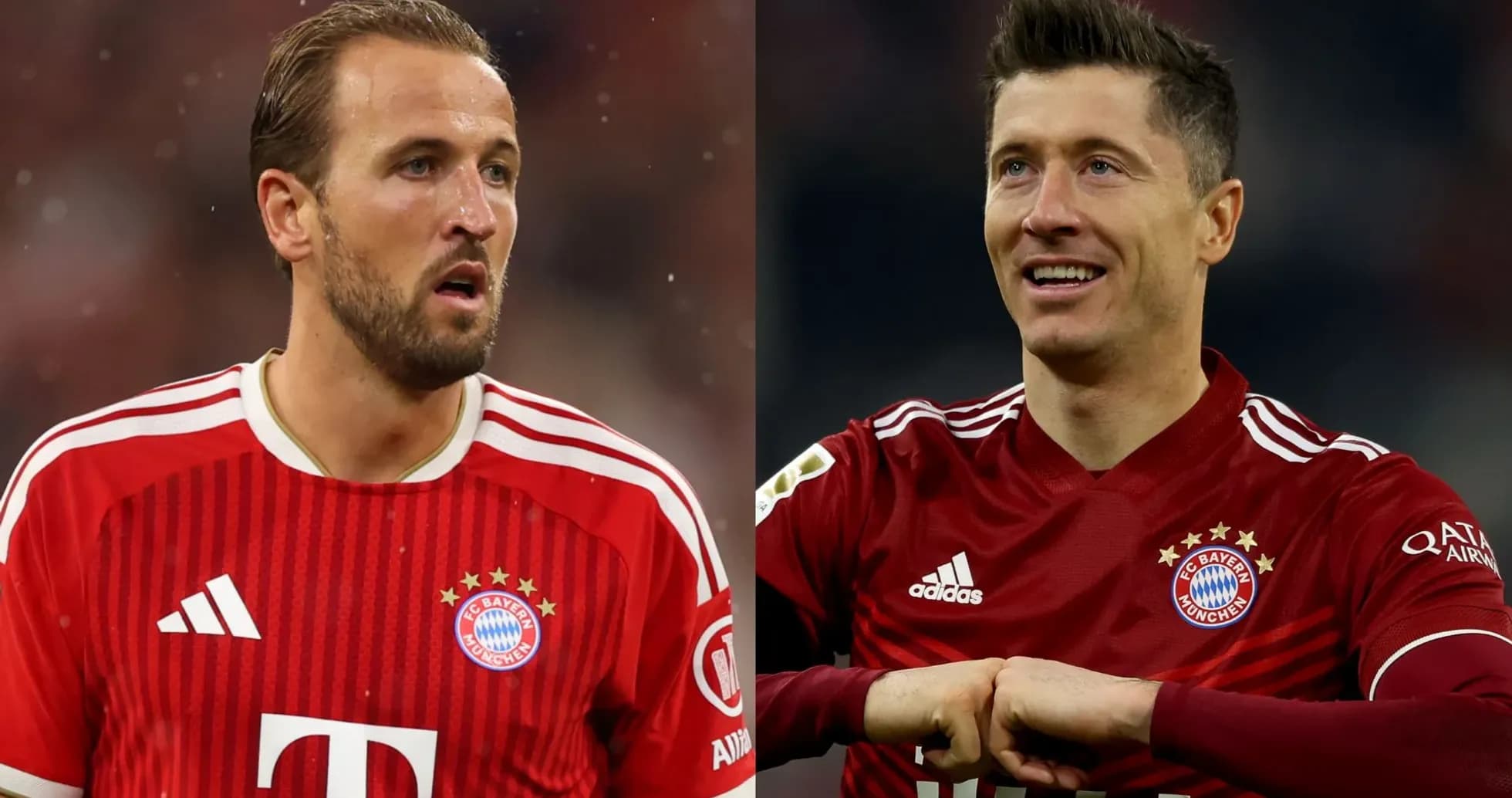
At Bayern Munich, every modern striker still lives in the shadow of one number: 41.
Robert Lewandowski’s 41-goal haul in the 2020-21 Bundesliga season ripped up what many believed to be an untouchable record, eclipsing Gerd Müller by a single strike and rewriting the standards for a centre-forward in Germany. It was the kind of season that usually belongs to myth rather than memory.
Harry Kane has come as close as anyone to challenging that level of devastation, yet even he has discovered the brutal height of that bar.
The England captain has been prolific since landing in Bavaria. One hundred and forty-six goals in 149 appearances for Bayern is a return that would anchor most clubs’ histories, never mind a chapter. The so-called trophy curse that stalked him at Tottenham has been buried under silverware, and he sits just two goals shy of the Bundesliga’s 100-goal mark. Three straight Golden Boots since his move underline how ruthlessly he has adapted.
And still, Lewandowski’s 41 stands apart.
Dietmar Hamann, speaking to GOAL in association with ToonieBet, did not dress it up. For him, the numbers tell their own story.
“That record stood for 40 or 50 years and everybody said it's not possible to do it,” Hamann said. “But then Lewandowski found another gear and beat Gerd Muller by one.”
Kane’s own surges have threatened to make a mockery of that record. There was that blistering first half of a campaign when he raced to around 17, 18, 19 league goals before Christmas and whispers started: could he actually get there?
Hamann never bought into the frenzy.
“I said this, I think it was Christmas eight months ago, nine months ago, when people said, ‘oh, is he able because he scored I think 17, 18, 19 goals in the first half of the season’,” he recalled. “And I said, I think it all depends on the Champions League.”
That is the crux. The Polish great hit 41 in a season when every league game became a personal hunt. For Kane, the landscape looks different. Bayern expect to go deep in Europe every year. That changes everything.
“If they go deep in the Champions League, there will be one, two, three games where he won't play or maybe come on or doesn't even play at all,” Hamann explained. “And I think if you want to beat it, you probably have to play at least 30, probably 32, maybe all the games.”
The calendar now bites harder. Extra Champions League fixtures, more intensity, an older body to manage. Kane is 33, still evergreen but not immune.
“With the extra games in the Champions League now, he's a year older now,” Hamann said. “If they get knocked out in the group stage, which is not going to happen, I think he probably stands a chance to do it. But they won't because he'll probably go deep in the Champions League again.”
The irony is obvious: Bayern’s European ambition, and Kane’s central role in it, likely denies him the volume of Bundesliga minutes Lewandowski devoured during that record year. When the league is all but wrapped up and a Champions League semi-final looms, the risk-reward equation shifts.
“And I think that counts against him when it comes to the record,” Hamann argued. “Because when you play a league game where you've probably already won the league in between two Champions League semi-finals or quarter-finals, I think the chances are very high that he won't play. They don't risk him and that doesn't help him.”
So, can Kane do it?
“So is he capable of doing it? Yes, of course he is,” Hamann concluded. “I don't think he will do that.”
The individual-season record may remain out of reach, but the long game tells a different story. Kane is expected to sign a new contract in Munich, having entered the final year of his current deal. If he commits for a few more seasons, another Lewandowski benchmark comes into focus: five consecutive Golden Boots.
Kane already has three. The path is clear.
Asked whether the England captain is on course to match that run if his body holds up, Hamann did not hesitate.
“Absolutely,” he said. “And obviously he's an ambassador. He's great. He's just a very likeable character. And obviously they all appreciate the people, not only the Bayern Munich fans, but they all appreciate having the England captain playing in the Bundesliga.”
Kane’s impact stretches beyond the penalty area. He has given the league a global focal point, and by all accounts, he has settled into the Bavarian rhythm with ease.
“I think he's very settled there,” Hamann noted. “They talk about a new contract. I think his family and his missus are very happy and settled in Munich. So that's good to hear.”
On the pitch, the expectations are now almost absurd. For Hamann, Kane begins every season with a built-in guarantee.
“If he stays fit, then he probably starts with 20 or 25 goals,” he said. “Every goal he passes is probably a bonus. But I can't see a scenario where he doesn't score 20, 25 goals, which most years wins him that big Golden Boot.”
That is the standard: 20 to 25 league goals as a baseline, everything beyond that treated as decoration. It is a level of reliability few strikers in history have reached.
“He’ll win it again if he stays fit,” Hamann added. “And he's just a remarkable finisher. Obviously, we all talk about his penalty-taking skills. But his finishing with both feet is just... I'm not sure there's been a finisher in the history of football who's more clinical when it comes to chances in front of goal.”
Lewandowski carved out a record that may stand untouched for another generation. Kane, with his own brand of relentless efficiency, is building something different in Munich: a reign of sustained dominance, Golden Boot after Golden Boot.
One season of perfection versus a dynasty of goals. In Bavaria, the argument is only just beginning.