Harry Kane and the Ballon d'Or: A Historical Perspective
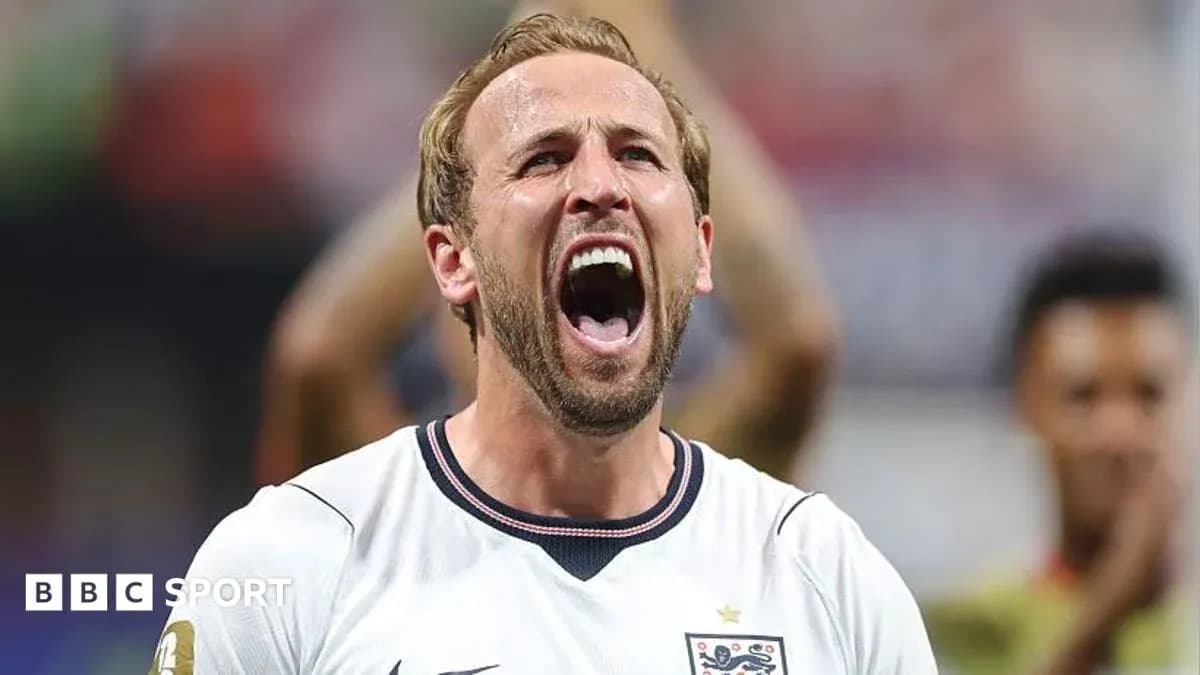
Harry Kane stands on the brink of the Ballon d'Or shortlist as the bookmakers' clear favourite, his season carved out in goals for club and country. On paper, few can touch him.
History rarely cares about paper.
Since 1956, when Sir Stanley Matthews took home the very first Ballon d'Or, the game's biggest individual prize has almost always bent towards the biggest stages. World Cups. European Championships. Champions League nights that define eras. The award has never been just about who scored the most. It has been about who owned the moments the world was watching.
World Cup years, in particular, leave a trail you can almost trace with a ruler.
A prize shaped by tournaments
When France Football journalist Gabriel Hanot created the Ballon d'Or, it was a European-only honour, voted for by journalists and reserved for European players until 1995. That restriction disguised a truth the magazine later chose to confront.
In 2016, to mark the award's 60th anniversary, France Football went back through every pre-1995 edition and asked a simple question: if everyone had always been eligible, who really would have won?
The answers only reinforced how decisive the World Cup has been.
Raymond Kopa was the first Ballon d'Or winner in a World Cup year, recognised in 1958 after leading France to the semi-finals. Yet France Football’s retrospective verdict was blunt: Pele, who inspired Brazil to their first World Cup title at just 17, would have taken it.
Four years later, Josef Masopust officially lifted the Ballon d'Or after captaining Czechoslovakia to the 1962 World Cup final. Again, the review pointed elsewhere. Garrincha, the genius who drove Brazil to back-to-back World Cups, was judged the standout.
The pattern hardened in 1970. Pele, who carried Brazil to a third world crown, was again deemed the rightful winner in hindsight. From there, the link between World Cup glory and the Ballon d'Or became almost ritual.
Bobby Charlton in 1966. Paolo Rossi in 1982. Lothar Matthaus in 1990. Zinedine Zidane in 1998. Ronaldo in 2002. Fabio Cannavaro in 2006. All of them world champions, all of them Ballon d'Or winners.
Even the exceptions tell a familiar story. Johan Cruyff in 1974 and Luka Modric in 2018 both drove their nations to World Cup finals without lifting the trophy. Deep runs still mattered. Being the face of a tournament still counted.
France Football’s retrospective work delivered a clear conclusion: had the award always been open to all nationalities, every South American World Cup-winning team between 1958 and 1994 would have produced a Ballon d'Or winner. The World Cup has not just influenced the vote; it has often dictated it.
When greatness defies the script
World Cup success, though, has never been a hard rule.
Kevin Keegan claimed the 1978 Ballon d'Or even though England did not qualify for that year’s World Cup. Once again, the retrospective lens shifted the spotlight. France Football later argued that Mario Kempes, top scorer and talisman as Argentina lifted the trophy on home soil, would have been the deserving winner.
The same logic applied to Diego Maradona in 1986 and Romario in 1994. Both dominated World Cups their countries won. Both would almost certainly have taken the Ballon d'Or had they been eligible.
As the modern era arrived, the World Cup’s grip loosened slightly, but another trend took over. Winning something big – Champions League, Euros, Copa America – became close to mandatory.
Only four of the last 19 Ballon d'Or winners failed to lift one of those major trophies in the year they were crowned. That short list says a lot about the two men who defined an era.
Lionel Messi won in 2010, 2012 and 2019 without a major international or continental title that year, his numbers and influence so outrageous that voters ignored the usual checklist. Cristiano Ronaldo did the same in 2013, when Portugal did not make it beyond the World Cup play-offs, but his season with Real Madrid forced itself onto the ballot.
Those wins underline just how freakish their dominance had to be. Even then, some campaigns that seemed tailor-made for the trophy fell short.
Wesley Sneijder’s treble with Inter Milan and run to the 2010 World Cup final. Franck Ribery’s central role in Bayern Munich’s 2013 treble. Mohamed Salah’s record-breaking 2017-18 season as he tore through Premier League defences and carried Liverpool to a Champions League final. All of them looked like Ballon d'Or seasons. None of them ended with the golden ball.
Narratives, not numbers alone, decided the vote.
Kane, Rodri and the weight of history
That is the backdrop Harry Kane walks into.
He arrives with one of the most prolific goalscoring seasons of the modern era behind him, the bookmakers' favourite but not the historical favourite. The question is brutally simple: can sheer volume and consistency of goals outweigh the gravitational pull of football’s biggest prizes?
Rodri stands as his most serious obstacle. The midfielder, already a former Ballon d'Or winner, anchored Spain to a second World Cup title and took home the Golden Ball as the tournament’s best player. Across the competition he looked like the game’s metronome and its shield, dictating tempo, closing space, and giving Spain the platform to dominate.
Lamine Yamal, still a teenager, added a World Cup winner’s medal to a season in which he helped Barcelona reclaim La Liga. Pau Cubarsi, another of Barca’s prodigies, walked away with the Fifa Young Player Award after a string of standout displays on the biggest stage.
Then come the familiar giants.
Kylian Mbappe finished as the World Cup’s top scorer with 10 goals and also claimed the Champions League Golden Boot and La Liga’s top scorer prize. He did all that in a year when France fell short of the World Cup final and Real Madrid ended the season without a major trophy. The personal numbers scream Ballon d'Or, the team honours do not.
Messi, at 39, captained Argentina to a second successive World Cup final and scored eight goals at the tournament. His presence in any Ballon d'Or discussion is now almost automatic, his legacy colouring every vote.
Somewhere in that crowded field stands Kane, a striker who has never finished higher than 10th in the Ballon d'Or standings. This time he arrives as the man to beat, at least in the markets. History, though, lines up against him.
An Englishman against the tide
Should Kane win, he would join one of English football’s most exclusive clubs. Only four Englishmen have ever lifted the Ballon d'Or: Matthews, Charlton, Keegan and Michael Owen. No one from England has done it since Owen in 2001.
He would also break new ground for his club game. No player representing a Bundesliga side has won the award since Matthias Sammer in 1996. For a league often overshadowed by the financial might and global reach of the Premier League and La Liga, that would be a statement.
The mechanics of the vote are clear. Once the shortlist lands, an international jury of specialised journalists – one representative from each of the men’s top 100 footballing nations – will cast their ballots. They will weigh goals against trophies, dominance over a season against dominance in a month that changed everything.
On one side, Kane’s relentless finishing, his leadership, the sense that he has elevated himself into a different bracket. On the other, Rodri’s World Cup, Yamal’s and Cubarsi’s rise, Mbappe’s scoring avalanche, Messi’s enduring pull.
History says the odds lean towards the player with the medals.
Kane’s season says this might be the year someone bends that rule.
Now the jury must decide: does one of the most devastating goalscoring campaigns of this era finally trump football’s biggest prizes – and is that enough to write Harry Kane’s name into Ballon d'Or history alongside the game’s immortals?