
Hansi Flick's Selection Dilemma: Right-Back, Midfield, and Left Wing
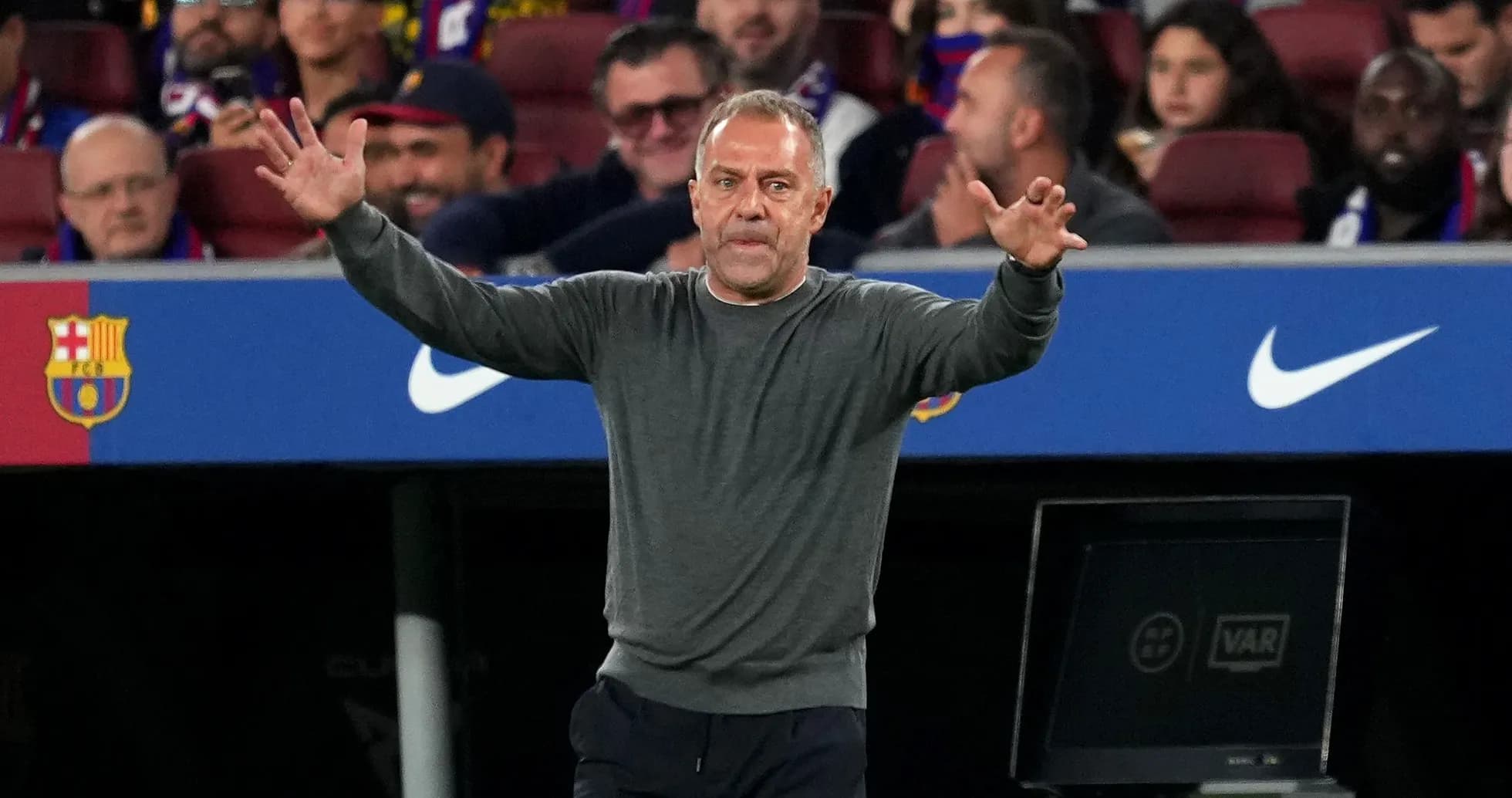
Hansi Flick stands on the touchline with a familiar problem and a very modern headache. The system is clear, the ideas are fixed – but the names on the teamsheet are anything but.
Right-back: Fariñas’ form vs Flick’s faith
Brian Fariñas has done everything a coach could ask for, and then a little more. Out of position, under pressure, and with no margin for error, he has been immaculate. Alavés first, Aston Villa next – two games, two statements. He didn’t just cope at right-back. He owned it.
Now comes Atlético. Now comes Álex Baena.
Baena is exactly the kind of player who tests a full-back’s concentration and legs. He drifts, he darts, he never stops asking questions. Track him inside and he’ll spin outside. Show him the line and he’ll cut in on the blind side. Whoever starts on that flank will spend 90 minutes in a running exam.
And that’s before you factor in Diego Simeone’s taste for raw pace out wide. If Atlético lean into that, Flick may be forced to think less about positioning and more about pure speed on that side. You can’t let a footrace become a mismatch at this level.
This is where Eric García comes back into the conversation. Flick trusts him completely. That trust is deep, built over time, and it doesn’t evaporate because of a muscle injury and four missed matches. If the medical staff clear García and he looks sharp enough in training, his chances of walking straight back into the XI are high, even if Fariñas has done nothing wrong at all.
Merit says Fariñas. Hierarchy and faith say García. Flick has often sided with merit, but this decision cuts right to the spine of how he wants his defence to feel in a game of this magnitude.
Jules Koundé, once an automatic pick in these debates, is barely in this one. The ankle sprain still lingers, his influence has faded in recent weeks, and he looks a long way from being a real option to start. Right now, this is a two-man fight.
Whoever wins it will not only shadow Baena. He’ll also have to lock in on Ademola Lookman, still short of last season’s devastating peak but permanently one moment away from catching fire again. One lapse, one mistimed step, and last year’s Lookman can reappear without warning.
The Rodri gap and the De Jong dilemma
If the right-back slot is a tactical puzzle, midfield is an emotional one.
Rodri’s injury has ripped a familiar anchor out of Flick’s side just as Frenkie de Jong finally looks ready to play a full part again. Flick has leaned on the Dutchman whenever the stakes rise. Big nights, difficult stadiums, complicated ties – De Jong is usually there from the first whistle.
The obvious solution on paper is Marc Bernal. He came on for Rodri at half-time in the 3–0 demolition of Aston Villa and looked completely at ease, sliding into the rhythm of the game without fuss. Flick has turned to him before in key moments too, including against Paris Saint-Germain when Rodri was given a rest. Bernal is the logical, straight-line choice: like-for-like, no major tactical surgery required.
But De Jong changes the texture of a midfield. Flick knows it. He has started him in some of the toughest matches, even if it has meant shifting his role. Against Alavés, De Jong dropped back to centre-back to give Gerard Martín a breather. In the Champions League, he began on the bench, only to be thrown on for the final 20 minutes in Pedri’s place when control and calm were needed.
That habit – trusting De Jong when the difficulty level spikes – could weigh heavily now. Does Flick stick with the continuity of Bernal, the man already blooded in Rodri’s role, or does he lean back on his old reflex and build the midfield around De Jong’s brain and bravery?
The decision will shape not just the balance of the side, but the tempo of the entire match.
The left wing: Gordon rising, Adeyemi fading
Up front, two positions pick themselves. Lamine Yamal is non-negotiable on the right. He stretches the pitch, scares full-backs, and has grown into a central piece of Flick’s attacking plan. Raphinha through the middle gives intensity, pressing, and direct running.
The uncertainty lies on the left. And right now, the arrow is pointing towards Anthony Gordon.
Flick has already shown his hand in the biggest fixtures. When the lights are brightest, he tends to turn to Gordon. Both clashes with Paris Saint-Germain? Gordon. The Clasico? Gordon. Galatasaray away, in that fierce Istanbul cauldron? Gordon again. Only at La Cartuja did Flick break the pattern and go with the German instead.
Gordon brings aggression without the ball and purpose with it. He presses, he chases, he forces defenders to think twice about every touch. In matches where the margins are thin, those details matter.
Karim Adeyemi, by contrast, feels stuck in neutral. No goal, no decisive assist since 13 October, when he rounded off the 4–1 win at Galatasaray’s fortress. That was supposed to be a launchpad. It has turned into a timestamp.
Form dictates selection in Flick’s world. History shows he rarely blinks when a big call has to be made. Drop an out-of-form forward for a winger who runs himself into the ground? He’s done it before. He’ll do it again.
So the picture before Atlético is clear and complicated all at once: a right-back slot defined by form versus trust, a midfield stripped of Rodri but with De Jong circling, and a left wing where Gordon’s rise is squeezing Adeyemi’s margin for error.
The names Flick writes down now will say a lot about how he wants this Barcelona side to live these heavyweight nights – through loyalty to his lieutenants, or through the ruthless logic of current form.





