Haaland's Controversial Goal Sparks VAR Debate at Old Trafford
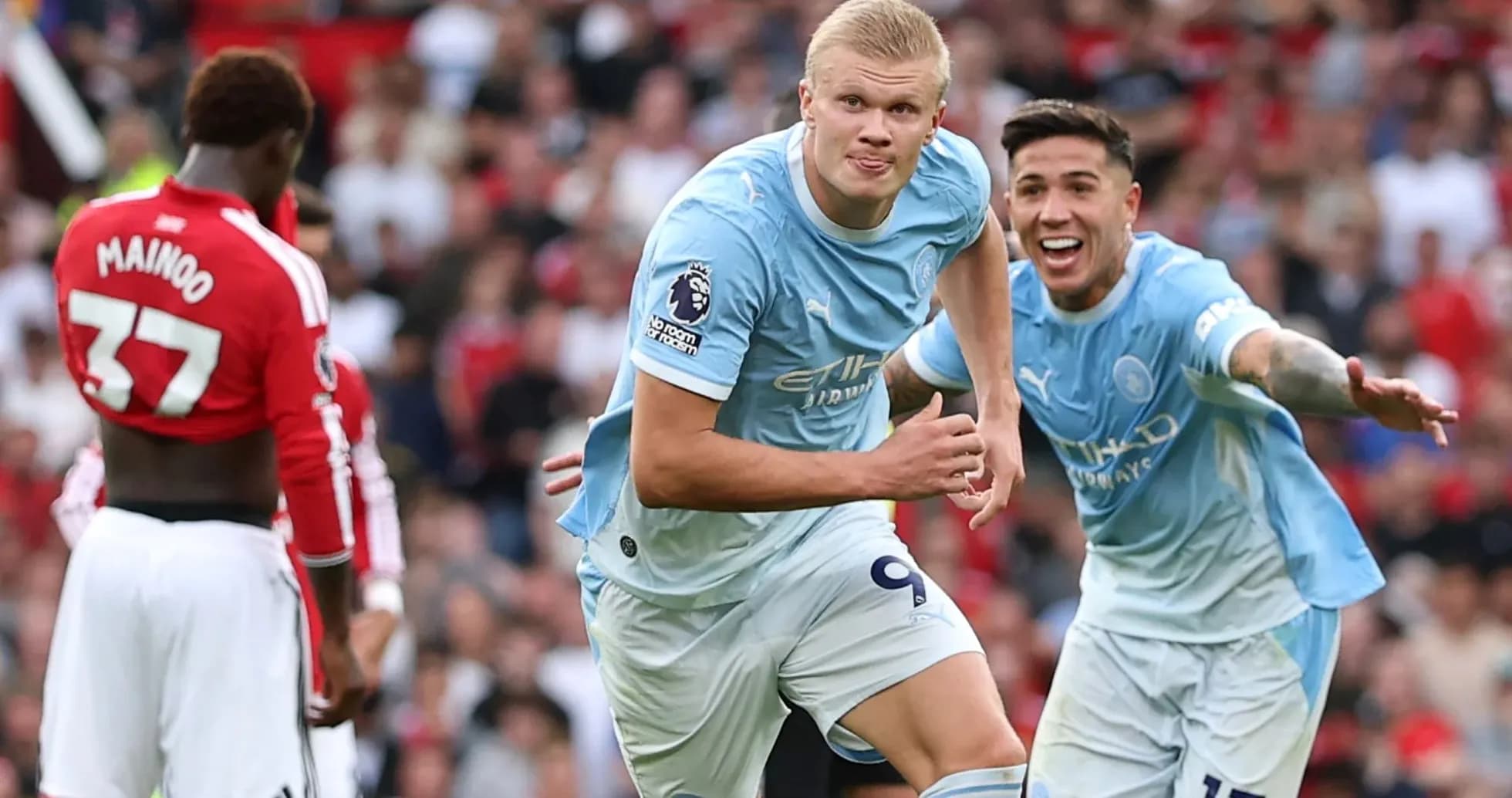
Erling Haaland’s winner will live a long time in the memory at Old Trafford – and not just for the ruthlessness of the finish.
On the hour, the Norwegian lashed the ball into the roof of the net from a tight angle, wheeling away as he has done so often in Manchester City colours. The flag went up, United breathed again, and for a few seconds the stadium exhaled.
Then came the familiar pause. Lines drawn. Angles checked. The kind of silence that now stalks every major decision in the modern game. When it cleared, the goal stood. City led. United seethed.
A boot, a ghost, and a blind spot
The replays told a tangled story. Haaland, City’s No.9, had been played onside by the boot of Patrick Dorgu, the United full-back stretching to cut out a low cross fizzed across the face of goal. The defender’s touch only helped the ball into a lethal area. Haaland did what Haaland does.
But the controversy did not centre on the striker. It centred on Enzo Fernandez.
The World Cup winner had never got himself back onside. He stood as City’s furthest man forward, six yards out, and as the ball flashed across him he launched himself head-first, trying to make contact. He missed it, but only just.
Lisandro Martinez saw the danger and moved towards Fernandez, drawn to the midfielder’s desperate lunge rather than the lurking Haaland ghosting in behind. That split-second decision – defender to attacker, ball to body – became the heart of the argument: did Fernandez’s clear attempt to play the ball interfere with play?
The VAR team decided it did not. The goal stood. Old Trafford erupted, this time in fury.
“It absolutely beggars belief”
On commentary duty for Sky Sports, United great Gary Neville did not hold back. After watching the angles, he suggested an apology would follow, calling it a huge mistake in one of the showpiece fixtures of the season.
Former England striker Michael Owen, now a prominent voice on officiating through his work with ‘Match Officials Mic’d Up’ alongside referees chief Howard Webb, had already spent time inside the VAR hub. He knows the chaos of the screens and the speed of the calls. He also knows when something is wrong.
“I've sat in the VAR hub and gone through lots of decisions and it isn't easy. I mean it's 10 times harder than people think,” he told GOAL. Then he cut to the point.
“This was as straightforward as it gets really. I simply don't know how they can come to this decision.”
Owen revealed that the assistant had initially flagged Haaland offside. That, he believes, framed everything that followed.
“So he gave offside for Haaland, I know that for a fact. So that can only have distorted their view in terms of they think, ‘right well we've got to check for Haaland, let's draw the lines, oh my word he's onside’.”
The real issue, in his eyes, sat six yards out in red.
“But how they can't check, or if they do check, how they can't pull it up for an offside from Fernandez – he clearly makes a movement towards the ball. What movement is more obvious than a diving header! It's not a case of has he tried to touch that or not? He's flung himself for a diving header. It absolutely beggars belief. It doesn't get any more straightforward in my eyes.”
Carrick’s anger and a hollow apology
The final whistle brought no relief for Manchester United, only a deepening sense of injustice. The match finished 1-0 to City, despite Phil Foden’s early dismissal for kicking out at Bruno Fernandes. United played more than 65 minutes against 10 men and still left empty-handed.
Michael Carrick did not disguise his frustration. For a manager who has spent his career in elite dressing rooms, his words cut at the entire structure now wrapped around referees.
“I can't understand how we are trying to help referees – putting so many layers behind them, so many people, so many bodies, so many screens and so many offices, to try to come up with the right decisions,” he said.
Then he drove at the core of the incident.
“If that's how the rule is interpreted, that you're not interfering with play because you have thrown yourself at the ball six yards from goal and pretty much nearly touched it, it's worrying if that's how the game is seen by those who are officiating it.”
Neville had predicted a formal response. It did not take long.
Pro Ref issued a statement that attempted to explain the thought process, while conceding the key failure. “It was established that Enzo Fernandez did not play the ball and therefore that makes any offside offence subjective, however, on this occasion, the VAR did not recognise the likely impact of his position and should have recommended an on-field review.
“Contact has been made with Manchester United this evening to acknowledge what we deem is an error of judgement. A review of the incident will take place.”
For United, that landed like a cold comfort. The points had gone. The table would not change.
VAR under the spotlight again
Foden’s red card, shown after he tangled with Fernandes and was adjudged to have kicked into the United captain’s stomach, should have handed Carrick’s side a platform. Instead, the dismissal became a footnote to another VAR storm.
The season is only weeks old, yet the technology has already muscled its way to the front of the conversation. Another weekend, another explanation, another apology.
Owen, like many within the game, is not calling for VAR to be scrapped. He is asking for something more basic: clarity, consistency, competence in the moments that matter most.
Because if a diving header six yards from goal, from an offside attacker who drags a defender with him, does not count as interfering with play, the question now is unavoidable: what on earth does?