Golden State Warriors: Key Trade Assets for the Future
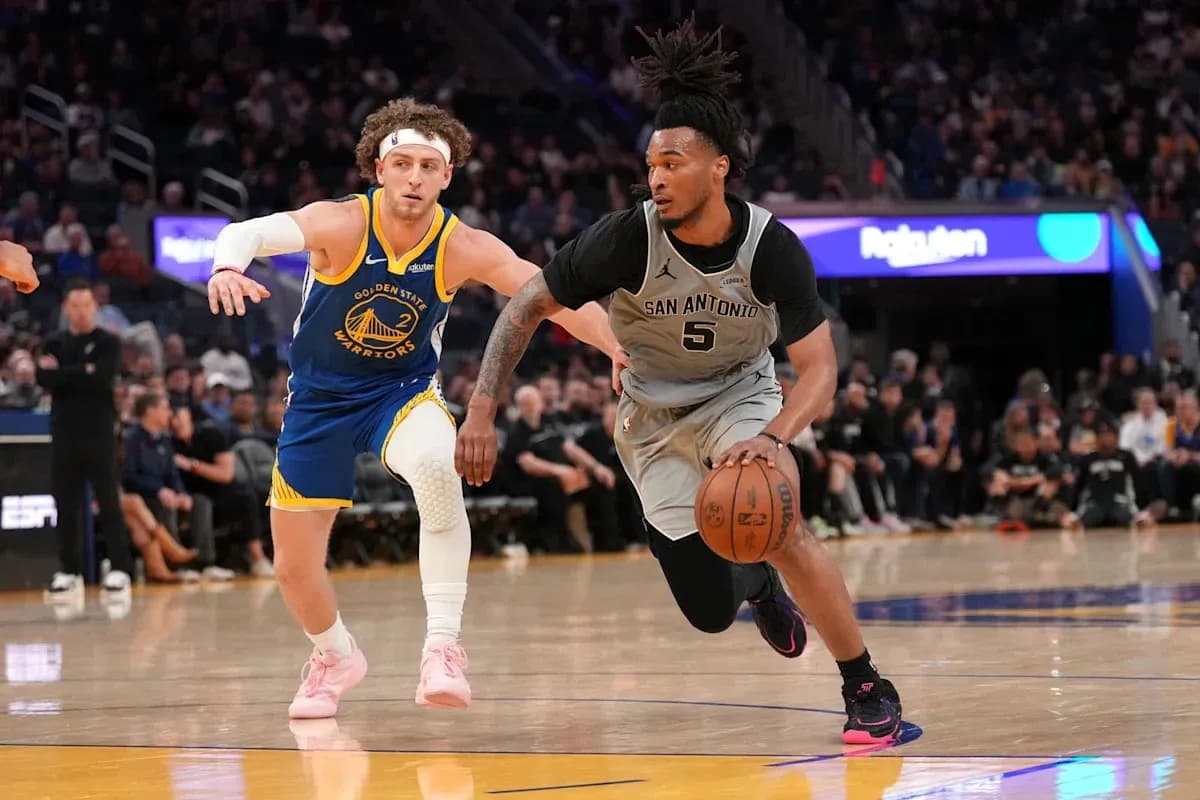
The rest of the league already has its script ready for a call with Golden State.
They know what they’d ask for. They also know what’s off the table.
Stephen Curry’s name doesn’t even come up. It’s pointless. As ESPN’s Brian Windhorst reported this week, there is no real “negotiation” on his extension, just a franchise waiting for a 38-year-old icon to decide how long he wants to keep doing this and on what terms. The Warriors will sign whatever he slides across the table.
Jimmy Butler and Moses Moody aren’t part of those conversations either, but for very different reasons. Mike Dunleavy made it clear in August: neither will play in the Oct. 21 opener, and there’s no timetable on their rehabs. You don’t trade injured players as centerpieces. You wait, you hope, you reassess.
Strip all that away and Golden State is left with three real, movable assets that matter to rival front offices—and that may define what’s left of the Curry era.
No. 3: Kristaps Porzingis and the Contract That Travels
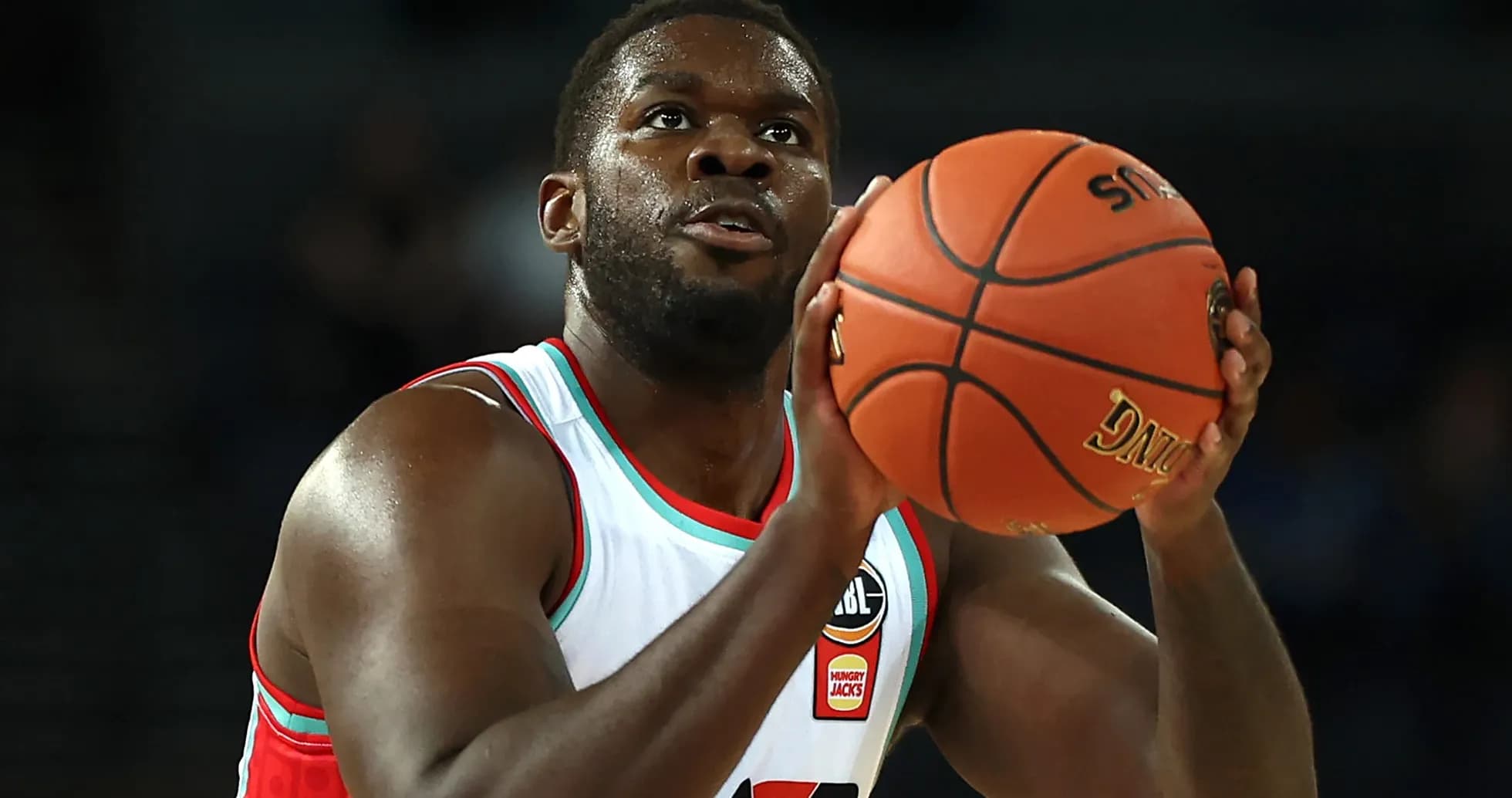
Kristaps Porzingis arrived in February from Atlanta in the Jonathan Kuminga deal, a midseason swing that never really had time to settle. He played just 15 games in a Warriors uniform, 32 total on the year, averaging 16.7 points and 5.2 rebounds. Flashes, not a body of work.
In June, Golden State doubled down with a two-year, $40 million extension, the second year a player option. As John Hollinger of The Athletic noted, the key detail is how it was structured: as an extension, not a new deal, which left Porzingis eligible to be traded immediately.
That’s the appeal. Not the résumé, not the health record. The number.
At $19.5 million, Porzingis’ salary sits in the sweet spot—big enough to bring back a legitimate player, small enough to slide into most cap sheets without major surgery. For a front office that chose continuity all summer, that contract is the pressure valve if a star suddenly becomes available and the Warriors decide they can’t just stand and watch.
He’s third on this list for a reason. A 31-year-old who has suited up only 15 times for his new team can’t realistically be the lone headliner in a major deal. He’s a matching piece, a facilitator, the kind of contract that makes a big move possible without being the reason you make it.
If the right deal appears, he’s the one you let go.
No. 2: The Picks That Terrify the Future
If anyone forgot what draft capital looks like in this league, the punishment that stripped the Clippers of five future first-rounders in the Kawhi Leonard case served as a sharp reminder. Picks are currency. Sometimes they’re punishment. Often they’re leverage.
Golden State still has plenty.
A breakdown in May showed the Warriors holding their own first-round picks in 2027, 2028, 2029, 2031 and 2032. The 2030 pick is earmarked for Dallas, but only if it lands outside the top 20. For a franchise built around Curry and a 36-year-old Draymond Green, that kind of long-term control is unusual. Contenders usually mortgage the future to keep the window open. The Warriors haven’t—at least not fully.
That’s exactly why rivals are circling. Nobody knows what this team looks like in 2029. Is Curry still around? Is the roster gutted? Are those picks quietly turning into lottery tickets? The uncertainty is the value.
Golden State already signaled its belief in this draft pipeline by keeping the No. 11 pick in June and taking Yaxel Lendeborg instead of cashing out. But that restraint has a limit. The day this roster clearly needs a serious upgrade, those far-off firsts are the assets that make other general managers stop what they’re doing and pick up the phone.
You don’t move them lightly. You move them when you’re sure you’re not just chasing nostalgia.
No. 1: Brandin Podziemski, the One They All Want
Brandin Podziemski is the name that comes up first when other teams call. He’s also the name the Warriors least want to hear.
He’s 23. He played all 82 games last season. He averaged 13.8 points, 5.1 rebounds and 3.7 assists, and he did it on a $5.7 million salary in the final year of his rookie deal. In a cap environment where mid-tier veterans earn multiples of that to give you less, that’s gold.
This is what every front office chases: a young guard who can play, who’s durable, who already knows your system and isn’t yet expensive.
Dunleavy has been open about the plan. In August, he said he’d rather get an extension done now than drag Podziemski into restricted free agency next summer. His reasoning was blunt and accurate: “When he’s on the court, we’re a better team.”
Nothing is signed yet. The extension window closes on Oct. 19. Until pen hits paper, his value cuts both ways. For Golden State, he’s a foundational piece on a bargain contract. For anyone trying to pry him away, he’s a cheap starter with upside and full restricted free agent rights attached. If he breaks out this season, the price only climbs.
This is why he tops the list. Podziemski isn’t just a trade chip; he’s the bridge between eras if the Warriors choose to build one.
Golden State finished 37-45 last season, 10th in the West. That’s not a blip anymore; that’s a warning. With Butler and Moody set to miss the start of this year, Dunleavy has until February to decide what these assets really are.
Are they the foundation of the next Warriors team, the one that lives beyond Curry? Or are they the last bullets in the chamber for one more run with him?
The logic is clear enough: keep Podziemski and the bulk of those future firsts unless a true star with years left on his deal becomes available. Treat Porzingis as the contract you’re willing to move when that moment arrives.
The harder part isn’t ranking the assets. It’s answering the question that hangs over all of them: is this front office ready to plan for life after Curry, or will it gamble everything on the idea that there’s still one more deep run left in him?