
Germany Secures Top Tier for Euro 2028 After Dominating Serbia
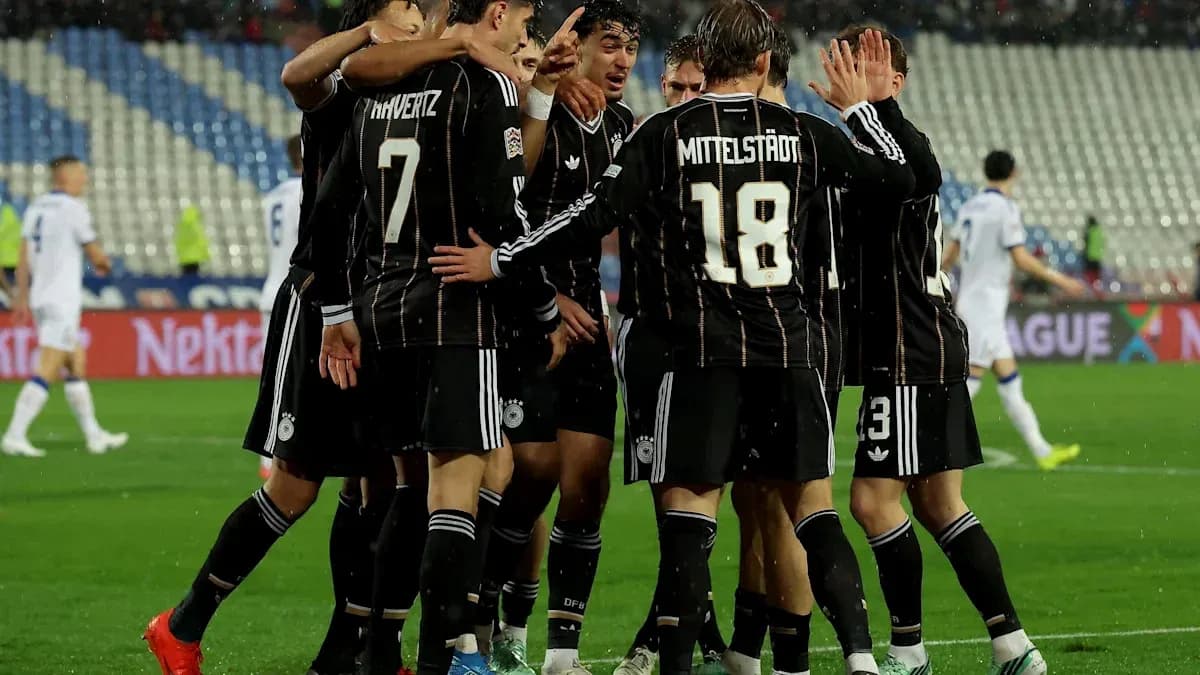
Germany did not just beat Serbia in Belgrade. They brushed them aside and walked out with something far more valuable than three Nations League points.
A 3–1 win, in front of barely 5,000 spectators because of a UEFA ban, felt at times like a glorified training session. The atmosphere was flat, the home side looked drained, and Germany played as if they owned the place.
They struck early, seized control of the ball, and never really let Serbia breathe. Possession belonged to the visitors, territory too, and as the game wore on the Serbians looked less like a team chasing survival in League A and more like one resigned to its fate.
That fate is now sealed. Germany’s victory mathematically locks Serbia into fourth place in League A’s Group B, confirming their slide to the bottom of the section. Morale, already fragile, took another hit as the minutes ticked by and the gulf in conviction became obvious.
For Germany, though, the night carried a different kind of significance.
They still need help on Monday if they are to reach the knockout phase of the UEFA Nations League. The job is not fully in their hands there. But by guaranteeing a top-three finish in their League A group, they hit a crucial target in another competition altogether.
The reward is strategic, not emotional: a place in Pot 1 for the Euro 2028 qualifiers draw, scheduled for December 6.
In the cold arithmetic of international football, that matters. Pot 1 means, on paper, a smoother qualifying path and fewer giants in their way. It is the kind of structural advantage that can shape an entire cycle.
Germany now sit in elite company. Pot 1 already features Italy, France, Belgium, Netherlands, Greece, Spain, England, and Portugal. These are the teams expected to dictate qualifying groups, not chase them.
Others are still scrambling for a seat at that table. Croatia only need a draw against Czechia to secure their place among the top seeds. Denmark, Wales, and Norway are locked in a fight for two remaining spots in their section, knowing that one misstep could push them into a far more complicated route to Euro 2028.
So Germany leave Belgrade with more than a comfortable away win and a bruised opponent behind them. They leave with positioning, leverage, and a clear signal that, whatever the Nations League brings next week, they have already claimed a crucial advantage for the battles to come.





