Germany Secures Second Place with Dominant Win Over Mali
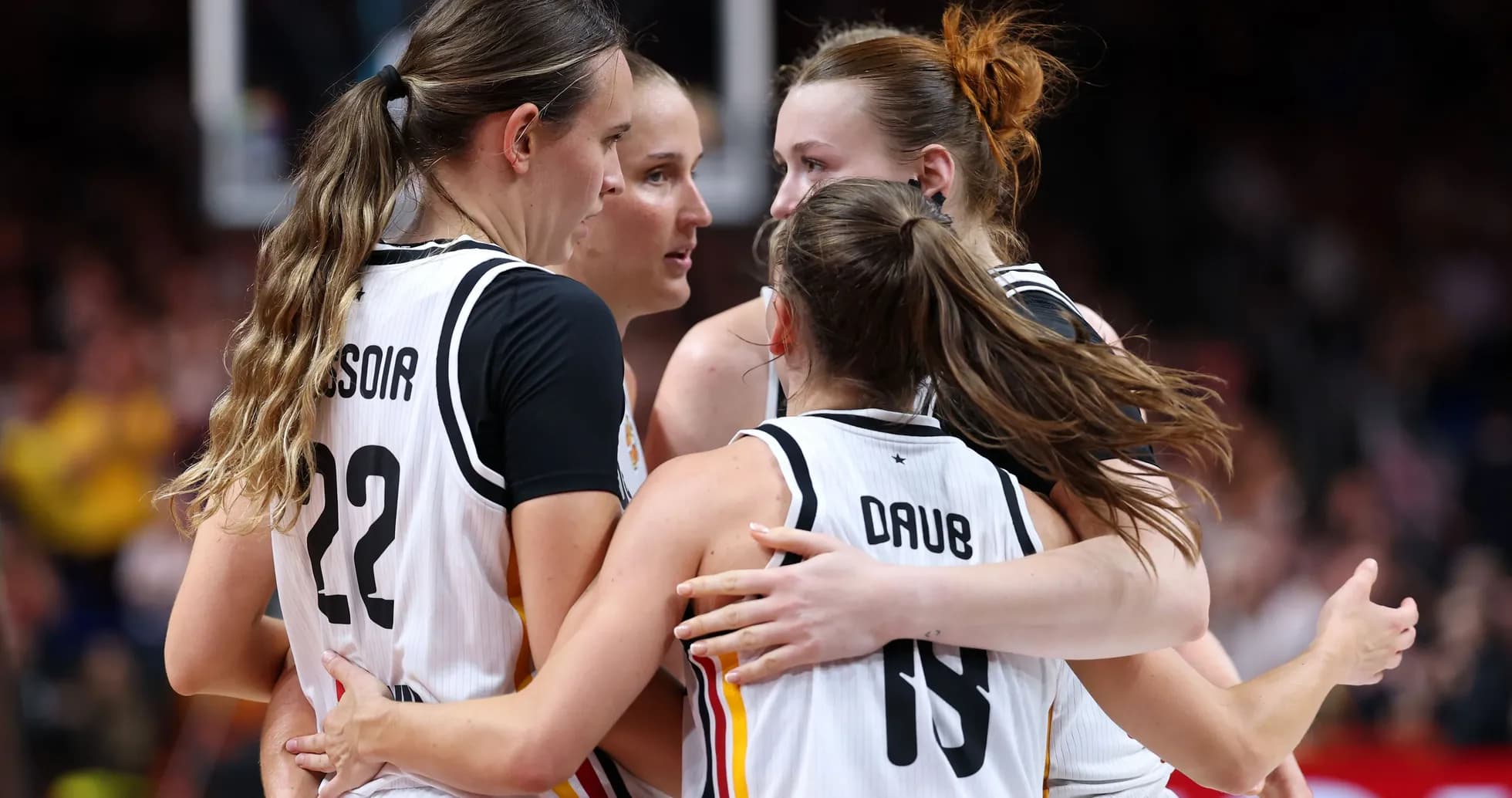
“Through the Monsoon” thundered around the Uber Arena, and Germany were already halfway there.
They bounced through the layup lines to their team anthem, soaking in the noise of 12,550 fans. By the final buzzer, Olaf Lange’s team had turned that soundtrack into a statement: Germany 83, Mali 58. Second place in Group A secured. A clear path to the qualification showdown with South Korea on Tuesday night.
This wasn’t just a win. It was a coming-of-age performance on home floor.
From chaos to control
The stakes were sharp before tip-off. All four teams in the group sat on three points, each with one win and one defeat. Germany could still finish anywhere from first to fourth. Spain’s later 79-59 victory over Japan would close the door on top spot, but Germany took care of their own business with ruthless clarity.
They had already ridden the tournament rollercoaster: a heavy opening loss to Spain (53-83), then a strong response against Japan (74-58). One more win was non-negotiable if they wanted a favourable route into the knockouts.
“We have to be the aggressor from the start,” Frieda Bühner had demanded before the game. Her team listened.
Backed courtside by men’s world champion captain Dennis Schröder, Germany flew out with intent. The defence clamped down early, Mali’s first options taken away, their rhythm strangled. Leonie Fiebich buried an early three, the hosts surged 15-7 ahead by the sixth minute, and the arena found its voice.
Then came the wobble.
Alexis Peterson, back in the rotation after missing the second half against Japan with an infection, twice turned the ball over in quick succession. The game grew scrappy, mistakes creeping in on both sides. For a moment, the tension in the building matched the group table: tight, nervous, unpredictable.
Germany needed a calm hand. They found two.
Geiselsöder and Bühner take charge
Luisa Geiselsöder, quiet for much of the tournament so far, chose this night to announce herself. She didn’t miss a shot in the first half, owning her spaces in the paint and stepping out when needed. Each make seemed to loosen Germany’s shoulders a little more.
Bühner, the star of the Japan win, picked up exactly where she had left off. Her second straight three-pointer stretched the lead to 40-29 in the 16th minute, Germany’s first double-digit cushion. By then, almost everything in white was dropping.
Alexandra Wilke and Marie Gülich joined the perimeter barrage, each hitting from outside. Mali’s defence sagged, then stretched, then simply chased. Bühner struck again and again, finishing as top scorer with 21 points, the kind of performance that shifts how opponents scout you overnight.
On the sideline, Schröder liked what he saw.
“You want to get better in every game, and that’s what they are doing,” he said at half-time, praising the “brilliant atmosphere” roaring around the sold-out arena.
Germany led 49-32 at the break. This time, there would be no collapse.
No repeat of Spain’s fate
Mali arrived in Berlin as the group’s wild card, the team that had stunned Spain 82-73 on the second matchday and ripped open the bracket. That upset had turned Group A into a minefield. It also served as a warning.
Germany heard it loud and clear.
Lange’s team came out of the locker room with the same edge, the same discipline. Defensive rotations stayed sharp, closeouts were hard, and Mali’s drives were repeatedly met by a wall of bodies. The Africans never found the momentum that had carried them past Spain.
The pressure finally told in the third quarter.
Geiselsöder, already brimming with confidence, stepped out beyond the arc and drilled another three. The scoreboard flicked to 56-37 in the 25th minute, and with it, the air went out of Mali’s challenge. That shot felt like the decisive blow.
“It felt great. It was really good basketball,” said the WNBA player afterwards, a simple summary of a night when everything clicked for her and her teammates.
Germany never loosened their grip. They managed the game, not just the lead, rotating smartly, keeping energy high, and refusing Mali any hint of a late run. In their second-ever meeting with Mali, after an international in Saarlouis back in 2007, there was no drama, no doubt. Just authority.
South Korea next, Belgium waiting
The equation now is brutally simple.
Germany, second in Group A, will face South Korea, third in Group B, in the qualification round on Tuesday at 8.45pm. Win, and the quarter-finals beckon. Lose, and the Berlin buzz could evaporate in a single night.
Standing behind that door: Belgium.
The European champions of 2023 and 2025 marched through Group C unbeaten, looking every inch the powerhouse their recent titles suggest. Beat South Korea, and Germany earn the right to test themselves against the continent’s current standard.
Lange knows it. His players know it. The Uber Arena crowd certainly feels it.
“I’m very happy with how we have developed. Now the success is there too,” the head coach said on MagentaTV, even as he immediately turned his gaze to the next hurdle. “Now we have to reorganise again. South Korea are a good team.”
Germany have their song, their stage, and their momentum. The question now is simple: can this team ride the noise and the form all the way past South Korea and into a showdown with Europe’s best?