Germany Dominates Mali 83:58 to Secure Quarter-Final Spot
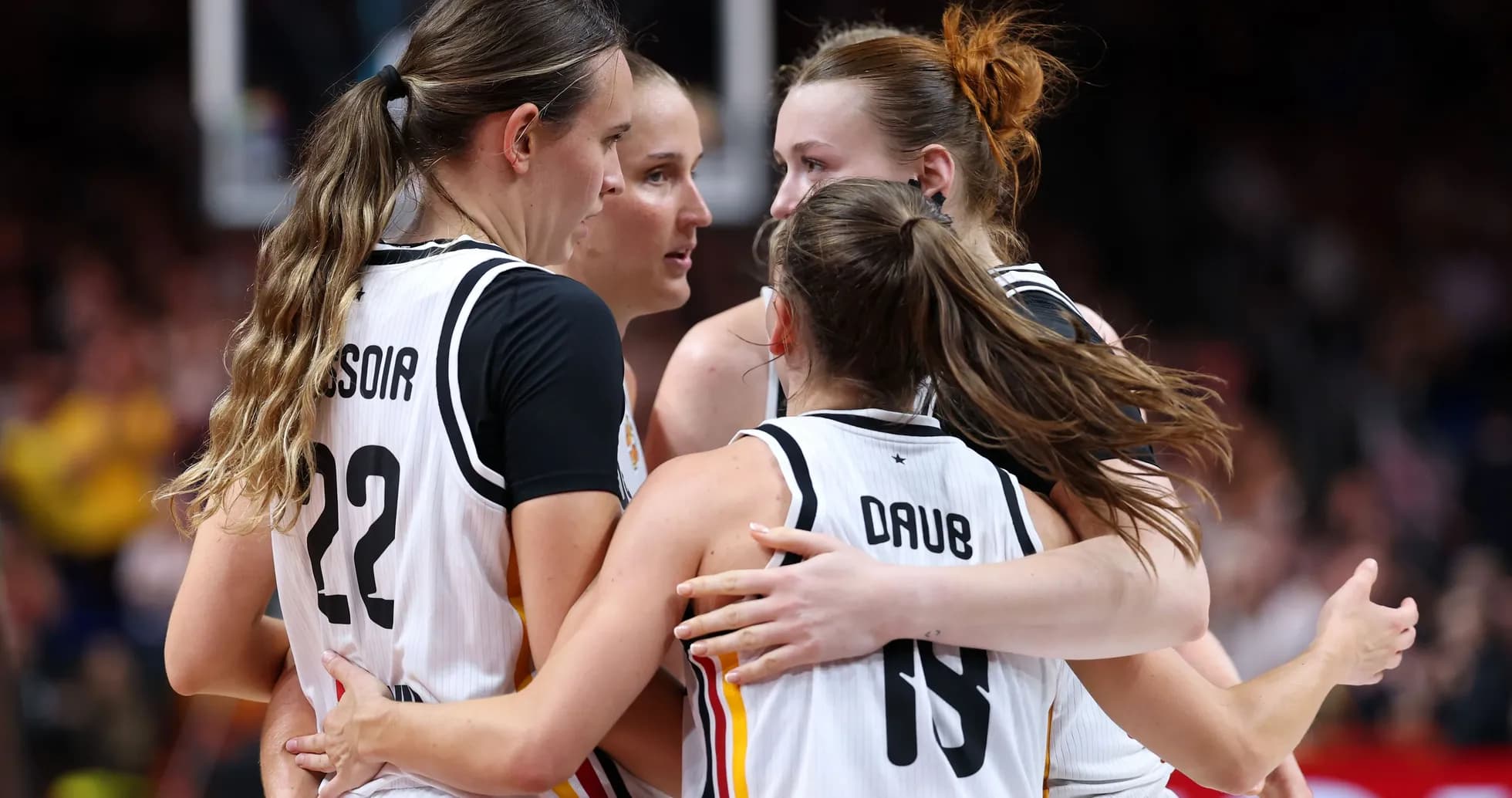
The lights dimmed, the bass kicked in and “Durch den Monsun” rolled around the Uber Arena. Germany’s women bounced onto the court to their team song, loose shoulders, sharp eyes. This was a win-or-sink-down-the-table kind of night, but it didn’t look like it. It sounded like a party.
By the end, it felt like one too.
Germany dismantled Mali 83:58 (49:32) in Berlin, closing the group phase with authority and locking in second place in Group A behind powerhouse Spain. The reward: a qualification showdown with South Korea on Tuesday night for a place in the quarter-finals.
Olaf Lange stood on the sideline and watched a team that suddenly looks like it believes. “I am very pleased with how we have developed. Now the success is there as well,” he said on MagentaTV in the sold-out arena, before cutting straight to the chase: “Now we have to reorganise again. South Korea are a good team.”
Tight group, clear response
This group had been a minefield. Before tip-off, all four teams sat on three points after two games, each with one win and one defeat. Germany could still snatch top spot. They could also crash to fourth. Every possession felt like it carried a tiebreaker.
Spain’s 79:59 win over Japan in the other evening game removed any hope of first place, but it also simplified the mission. Germany’s task after the heavy opening loss to Spain (53:83) and the strong response against Japan (74:58) was straightforward: win again and climb as high as possible.
“We have to be the aggressor from the start,” said Frieda Bühner, the standout against Japan. It sounded like a cliché. It turned into a blueprint.
A blistering start, a brief wobble
With world champion and national team captain Dennis Schröder sitting courtside, arms folded but clearly enjoying himself, Germany came out snarling. The defence locked in early, pushing Mali off their spots, contesting every cut. Leonie Fiebich buried an early three, the hosts ran the floor hard, and by the sixth minute the scoreboard read 15:7.
Then came the human part. Sloppy minutes, loose handles, bad decisions.
Alexis Peterson, back in the lineup after missing the second half against Japan due to an infection, coughed up two quick turnovers. The rhythm went. The noise dipped. For a moment, the game threatened to open up again.
It didn’t.
Geiselsöder and Bühner take charge
The reset came from inside. Luisa Geiselsöder, who had struggled to impose herself in the tournament so far, suddenly looked like a different player. Confident catches, strong finishes, no wasted motion. She didn’t miss in the first half.
Bühner picked up exactly where she had left off against Japan. Stretching the floor, attacking closeouts, playing with a calm that belied the stakes. Her second straight three-pointer pushed Germany to a 40:29 lead in the 16th minute, the first double-digit cushion. From that moment, the game tilted decisively.
The perimeter opened up. Alexandra Wilke and Marie Gülich both connected from deep. The ball zipped, Mali’s defence chased shadows, and every German make seemed to land with extra weight in front of 12,550 fans.
Bühner kept piling on, finishing as Germany’s top scorer with 21 points. Mali, who had stunned Spain 82:73 on the second matchday, never found the same punch in Berlin.
“You want to get better in every game, and they are doing that,” Schröder said at half-time, praising the “awesome atmosphere” around him. The noise only grew from there.
No second-half nerves
If there were any doubts about Germany’s ability to manage a lead, they vanished after the break. This was only their second meeting with Mali after a friendly back in Saarlouis in 2007, but there was nothing tentative about it.
Lange’s team stayed on the front foot. They ran hard, closed out with intent, and kept Mali’s guards away from the paint. Every small Mali run met a firm response.
Geiselsöder, now playing like she’d been waiting all week for this, delivered the decisive blow. Her three-pointer in the 25th minute stretched the gap to 56:37 and effectively killed off any thought of a comeback.
“It felt great. It was really good basketball,” said the WNBA player afterwards, a simple line that matched the performance.
From there, Germany managed the game with maturity. No panic, no unnecessary risks, just solid possessions and a defence that refused to let Mali breathe.
South Korea next – and then Belgium?
The picture is clear now. Beat South Korea, third in Group B, in Tuesday’s play-off round and Germany will march into the quarter-finals. Waiting there: Belgium, the European champions in 2023 and 2025, who cruised through Group C without a defeat.
Germany have already taken their first big step, turning a bruising loss to Spain into a controlled, confident group finish on home soil. The music, the crowd, the atmosphere in Berlin suggest they are only just getting started.
The question is no longer whether they belong in this company. It’s how far this rising team can push a tournament that suddenly feels wide open.