
Gerard López Supports Barça in Negreira Case as Trial Approaches
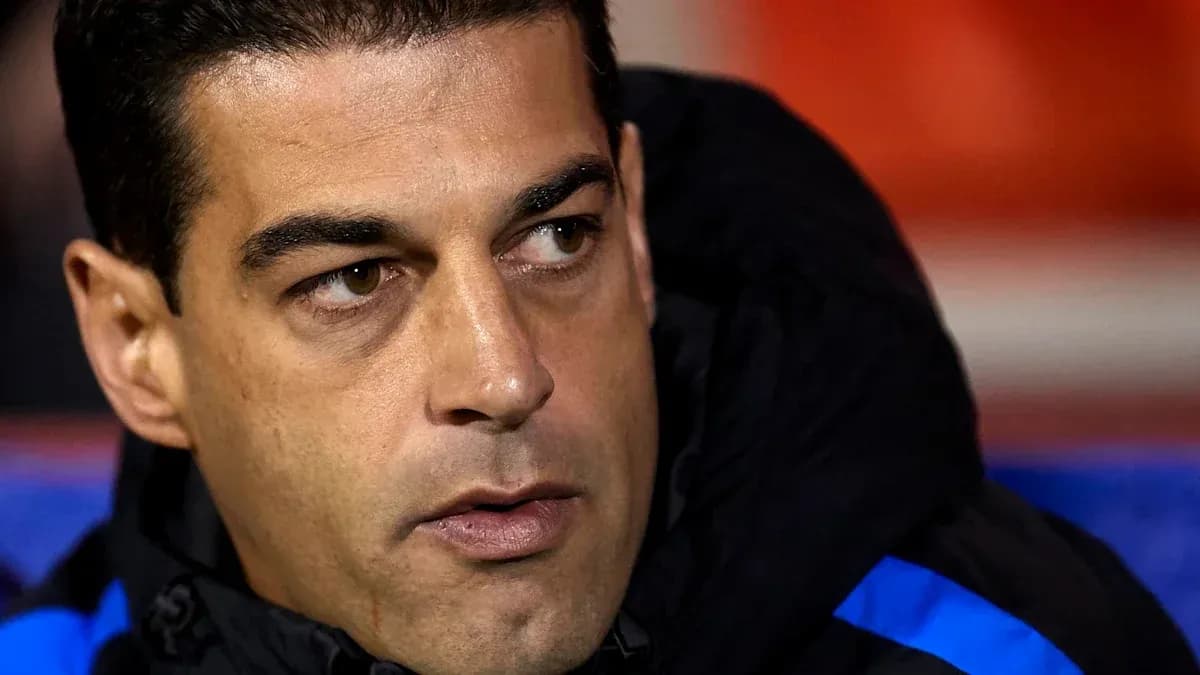
The Negreira case, a scandal that has hovered over FC Barcelona for nearly four years, took another sharp turn with testimony from Gerard López that lands firmly on the club’s side of the story.
López, coach of the Catalan national team and former Barcelona B manager, told investigators he personally read referee reports prepared by José María Enríquez Negreira during his spell in charge of the reserve side, now known as Barcelona Atlètic.
That detail matters. A lot.
For months, a key question has hung over the case: did these referee reports actually exist and were they used inside the club, or were they a smokescreen for something far more serious?
López says they existed. And that he used them.
A Different Tune from the B Team
His account was supported by former Barcelona B delegate Toni Alonso, who also testified that the reports were real and consulted in the day-to-day work with the reserves.
Their version directly contrasts with that of former first-team coaches Luis Enrique and Ernesto Valverde. Both men previously told authorities they never saw such reports while managing the senior side.
So the picture is no longer binary. Instead of “reports or no reports,” the case now carries a more nuanced split: first-team coaches who say they never used them, and reserve-team staff who insist they did.
López and Alonso reportedly went further, stressing how crucial these referee dossiers were before the introduction of VAR. In the lower divisions, where Barcelona B compete, officials are less well known and their tendencies harder to predict. Any edge in understanding how a referee handled physical play, dissent, or borderline decisions could shape a match plan.
For them, this was scouting, not scheming.
The €8.4 Million Question
At the heart of the case lies a staggering figure: around €8.4 million paid by Barcelona to Negreira over 17 years.
Negreira was no longer an active referee during that period. He held a powerful role as vice president of the Technical Committee of Referees, a position close to the nerve center of Spanish officiating.
Prosecutors argue that these payments were not innocent. Their theory is blunt: the money was used to obtain favorable refereeing appointments and, by extension, influence on the pitch.
Barcelona reject that outright. The club has consistently claimed the payments were for consultancy services and technical reports on referees, designed to help coaches and players better understand how games would be managed.
López and Alonso’s testimony does not resolve the wider accusation, but it gives the club something it has often lacked in this saga: internal voices confirming that the product supposedly paid for was indeed delivered and used, at least at some levels of the sporting structure.
Power, Proof, and a Narrowing Case
One crucial element remains murky: how much real power did Negreira have over which referees were appointed to which matches?
That question sits at the core of the prosecution’s narrative but is still heavily debated. The investigation has not yet demonstrated that any specific match was manipulated, nor that any individual decision on the pitch was altered because of the payments.
A Spanish court has already dropped bribery charges against the club, stripping away the most explosive label attached to the case. Yet the legal battle is far from over.
Prosecutors continue to pursue a charge of “sports corruption,” and the personal stakes are rising. Barcelona executives, Negreira himself, and several associates face additional accusations of breach of trust, false business documentation, and money laundering.
The legal frame has narrowed, but the potential consequences have not.
Heading for the Courtroom
After almost four years of leaks, statements, and speculation, the Negreira case is finally approaching its decisive phase.
The investigation stage has formally closed. The next step is no longer theoretical: an oral trial is expected, where arguments will be laid out in full, witnesses will be tested under pressure, and the different versions of events will collide in open court.
Gerard López’s testimony does not close the case. It does, however, sharpen the central question.
Were Barcelona simply buying information in a grey, uncomfortable corner of the game’s ecosystem? Or will a court conclude that those millions crossed a line that could redefine how Spanish football looks at its own recent past?





