George Chuvalo: A Life of Resilience and Courage
George Chuvalo took punches the way most men take a stiff breeze. He built a life, and then watched it fall apart, with the same stubborn refusal to go down.
“The best thing I have going for myself is my attitude,” he once said. “I have a hard time quitting on something. I have a hard time walking away from something. I’ll be the last guy to quit on somebody.”
On September 12, his 89th birthday, that attitude finally met something it could not outlast. Chuvalo died at 89, his passing confirmed by the World Boxing Council, which saluted his “unrelenting courage and legendary iron chin”. The words fit. For decades, they had been his calling card.
He left the sport with a record that reads like a heavyweight’s fantasy: 73 wins, 18 defeats, two draws. Sixty-four of those victories came by knockout. He was particularly fond of one of them – the night in 1968 when he stopped Mexico’s heavyweight champion Manuel Ramos in five rounds.
“I think he was ranked No 4 in the world,” he later told Maclean’s. “I knocked out all the No 4s.”
The problem, as he liked to add with a shrug, “came with the ones, twos and threes”.
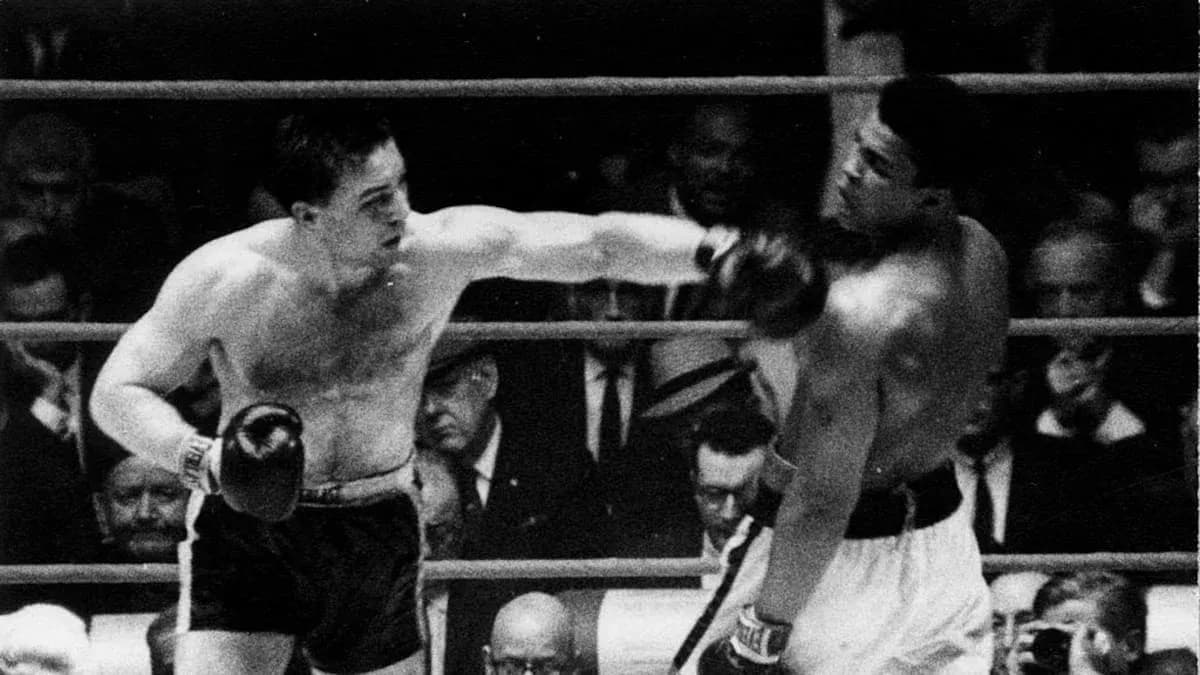
Those “ones” included the biggest of them all. In March 1966, with just 17 days’ notice, Chuvalo stepped in to face the world’s undisputed No 1, Muhammad Ali. Ali’s scheduled bout with Ernie Terrell in Chicago had collapsed in the storm over Ali’s refusal to serve in Vietnam. The champion headed north to Canada. Waiting for him there was a 6ft Canadian brawler listed as a 7-1 underdog.
A New York Times headline captured the mood among bettors: Chuvalo was “A Big Bum With a Lot of Heart”.
The bum never budged. Ali won a unanimous decision, but Chuvalo walked the distance and walked straight into boxing folklore. His face at the final bell, Toronto Star columnist Milt Dunnell wrote, looked like “a bucket of balls at a golf driving range”. It was a mess. It was also a badge of honour.
He would get a rematch in Vancouver in 1972. Ali outboxed him again. Chuvalo, again, refused to fall.
He fought as he lived – “rough and tough”, as he called it. A squat, barrel-chested heavyweight, he trained his body not just to throw punches but to swallow them. Rocky Marciano, who knew a thing or two about durability, once joked that “if all fights were a hundred rounds, George Chuvalo would be unbeaten in any era”.
In his memoir, Chuvalo credited that granite chin partly to “being born with a short neck”. He added his own homemade science. He chewed bubble gum to “strengthen my jaw muscles”. He believed that “real poverty” hardened him in ways no gym ever could.
He knew poverty early. George Louis Chuvalo was born in Toronto on September 12, 1937, the son of Croatian immigrants from what is now Bosnia. His father skinned cattle on the floor of a slaughterhouse. His mother stood in a poultry plant, plucking chickens for two and a half cents a bird.
She was the one who bought him his first boxing gloves when he was about nine. He had begged for them for two years after staring at photos of muscled fighters in the window of a nearby cigar store.
“The power of knocking a guy out, of standing over him, of raising your arms in the air, that was what appealed to me about boxing,” he told Canada’s National Post in 2013. “A cave man can understand boxing. He might not understand cricket, but he can understand boxing.”
He started out in a parking lot called Macaroni Field, next to a pasta factory, trading punches for pride. By 18, he was a professional. In 1958, he claimed the Canadian heavyweight title. Nearly 40 years on, he was still bench-pressing 400 pounds and still haunting the gym, long after most of his contemporaries had disappeared into soft chairs and softer lives.
He did not disappear. He reinvented himself. Real estate came first. Then film. He even turned up in “The Fly”, playing a man who loses an arm-wrestling contest – and a bone – to Jeff Goldblum’s transformed scientist. For a fighter who had taken the best shots of Ali, it was an oddly fragile cameo.
The screen role was light. What waited at home was not.
In 1984, his youngest son, Jesse, ripped off his kneecap in a dirt-bike accident. At a party, someone handed him heroin and told him it might dull the pain. The drug did more than that. Jesse began injecting. Soon, his brothers George Jr – known as Georgie Lee – and Steven were doing the same.
Within a year, the first tragedy hit. In 1985, Jesse died by suicide at 20. The other boys sank deeper into addiction. In 1987, they were jailed for robbing a drugstore.
The spiral did not stop. After his release, Georgie Lee died of a heroin overdose in 1993. Two days after his funeral, Chuvalo’s wife, Lynne Sheppard, also died by suicide.
“It never stops,” Chuvalo said. “I must have been a bad guy in a previous life. I don’t know.”
He found a fragile kind of peace with Joanne O’Hara, a nurse who had worked with Lynne. She helped pull him back from his own thoughts of suicide. They eloped in 1994. Love steadied him, but it could not save everyone.
Steven, still trapped by heroin, robbed another drugstore and went back to jail. In 1996, less than two weeks after his release, he died of an overdose at 35.
Chuvalo called it his “personal holocaust” and kept a share of the blame for himself. While his sons shot up in the basement, he said, he had been “walking around like I was deaf, dumb and blind”. He also turned his anger outward, towards a system that, he felt, had nothing like the support his family needed.
He pointed to the absence of grief counselling for his son in prison. “They have psychiatrists for sex offenders, but not for what he needed,” he told the New York Times. “It was like if I sparred with lightweights before I fought George Foreman. It just wasn’t the proper preparation.”
The ring had given him a platform. He used it. He began speaking in schools and community halls, talking to teenagers who knew little about his fights with Ali but listened when he described losing three sons and a wife to drugs and despair.
The days were manageable. The nights were not.
“It’s the only time I feel sorry for myself,” he told Maclean’s in 1999. “I think, ‘How can you even live after that, how the hell did all that happen?’ You don’t want to be me after midnight.”
As the years passed, the fighter who had prided himself on his physical toughness faced a different kind of decline. Dementia crept in. A bitter legal battle broke out between his second wife and his surviving children, Mitchell and Vanessa, who said they were acting on his wishes in pursuing a divorce on his behalf. The Toronto Star reported in 2018 that as the case dragged on and his memory faded, friends and family rallied to make sure he was cared for.
The man who once seemed indestructible needed protecting. The man who had spent a lifetime talking about pain and endurance came back, in the end, to something simpler.
“When I talk to young people about drugs or staying off drugs, I always talk about love in your life,” he had said years earlier. “And sometimes people say, ‘Oh, yeah, love, you’re not going to bore me with that stuff are you?’ But what else is there in life? What else are we here for if we can’t love people?”