Fury–Joshua Fight to be Held at Cardiff's Principality Stadium
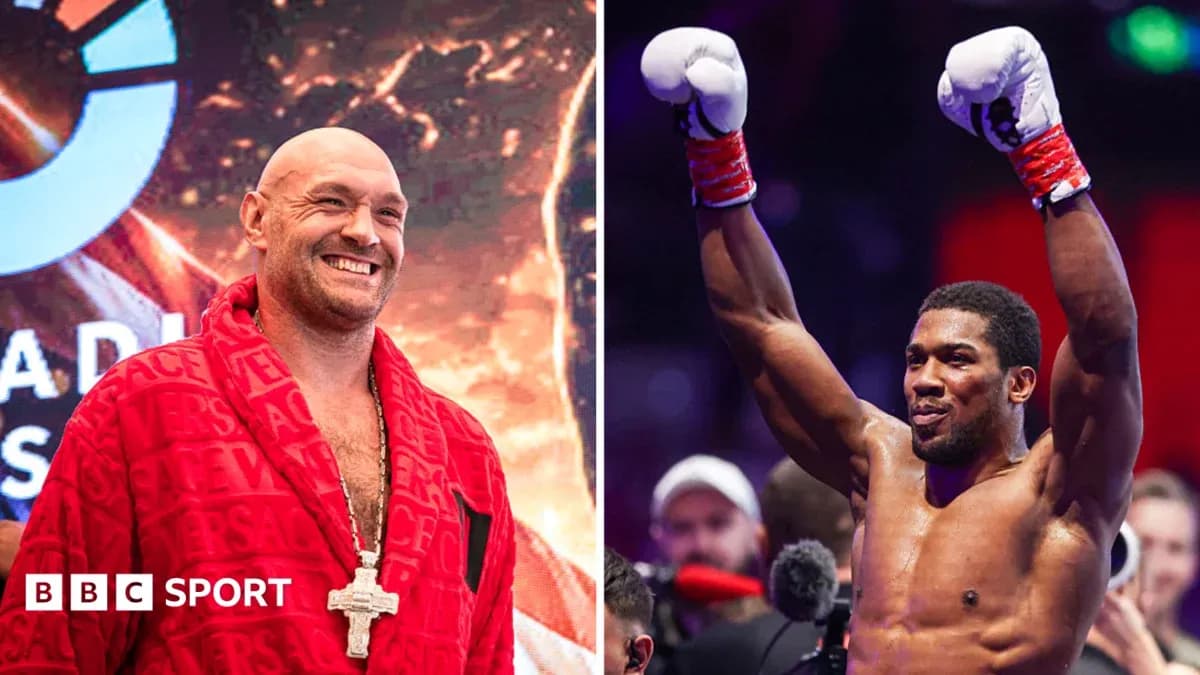
The most talked-about fight in British boxing is finally finding a home – and it is not where the powerbrokers first imagined.
Tyson Fury and Anthony Joshua are expected to meet at Cardiff’s Principality Stadium on Friday, 11 December, with the Welsh capital surging ahead of New York and London in a scramble shaped by contracts, broadcasters and winter weather. An official announcement is anticipated this week, but the direction of travel is clear: the biggest all-British heavyweight event of the century is heading to Wales.
Not long ago, this story was being written in Manhattan ink. Madison Square Garden had moved so close to hosting that plans were already being sketched for a glitzy news conference in midtown. Netflix liked it. Saudi organisers Sela liked it. Plenty around the table did. The heavyweight showpiece under the New York lights felt inevitable.
Then the paperwork bit back.
The contract clause that changed everything
Both fighters had individual deals with Sela, not a joint agreement. That split detail turned into a major fork in the road.
Joshua’s contract was explicit: the fight had to be staged in the United Kingdom. Fury’s deal carried no such restriction, leaving his side free to entertain the New York option pushed hard by organisers and Netflix, who were eager to plant this mega-event in prime-time America.
Promoter Eddie Hearn admitted almost everyone else preferred New York. Matchroom even looked into what it would cost to tear up that UK-only clause. For a while, the whole thing teetered. Fury accused Joshua of dragging his feet and briefly dangled the idea of completing a trilogy with Oleksandr Usyk instead.
The heavyweight soap opera threatened to swallow the fight.
Then Fury stepped back from the brink. With the UK requirement now accepted, attention swung to a more pragmatic question: where in Britain could you stage a winter stadium fight of this scale, hit Netflix’s US timing demands and not leave 70,000 people shivering in the rain?
Piece by piece, the options fell away until Cardiff was left standing.
Wembley’s prestige, winter’s reality
On paper, Wembley Stadium should have been the natural home. It is the national arena, the grand stage where the two defining British heavyweights of their generation could settle a rivalry that has shadowed both careers.
But the calendar and the climate had their say.
The fight was first floated for November. Delays over the venue nudged it into December, straight into the teeth of the British winter. An open-air event with tens of thousands of fans, plus a vast international broadcast set-up, was judged too big a risk. Freezing temperatures, wind, driving rain – the worst-case scenario was simply unacceptable at this scale.
Dropping down to an indoor arena like London’s O2 would have solved the weather problem instantly. It would also have slashed the gate, sacrificing tens of thousands of tickets and the sense of a true heavyweight stadium occasion.
The Principality Stadium offered something Wembley could not: a roof.
With its retractable cover, Cardiff delivers the spectacle and revenue of a stadium show while shutting out the elements. Officially, it seats just under 74,000, but boxing layouts can push that number higher. Joshua has already proved his pulling power there, defending his WBA and IBF titles against Carlos Takam in front of nearly 80,000 fans in 2017, then returning five months later to add the WBO belt against Joseph Parker.
He knows the walk. He knows the noise. He knows the city can carry a night like this.
Beating the clock for Netflix
The final, awkward piece of the puzzle was time.
Netflix wants the fight to land in prime-time in the United States. That means a projected UK ring walk of around 01:00 GMT – roughly 20:00 on the US east coast. Great for American audiences. A headache for London.
Wembley is bound by a strict 23:00 event curfew. The Mayor of London, Sadiq Khan, signalled his backing. Wembley’s hierarchy were willing to talk. But pushing a live event into the early hours would have required Brent Council and local safety bodies to sign off on an exception, a process laden with red tape and uncertainty.
Cardiff, again, made life easier.
The Welsh Rugby Union, which owns and runs the Principality Stadium, made it clear it would welcome the fight and that a late finish would not be a dealbreaker. Transport, policing and crowd management for an event spilling into the small hours still demand careful planning, but this is not uncharted territory for the city or the venue.
In 2007, Joe Calzaghe’s super-middleweight unification win over Mikkel Kessler did not start until 02:00 local time to satisfy American broadcaster Showtime. Cardiff has already proved it can host a world-title night on US time without losing its edge.
So as the final details are hammered out between Netflix, Sela and both camps, the picture has sharpened. A fight once destined for New York’s concrete canyons is set instead to unfold under a closed roof in Cardiff, in the dead of a December night, with Britain watching through its fingers and America tuning in over dinner.
For Fury and Joshua, there is nowhere left to run. The only negotiation that matters now will be settled between the ropes.