Filip Hrgovic Becomes Croatia’s First World Heavyweight Champion
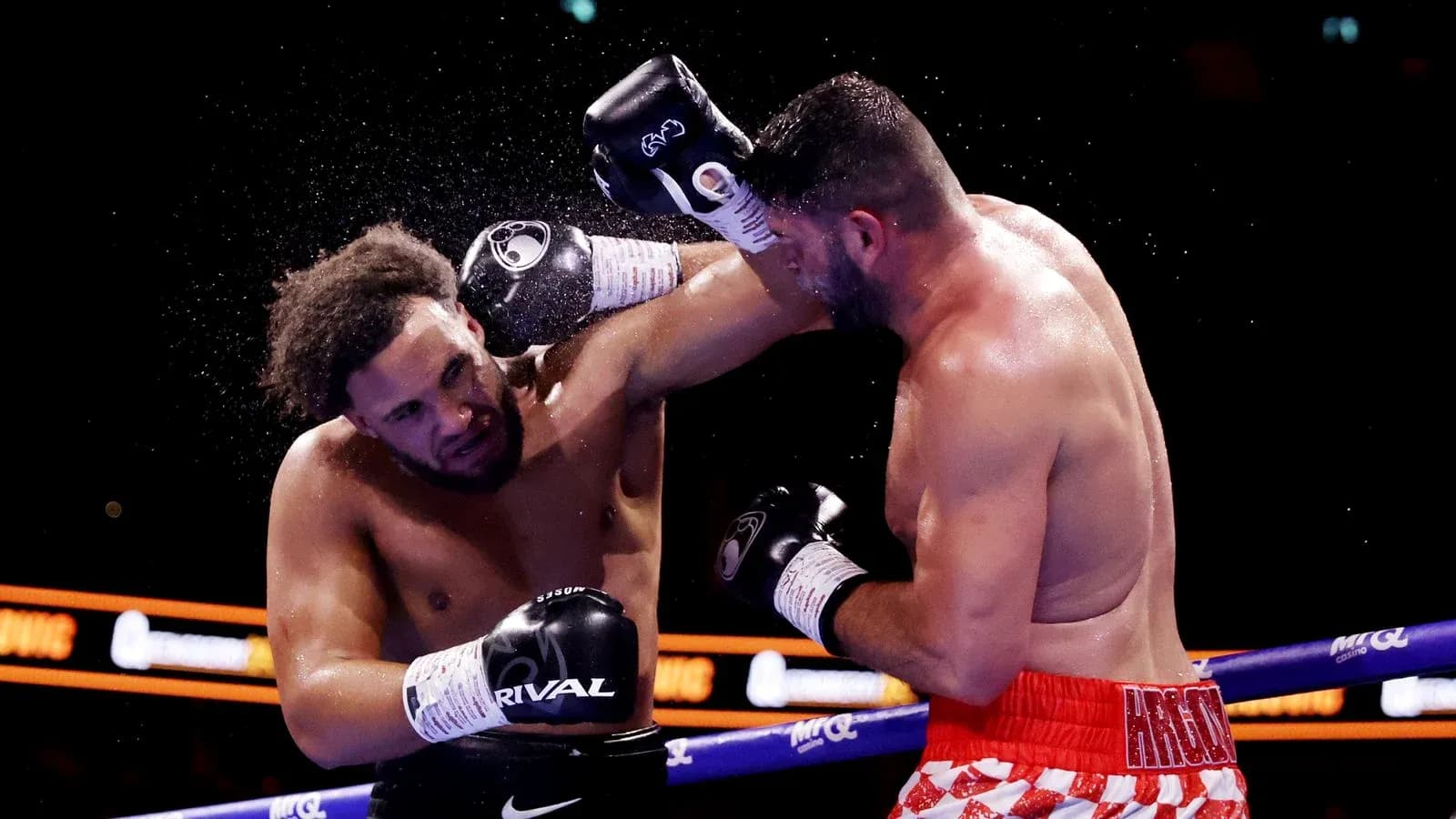
Filip Hrgovic walked into London as the opponent and walked out as Croatia’s first world heavyweight champion, dragging the IBF belt out of The O2 after a brutal, punishing lesson in what it takes to survive at the elite level.
Across from him, 21-year-old Moses Itauma looked, for six rounds, every inch the prodigy he has been sold as. Then the professional game bit back.
A prodigy starts fast
From the opening bell, Itauma boxed like a man in a hurry to make history. Britain’s would‑be youngest ever heavyweight world champion snapped out sharp jabs, slid inside with quick combinations and repeatedly beat Hrgovic to the punch. The Croatian admitted it himself: “I was losing all the rounds.”
Itauma’s hands were a blur. Hrgovic struggled to read the angles, often reacting a split-second too late as the younger man whipped in shots he “didn’t see coming”. The power wasn’t thudding, but the accuracy and speed were. For six rounds, Itauma dictated the terms, circling, picking his spots, making the older man look heavy-legged and one-paced.
But the clock was ticking on something less visible than the scorecards.
The gas tank empties
The seventh round told a different story. For the first time in his professional career, Itauma moved beyond six rounds, into territory he had never had to visit. His feet slowed. His shoulders sagged. The snap in his punches dulled.
Hrgovic had seen it coming from the very first bell.
“Since the first round I saw he was gassing out,” he said. “He was boxing still like an amateur… inexperienced.”
That was the turning point. Not a single punch, not a knockdown, but the slow, creeping realisation that the younger man’s pace was unsustainable. Itauma had fought like it was still the amateur code: fast, explosive, front-loaded. Over 12 rounds with a granite-chinned heavyweight, that approach comes at a price.
Hrgovic, 34, paid in patience. He absorbed the early flurries, trusted his conditioning and kept walking forward, round after round, knowing his chance would come if he could simply remain standing and relentless.
The champion pounces
By the ninth, the fight’s rhythm had flipped completely. Hrgovic, still marching, now found a more static target. Itauma, drained and damaged, no longer had the legs or lungs to keep the Croatian off.
The pressure finally told.
Hrgovic let his hands go with renewed purpose, pinning the Brit, forcing exchanges Itauma no longer had the energy to win. The shots didn’t need to be perfect; they just needed to keep coming. Under the sustained assault, with their young charge exhausted and hurt, Itauma’s corner made the only call they could. The towel came in. The dream ended on the stool, not the canvas.
Hrgovic, against the man many had billed as the most gifted heavyweight of his generation, had “beat all the odds” in his words, and climbed to the summit as IBF world heavyweight champion.
“I want to be considered the best heavyweight in the world,” he declared. “This is my time. I am the best. I am the present and he is the future.”
Respect and a warning
The new champion’s verdict on Itauma was strikingly blunt and generous in equal measure. He called him “amazing” and “the most talented guy in the division”, yet underlined the gulf between raw talent and finished product.
“He doesn’t hit so hard but he’s fast,” Hrgovic said. The sting might not yet match the speed, but the danger is obvious. Once Itauma learns to pace himself, to carry that explosive work into the later rounds, he will again become a nightmare assignment for anyone.
For now, though, this was a harsh education. Against a durable, experienced operator, Itauma discovered that brilliance over six rounds is not enough when the championship distance looms.
A scare and a sigh of relief
The drama did not end with the stoppage. Itauma left the ring on a stretcher and was taken to hospital as a precaution, a chilling sight after such a high-octane contest. Promoter Frank Warren stressed the priority: health first, everything else later.
By Sunday morning, the tone had softened. Queensberry Promotions confirmed Itauma had been discharged and was back home with his family. “Moses is well,” a spokesperson said. The collective exhale around British boxing was almost audible.
Warren, who had backed Itauma’s rapid rise, did not attempt to map out the next step in the immediate aftermath.
“I don’t know what he’s going to say,” he admitted. “Mentally, he’s going to be completely down. We’re going to have to talk to him and lift him… It’s going to take some time. He’s going to have a nice break.”
He also revealed the young heavyweight had “done something to his leg” during what he described as a “high-paced, fast fight” that kept fans “on the edge of your seat all the way through”.
Those seats will be waiting when Itauma returns. He remains 21, still one of the sport’s brightest young hopes, but now with scar tissue – physical and mental – that only this kind of night can create.
What comes next
For Hrgovic, the path is clearer. The IBF belt brings with it obligations, and the first of those is a mandatory defence against Frank Sanchez. The Croatian has his unification ambitions laid out as well, name-checking Daniel Dubois and Agit Kabayel as targets as he chases status, not just silverware.
“I want to go for unification,” he said. “That’s what I want.”
He has earned the right to ask the question of the division. Whether the division answers is another matter.
As for Itauma, the hype will quieten, the replays will sting, and the rebuilding will begin. The talent that dazzled for six rounds at The O2 has not vanished. It has simply been shown, under the harsh lights of a world-title fight, exactly how far it still has to travel.