Fifa President Gianni Infantino Agrees to Independent Governance Review
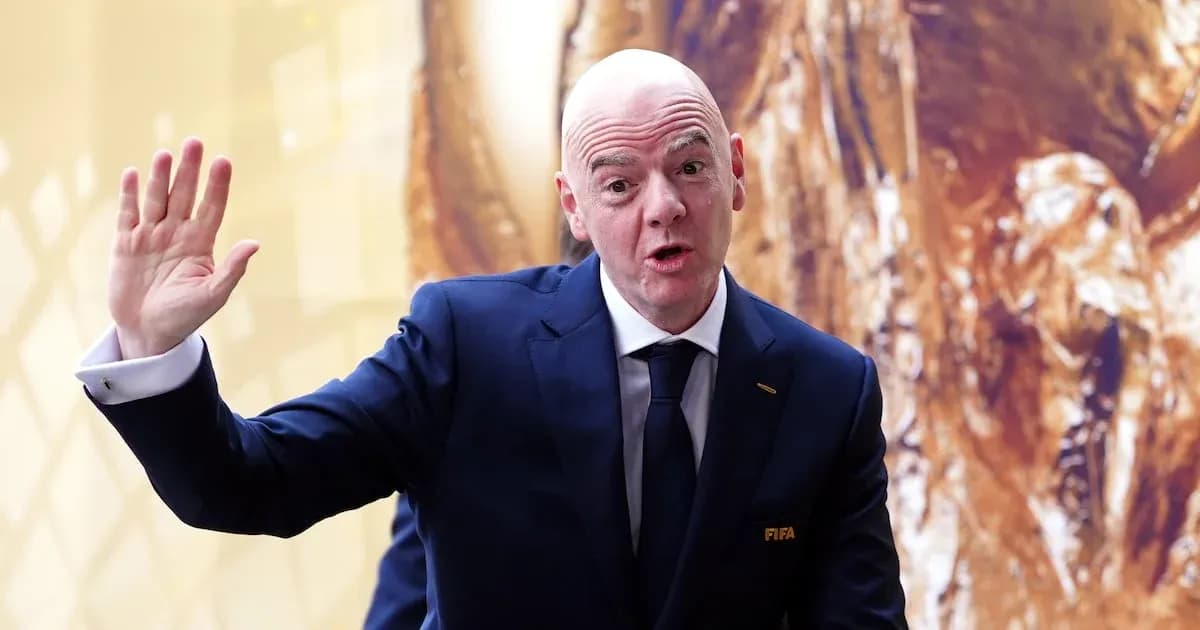
Gianni Infantino has finally blinked.
Under sustained fire over the chaotic World Cup commercial plans and the handling of the Folarin Balogun affair, the Fifa president has agreed to commission an independent governance review – the first time in his tenure he has opened the door to external scrutiny.
Infantino under siege
The pressure has been building for weeks. Several members of the Fifa Council have been pushing hard for an outside assessment of the proposed Fifa Forward Enterprise (FFE) sell‑off and the controversy surrounding Balogun. The situation escalated when the English FA chair, Debbie Hewitt, wrote directly to Infantino, demanding the release of all documents linked to both matters.
Infantino chose not to engage publicly with the dissenting voices on the council. No conciliatory calls. No open debate. Instead, he went over their heads.
In a letter sent to all 211 member associations, he signalled a shift: a willingness to let outsiders examine how football’s most powerful organisation is being run.
Independent review on the table
“First, I will ask the council whether it wishes to commission an independent external review of Fifa’s current governance framework for major strategic initiatives and recommend potential improvements,” Infantino wrote.
That is the headline move. An external review of how Fifa signs off its biggest projects – the kind of check many inside the game have been demanding since the FFE plan exploded into public view.
He coupled that with a second proposal, this time aimed at reshaping how decisions are made inside Fifa’s labyrinthine structures.
“Second, I will propose that the council establish a direct, structured and time-limited consultation with confederations, member associations and relevant stakeholders on how Fifa’s decision-making can be further strengthened.
“The consultation would invite specific proposals on earlier institutional involvement, the respective roles of the president, the bureau, the council and the congress, and practical ways to strengthen transparency, participation and accountability in major strategic initiatives.”
Those ideas will land on the table at the next Fifa Council meeting in Zurich on 15 October, a date that now carries far more weight than a routine gathering of administrators.
Power, pressure and what comes next
On paper, the council – 28 representatives from the six confederations, eight vice-presidents and Infantino himself – is almost certain to approve an external review. The real battle lies in the small print.
The terms of reference will decide whether this becomes a genuine turning point for Fifa’s governance or a carefully stage‑managed exercise that leaves the president’s authority intact. With a presidential election looming in March next year, every clause will be read as a signal of how far Infantino is willing to loosen his grip.
Notably, his letter does not explicitly promise that FFE and the Balogun case will be examined as part of the review. That omission matters. It falls short of Hewitt’s clear demand and leaves open the possibility that the most contentious recent episodes remain ring‑fenced from full disclosure.
The governance fight is not the only front on which Infantino is being challenged.
The $6bn question
Money is now at the heart of the political struggle. Fifa sits on cash reserves of around $6bn (£4.5bn), and the confederations want a slice released to national associations.
Last week, Uefa president Aleksander Ceferin and Concacaf president Victor Montagliani formally requested a payout of at least $10m for every member association. On Monday, Asian Football Confederation president Sheikh Salman bin Ibrahim Al Khalifa joined the chorus with a similar letter.
That turns next month’s council meeting into a showdown not just over process and transparency, but over who controls the game’s vast financial muscle and how quickly that money flows back to the countries that elect Fifa’s leadership.
Infantino has survived storms before. This time, though, the challenge comes from inside his own structures, from council members and confederation chiefs who want answers, influence and cash.
Zurich in October will show whether Fifa is truly ready to open itself up – or whether the world’s most powerful football body is simply learning new ways to protect the same old power.