
FIFA Eases Molina's Ban but Upholds Paredes' Full Suspension
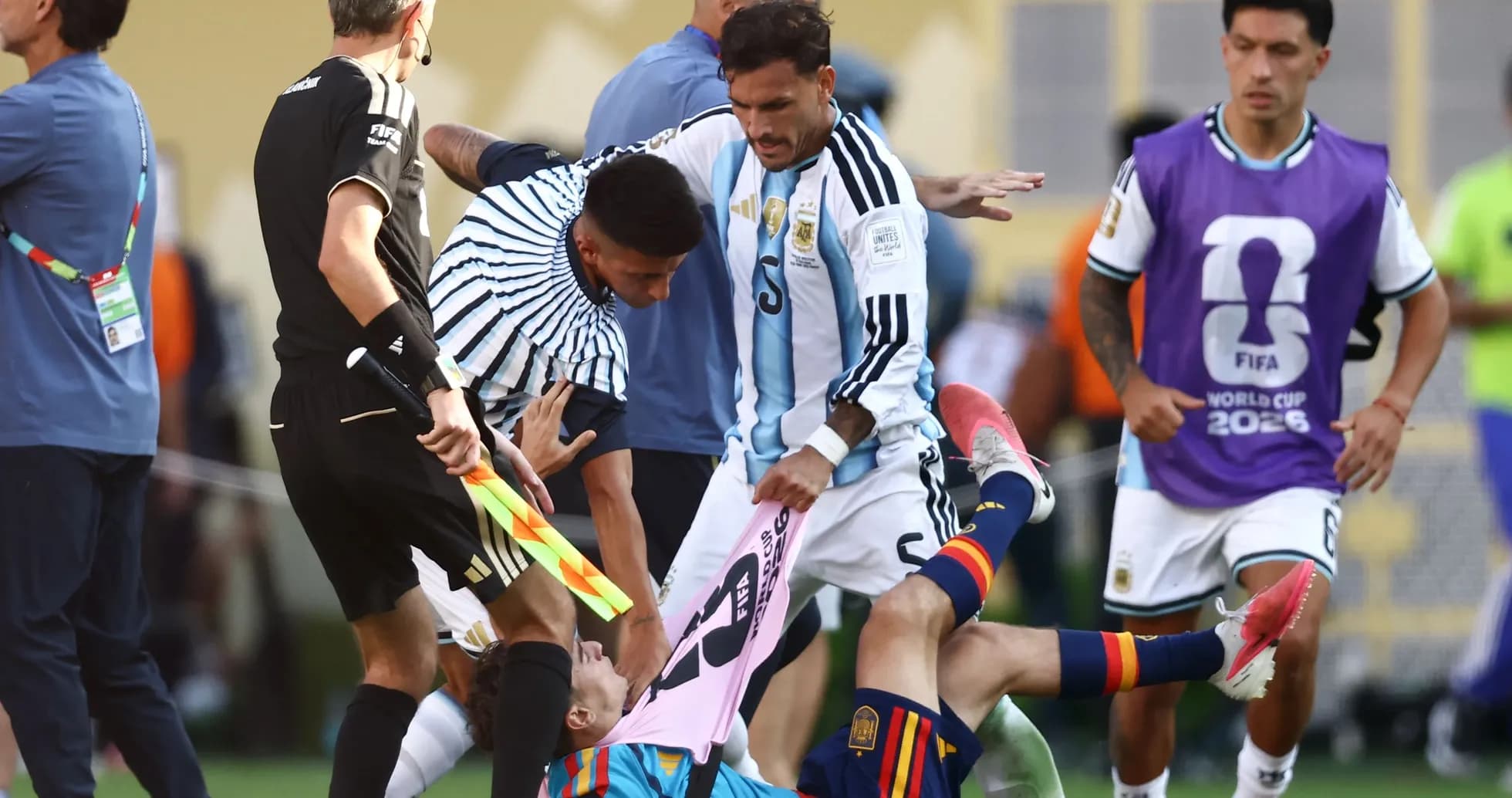
FIFA’s Appeal Committee has eased the punishment on Nahuel Molina but left Leandro Paredes to carry the full weight of its original verdict, in a ruling that keeps Argentina’s battle with world football’s authorities very much alive.
The sanctions stem from the stormy aftermath of the 2026 World Cup final against Spain, a night that ended with a 1-0 Spanish win and a long disciplinary tail for the Albiceleste.
Molina reprieved, Paredes not
According to Spanish newspaper Marca, FIFA trimmed Molina’s suspension from seven matches to four and cut his fine from 90,000 dollars to 60,000. It is a significant reduction for the former Atlético Madrid defender, who will now return to international duty far earlier than first feared.
Paredes received no such relief. The Appeal Committee upheld the midfielder’s 10‑match ban in full and confirmed a 90,000‑dollar fine, leaving one of Argentina’s most experienced figures sidelined for a long stretch of the new cycle.
For Lionel Scaloni’s staff, it is a mixed verdict: one key player back sooner, another effectively wiped out for almost an entire qualifying campaign.
AFA prepares next legal move
The Argentine Football Association (AFA) responded with a firm statement. It announced it will request the full written grounds of FIFA’s decisions, a formal step before taking the fight to the Court of Arbitration for Sport (CAS).
The federation stressed it believes it has “sufficient arguments from both a factual and legal standpoint” to seek a review of the sanctions. In other words, this is not over. Not yet.
The timing matters. CAS is already immersed in another high-profile case involving a major final: the chaotic 2025 Africa Cup of Nations showdown between Morocco and Senegal. A ruling there is expected by the end of November, and its reasoning could shape the legal landscape into which Argentina’s appeal eventually lands.
Heavy fines over discriminatory chants
Beyond individual suspensions, Argentina’s federation is also dealing with a broader punishment. FIFA’s Disciplinary Committee had sanctioned the AFA for discriminatory chants heard during several of the national team’s matches at the World Cup, including the final against Spain.
Spain’s 1-0 victory in July secured the title, but the soundtrack from the stands has carried serious consequences. FIFA imposed a 321,000‑dollar fine on the AFA and ordered restrictions on crowd attendance at future Argentina games. Those measures draw on multiple articles of FIFA’s disciplinary code and cover incidents from matches against Cape Verde, Egypt, Switzerland, England and Spain.
The fallout hit players and staff as well. Thiago Almada received a one‑match ban, while assistant coach Roberto Ayala was handed a three‑match suspension under the initial wave of sanctions.
Back in August, FIFA had at least granted one concession: it agreed that the suspensions could be served across both friendly and official fixtures played under CONMEBOL’s umbrella, “whichever comes first.” That decision allowed Argentina to start chipping away at the bans in lower‑stakes matches rather than waiting solely for competitive qualifiers.
Now, with Molina’s punishment reduced and Paredes still facing the full 10 games, the spotlight shifts from Zurich’s committee rooms to the lawyers and arbitrators of CAS. Argentina has its next venue. The question is whether it can change the scoreline there.





