FIBA Women’s World Cup Semifinals: France vs Germany and Spain vs USA
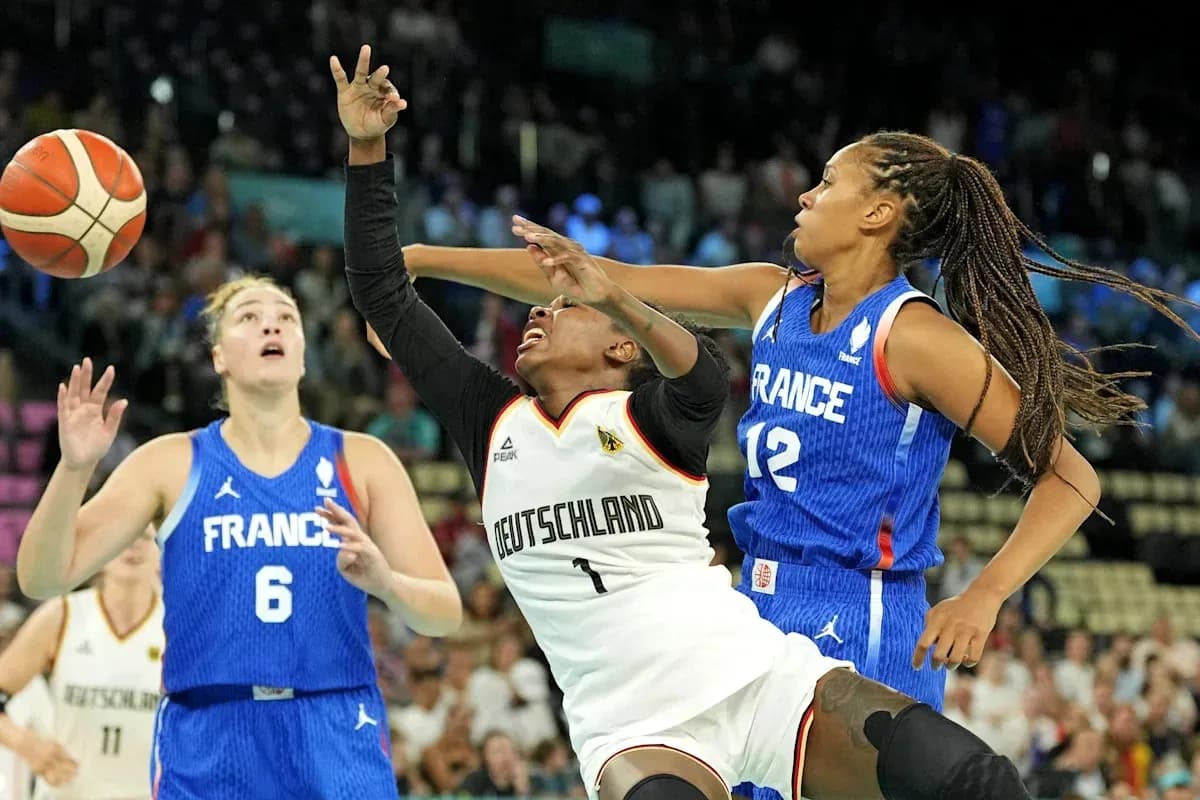
The 2026 FIBA Women’s World Cup has boiled down to four heavyweights and one charged Saturday in Berlin. The United States, France, Spain, and Germany all stormed through their quarterfinals. Now comes the hard part: surviving each other.
Two semifinals. One host nation. One defending powerhouse. One resurgent European force. One French team playing like it has a score to settle.
This is where the tournament grows teeth.
France vs Germany – Depth vs Noise in Berlin
France have not just been winning; they’ve been dismantling people.
They’ve broken the single-game three-point record. They’ve piled up points and stretched margins. Through the group stage and quarters, they’ve looked like the side everyone else is trying to solve, not simply beat. Yet their biggest examination arrives on German soil, against a host nation riding a surge of its own.
The French advantage starts where so many tournaments are won: on the bench.
Marine Johannès has turned the sixth-woman role into a weapon. She’s eighth in the tournament in scoring at 16.5 points per game and leads all players with 16 made threes. Those numbers would be impressive for a star guard playing 30-plus minutes. Johannès is doing it without even starting, coming in cold and immediately bending defenses out of shape.
Every time she checks in, the rhythm of the game changes.
On the wing, Gabby Williams has been playing some of the sharpest basketball of her international career. She has driven France’s tempo, defended across positions, and given them a reliable primary option when games tighten. If her current level holds, France’s path to the final remains wide open.
Germany, though, have something France do not: Berlin.
The World Cup in their own backyard has given this run a different kind of energy. Led by Marie Gülich, Germany have pushed their way into the semifinals with a blend of toughness and timely scoring. Gülich’s 11.8 points per game don’t leap off the page, but her impact does. She’s been the early spark, the interior anchor, the player who steadied them when games threatened to drift.
Around her, the supporting cast has grown with every round.
Leonie Fiebich and Nyara Sabally have elevated their play as the stakes have risen. Against Belgium in the quarters, Fiebich delivered a team-high 17 points and ripped down 10 rebounds for a double-double. Sabally matched that intensity with 16 points and 12 boards of her own. Those are not empty numbers; they’re the backbone of Germany’s belief that this isn’t just a feel-good host story.
If those two maintain that level, Germany have the tools to turn this into a real fight, not just a showcase for France’s firepower.
The problem sits in the margins. Germany’s bench has contributed, but it doesn’t stretch as deep or as dangerous as France’s rotation. Over 40 minutes, that difference can become brutal, especially against a side that keeps sending in fresh, high-level guards and wings who can all shoot, all defend, all run.
Germany know the danger. They’ve lived it.
At the 2024 Olympics in Paris, France knocked them out in the quarterfinals, 84–71. That result still hangs in the background. To avoid a repeat, Germany must lean into their defense, feed off the crowd, and drag France into a more physical, less free-flowing game. If the home fans can push their intensity up a notch and disrupt France’s three-point rhythm, the upset door creaks open.
France, though, are carrying something heavier than form: a mission.
The sting of that devastating loss to the USA at the 2024 Paris Olympics has not faded. This tournament has felt like a response—relentless, focused, unforgiving. They have kept their foot down from the opening tip and shown no interest in easing off.
Prediction: France have too much depth, too many shooters, and too much momentum. Germany’s crowd can rattle them, but over four quarters, France look set to punch their ticket to the final.
Spain vs United States – Firepower Meets Firepower
The second semifinal brings a different kind of tension.
Spain arrive in Berlin playing confident, clean basketball. They topped Group A, earned a bye, then dismantled Australia 89–66 in the quarterfinals. That’s not just a win; that’s a statement against a traditionally strong program.
At the heart of it, Megan DiLeo (née Gustafson) has found her groove. She led Spain with 16 points on 7-of-11 shooting in that win over Australia, a performance that mirrored the confidence she has built with the Portland Fire in the WNBA. Her World Cup form has been an extension of her club rise—steady, efficient, and increasingly assertive.
Alongside her, Iyana Martín has emerged as one of the tournament’s standout scorers. Averaging 16.5 points per game, she ranks seventh among all players. She has given Spain a dynamic perimeter threat, someone who can shift gears, attack closeouts, and hit big shots when defenses collapse on DiLeo.
Together, they’ve powered an offense that hums at 81.0 points per game.
On most nights, that’s enough. Against the United States, it might not be close.
Team USA are averaging 90.5 points per game. They wobbled briefly in the group stage against Italy, a scare that reminded them—and everyone else—that even giants can stumble. Since then, they’ve looked like themselves again.
Hungary felt the full force of that response: a 108–56 demolition in the quarterfinals.
Napheesa Collier led the way with 19 points. The former WNBA Defensive Player of the Year has been a model of consistency all tournament, impacting both ends with the kind of calm authority you expect from a player used to big stages. Rhyne Howard added 15 points and went 3-for-5 from deep, another reminder of how many different ways this American team can hurt you.
Then there’s the bench, which reads like an awards ballot.
Caitlin Clark. Paige Bueckers. Angel Reese. All three have come in and changed games when called upon. Some teams bring on role players. The United States bring on former WNBA MVP candidates and college superstars who can run an offense, crash the glass, or turn a defensive stand into a scoring avalanche in seconds.
Their defense has been just as ruthless. Across four games, they’ve allowed only 58.3 points per contest. They close out hard, switch with confidence, and suffocate second chances. On the glass, the numbers underline that control: 31.5 defensive rebounds per game, compared to Spain’s 26.3.
That gap matters.
If the United States keep owning their defensive board, Spain’s 81-point offense shrinks in real time. One shot, then back the other way against a team that runs as well as anyone in the world is a brutal formula to survive.
Spain will need a defensive performance at the edge of their limits to keep this close. They must disrupt rhythm, turn this into a half-court contest, and make every American possession feel heavy. DiLeo and Martín can score with anyone, but they cannot trade baskets with a team averaging nearly 10 points more per game and boasting this kind of depth.
Prediction: Spain’s run has been impressive, their growth obvious. But the United States bring experience in big moments, balance across the floor, and a bench that would start for almost any other nation. With their scoring, rebounding, and defensive discipline, they walk into this semifinal as clear favorites.
The question now is not whether these four teams belong here. They do. The question is who can handle the weight of Berlin, the roar of a home crowd, the ghosts of past tournaments, and the knowledge that one more win means playing for a World Cup.