
Felix Nmecha's Goal Celebration Sparks Cultural Debate in Football
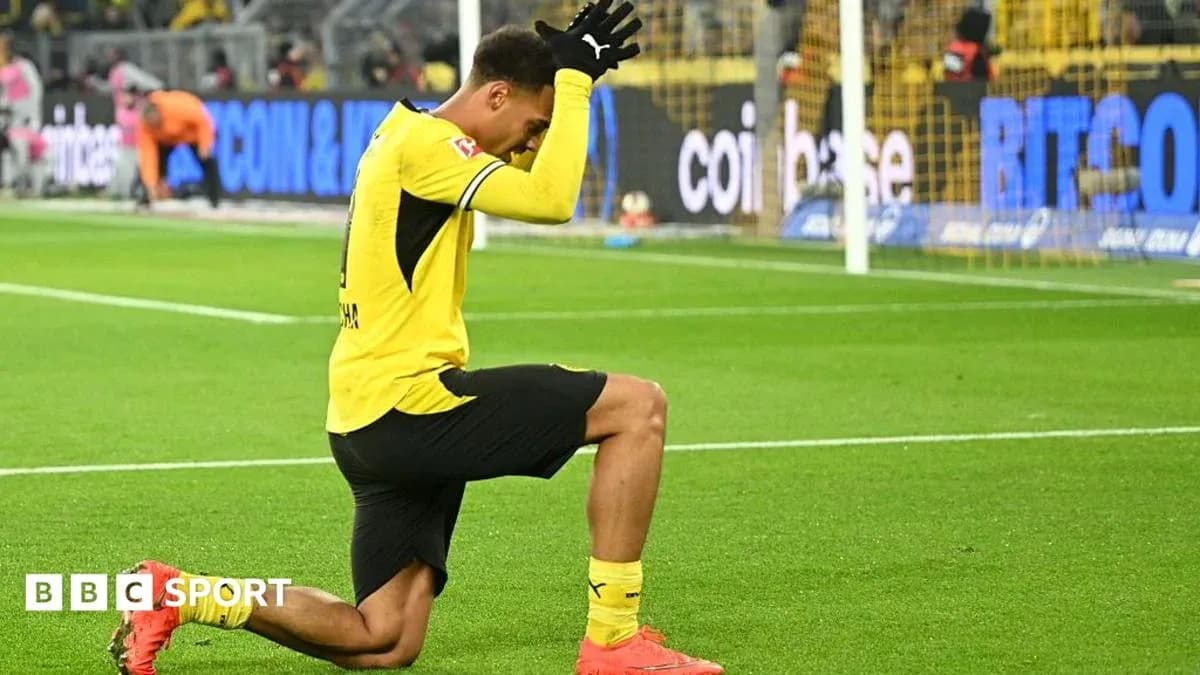
Felix Nmecha’s celebration was supposed to be simple. Two goals in a 2-1 win over Elversberg, a finger pointed to the sky, a mime of lifting an invisible crown from his head and placing it on the turf.
Instead, it has dropped him straight into the centre of German football’s fiercest cultural debate.
A Gesture, A Campaign, A Clash
The celebration, Borussia Dortmund fans quickly noticed, echoed imagery from “The King’s Return”, a campaign promoted by the Christian football group Ballers in God. That link was enough to trigger a sharp response from one supporters’ group, which accused the campaign of standing against the club’s core values.
The group pointed to reporting by German broadcaster ARD, saying the campaign advocates “extremely conservative positions against homosexuality and transgender identity”, describes abortion as “Satan’s plan” and collides with Dortmund’s long-professed commitment to tolerance and diversity.
For a club that has built a modern identity on anti-discrimination messaging, fan activism and a clear public stance on social issues, the symbolism around one player’s goal celebration suddenly mattered a great deal.
Nmecha: “Misunderstandings” And A Denial Of Hate
Nmecha moved quickly to distance himself from any notion that he was promoting intolerance.
He described the reaction as rooted in “misunderstandings” and stressed that the gesture was “not intended to promote myself or any organisation”. He went further, insisting: “My message has never been about promoting intolerance, discrimination, or hate in any form.”
In other words, faith, not politics. Personal belief, not a manifesto. But in 2024’s football landscape, those lines rarely stay clean.
Ballers in God Defend Their Message
Ballers in God, founded by former Crystal Palace and Tottenham midfielder John Bostock, now find themselves under scrutiny that goes well beyond a niche faith-based movement.
The organisation, which promotes Christian beliefs and counts high-profile followers such as England internationals Marc Guehi and Bukayo Saka and former Brazil forward Kaka, responded with a statement that tried to reframe the narrative.
“We are encouraged by player-led movements such as The King’s Return, where footballers themselves take the initiative to express their faith in Jesus,” the group said.
“Our desire is not only to share our hope, but to demonstrate love and respect towards everyone, including those who do not share our beliefs. Our focus has always been, and will always be, to point people to Jesus with grace and love.”
The wording was deliberate: emphasis on “love and respect”, a refusal to engage directly with the specific accusations from Dortmund fans, and a clear defence of players’ right to express faith publicly.
Football, Faith And The Rainbow Fault Line
Nmecha’s situation does not exist in isolation. It lands in a sport already wrestling with how far individual religious conviction can sit alongside institutional backing for LGBTQ+ inclusion.
Last year, the Premier League quietly stepped away from its formal partnership with LGBTQ+ charity Stonewall and withdrew from the Rainbow Laces campaign. The branding remains visible in some rounds, but the relationship at the top level has changed.
On the pitch, players have started drawing their own lines.
In 2024, then Ipswich captain Sam Morsy, a Muslim, said he did not wear a rainbow armband because of his “religious beliefs”. At Crystal Palace, Marc Guehi once wrote “I [heart] Jesus” on his rainbow armband while captaining the side, blending a league-backed symbol of LGBTQ+ support with a public declaration of Christian faith.
At Manchester United, plans to wear a jacket supporting the LGBTQ+ community were dropped when a player refused to take part. The club backed away rather than force a confrontation.
Each episode adds another layer to an increasingly complex picture: leagues and clubs presenting themselves as inclusive, corporate and progressive; players insisting on the primacy of personal belief; fan groups ready to challenge anything they see as hypocrisy or regression.
Dortmund’s Dilemma
For Dortmund, the Nmecha controversy cuts close to the bone. The club has long marketed its stance on diversity and anti-discrimination as non-negotiable. Its Südtribüne is famous not just for noise and colour, but for political banners and campaigns.
So when a section of that fanbase links a player’s celebration to a movement they believe discriminates against homosexuality and transgender people, the tension becomes unavoidable. Is this simply a footballer expressing his faith, or an unwanted platform for a campaign at odds with the club’s values?
Nmecha insists his intent was never to promote hate. Ballers in God talk of grace and love. The supporters’ group hears something very different behind the same slogans.
The goals against Elversberg are already fading from memory. What lingers is the image of a crown being laid down and the argument that followed – another sign that in modern football, what a player believes and how he shows it can matter every bit as much as what he does with the ball.





