
Fede Valverde: From Midfielder to Key Right-Back
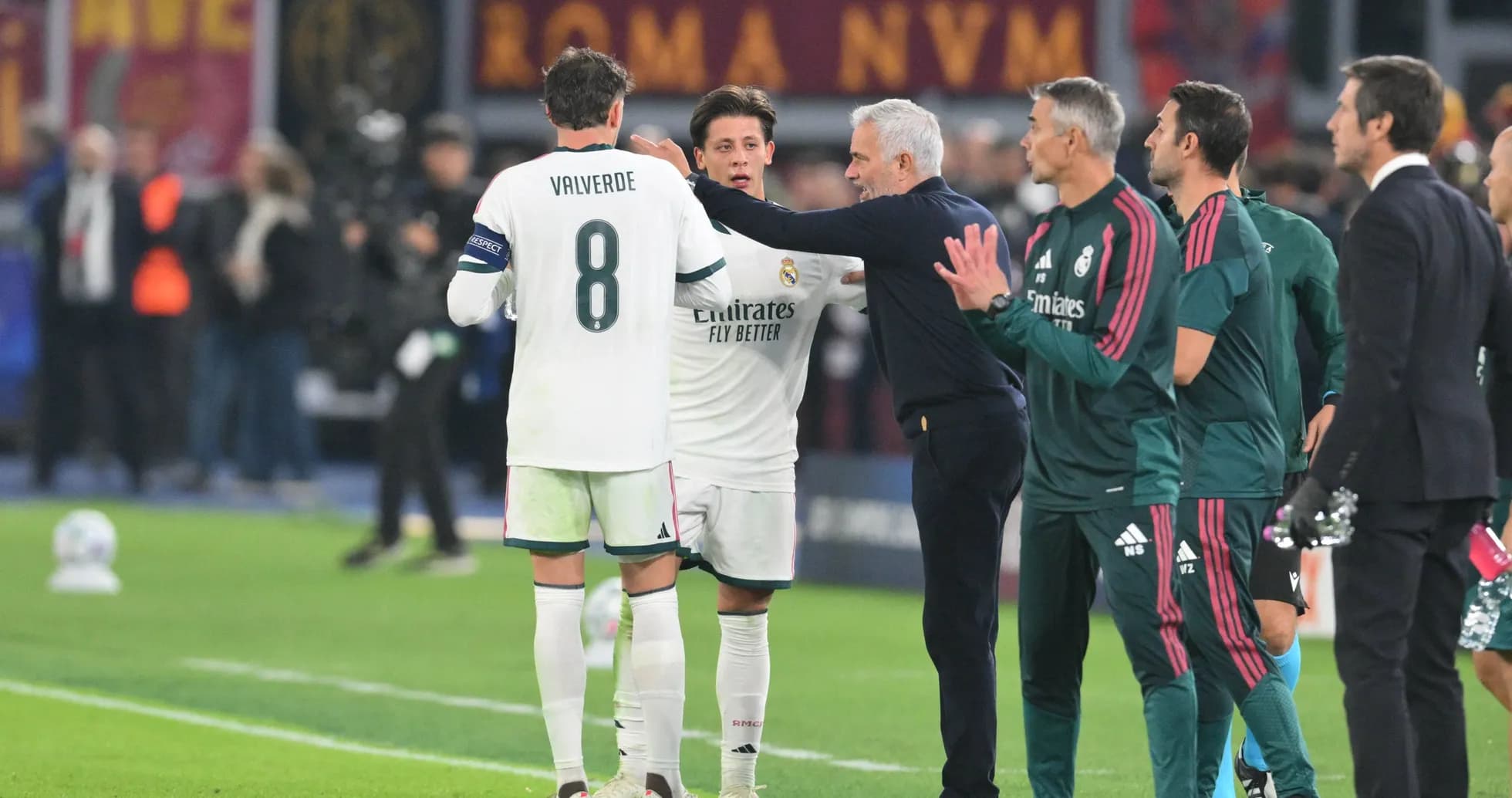
Fede Valverde needed less than half an hour in Athens to change everything.
Sent on from the bench, he tore into the game with the urgency of a man who refuses to be a footnote. He reorganised Real Madrid’s midfield on the fly, stitched together their attacks, and finished as the side’s leading creator with three chances fashioned in barely 30 minutes. Then came the exclamation mark.
From around 25 metres out, Valverde stepped into the ball and detonated it. The strike ripped past Brignoli, a rising rocket that barely seemed to dip before it smashed into the net. According to AS, it was Madrid’s third of the night, the goal that killed off the contest, sealed a seventh straight victory and kept the mood at Valdebebas almost defiantly buoyant.
It also felt like a flashback. A reminder of the midfielder who once roamed Carlo Ancelotti’s engine room, surging from deep, hitting the kind of thunderbolts that made him one of Europe’s most complete modern midfielders.
Yet the present tells a different story. And José Mourinho is the author of this new chapter.
From emergency full-back to first-choice weapon
Ancelotti was the first to push Valverde into unfamiliar territory, using him as an emergency full-back in the closing minutes of a Champions League tie against Sheriff Tiraspol back in 2021. At the time it looked like a one-off, a tactical patch rather than a plan.
Reality has caught up quickly.
Despite the glowing praise Mourinho offered in a press conference at Real Madrid’s training base – “He is an excellent professional, a friend to his team-mates, and although he is not a voice heard every second, he is always present as a role model for everyone” – Valverde’s immediate future is not in midfield. Against Valencia at Mestalla, he will start again at right-back, the role in which he has quietly become one of Mourinho’s most important pieces.
This is not a whim. It is a calculated shift, sold with the authority of a coach who has seen enough dressing rooms to know when to push and when to persuade.
Mourinho, with all his years on the touchline and his almost obsessive attention to the psychological side of the game, has worked on Valverde slowly, convincing him that this is not a demotion but an evolution. The Uruguayan has listened. More than that, he has bought in.
A right-back that unlocks everyone else
On paper, Mourinho has options. Trent Alexander-Arnold and Denzel Dumfries both arrived with reputations, both with strong arguments for the position. Alexander-Arnold did not disappoint in Santander, and Dumfries comes into this stretch of the season fresh from delivering a decisive assist against AEK.
Yet Mourinho’s verdict is clear: with Valverde at right-back, the rest of the team breathes easier and plays freer. The balance shifts. The structure tightens. The attack opens up.
The timing has helped. Valverde’s physical peak has allowed the switch to feel natural rather than forced, and the benefits have spread across the squad. His presence on that flank offers an extra card on the table, a moving reference point that shapes how team-mates position themselves and how opponents dare to press.
The first real glimpse of this new version of Valverde came against Sevilla. On his full debut in the role, he didn’t just survive; he dominated. Six ball recoveries. Five duels won – the best figure in the team. Three interceptions, two clearances, one shot blocked. The numbers told the story of a player who attacked the job with the same intensity he once brought to midfield.
His level has not dipped since. The sentence he once delivered in Almaty – “I was not born to play at full-back” – now sounds like something from another career, not just another season.
Mourinho’s U-turn and Valverde’s example
Mourinho has had to confront his own words too. He had previously insisted Valverde would never be used there under his command. Then he saw the impact, felt the stability it gave his side, and changed course.
He did not just find a solution. He found a weapon.
The Portuguese coach leaned on his man-management again, framing the shift as a chance for Valverde to lead, not to compromise. The Uruguayan responded, stepping into the role with a captain’s sense of responsibility and a willingness to set the tone for the rest.
Valverde himself summed up the message: “When we all work together and move in the same direction, we become stronger. And as the team’s captain, I took the step everyone was waiting for from me, and I provide a role model for my team-mates.”
For Mourinho, that attitude is gold. He has held Valverde up inside the dressing room as a symbol of commitment, a walking example of what this project demands and what it can become. A player who once resisted the idea of playing at full-back now embodies the unity the coach wants to protect.
The story picks up again tonight at Mestalla. Valverde will not glide through midfield but charge up and down the right touchline, a full-back by position, a midfielder by instinct, and a captain by conviction.





