
FC Andorra Goalkeeper Jesus Owono Receives 12-Match Ban
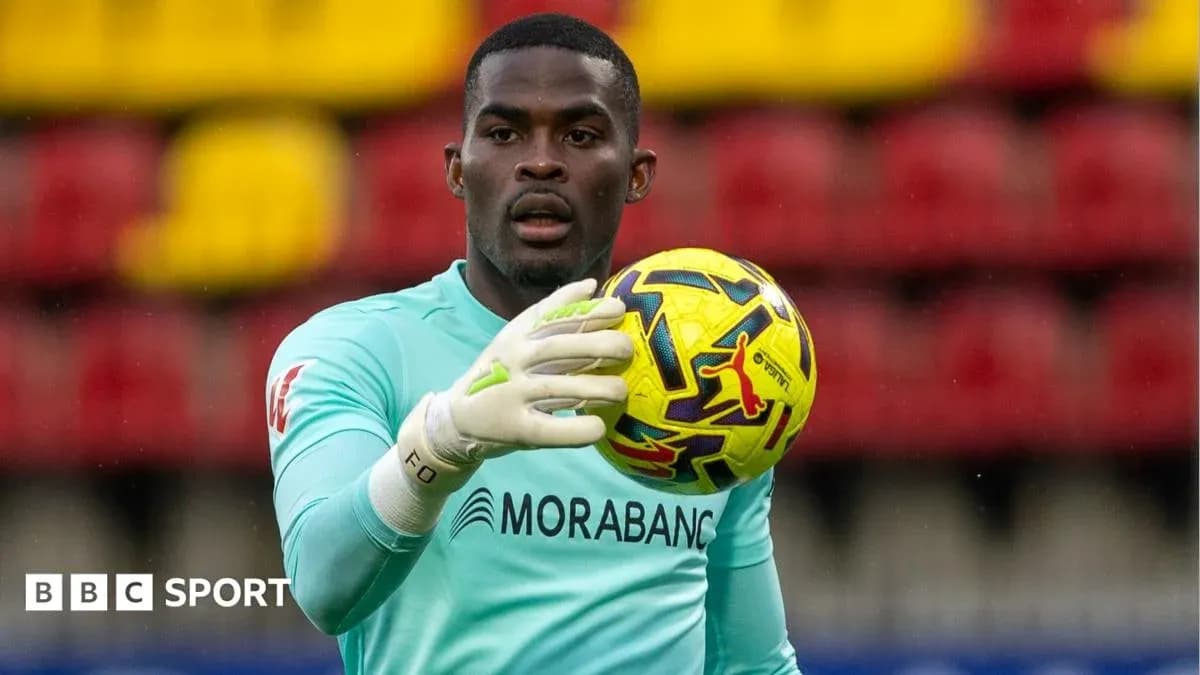
FC Andorra goalkeeper Jesus Owono has been hit with the heaviest suspension available to Spanish football’s disciplinary committee – a 12‑match ban – after the challenge that led to the death of Tenerife forward Jesus de Miguel.
The incident, which stunned the Segunda División and wider game, came deep into stoppage time of the match between the two clubs on 2 November. Owono, 25, was sent off after a violent collision with De Miguel. The Tenerife striker died the following day, aged 30.
Maximum sanction in a case that shook Spanish football
In its written ruling, the disciplinary committee stressed that it was bound to judge the case strictly on the referee’s report. That document stated that Owono “was sent off for violently striking an opponent in the chest with his leg, using excessive force, while the ball was in play”.
From there, the committee drew a clear line. The description of the action, the context of the play, and the consequences left it in no doubt.
“The tragic outcome of the incident, resulting in the death of Jesus de Miguel Alameda, is public knowledge,” the committee noted, before concluding that “the nature of the conduct described and the accompanying circumstances” justified applying the maximum possible punishment: a 12‑match suspension.
It is an extraordinary sanction, but so is the case. Spanish football has rarely been forced to confront an on‑field incident with such a devastating human cost.
Match abandoned – and left as it was
The federation also moved to close another question: what to do with the game itself.
Play was abandoned seven minutes into stoppage time, immediately after the collision. The score stood at 2-2, tension high, the result in the balance. The referee halted the match as medical teams fought to treat De Miguel.
Weeks later, the federation confirmed that the fixture will not be replayed. The 2-2 scoreline will stand as the final result.
“This avoids having to resume play from the precise moment at which the tragic incident occurred,” the federation explained, with a committee describing that decision as “the most respectful course of action, given the extraordinary and tragic circumstances of this case”.
Instead of dragging players and supporters back to the exact second everything changed, Spanish football has chosen to draw a line under the contest and leave it frozen in that moment.
A goalkeeper’s future in doubt
While the legal and sporting machinery has moved quickly, the human fallout is far from resolved.
On 4 November, FC Andorra released a statement on Owono’s behalf. In it, the Equatorial Guinea international spoke of living through “the most difficult days” of his life and of feeling “enormous pain” over De Miguel’s death. There was no attempt at self-defence, only grief.
That anguish has left his career at a crossroads.
Speaking on Thursday, FC Andorra manager Carles Manso admitted Owono has not yet decided whether he will return to football at all. The goalkeeper is currently with his family, away from the training ground, away from the noise.
Manso made it clear the club will not push him.
He described Owono as “completely free to make any decision” about his future and underlined that the priority is to “support him in every way and be close to him”, not to hurry him back between the posts.
“We will give him space so that he feels completely free to make any decision, whether he wants to return, when, or if he does not want to return,” Manso said. The timing, the choice, the next step – all of it rests with the player.
“When he feels it is appropriate and when he feels genuinely ready to take a decision like that,” his coach added, “he will do so.”
A 12‑match ban will one day expire. The question that now lingers over this tragedy is whether Jesus Owono will ever choose to serve it.





