Fantasy Forward Risers and Sleepers for 2026-27
The forward pool in Yahoo Fantasy’s High Score game looks very different this year.
LeBron James is out of Los Angeles. Giannis Antetokounmpo is out of Milwaukee. Rotations have been ripped up, rebuilt and, in a few spots, left wide open. That’s where fantasy managers win drafts — in the chaos that follows stars changing jerseys.
This 2026-27 forward class is loaded with players stepping into bigger roles, and the scoring format — where only your best game of the week counts — makes high-usage, stocks-heavy forwards absolute gold.
Below are the names who stand to benefit most.
Forward Risers
Naz Reid, Charlotte Hornets
Naz Reid has been waiting for this kind of runway.
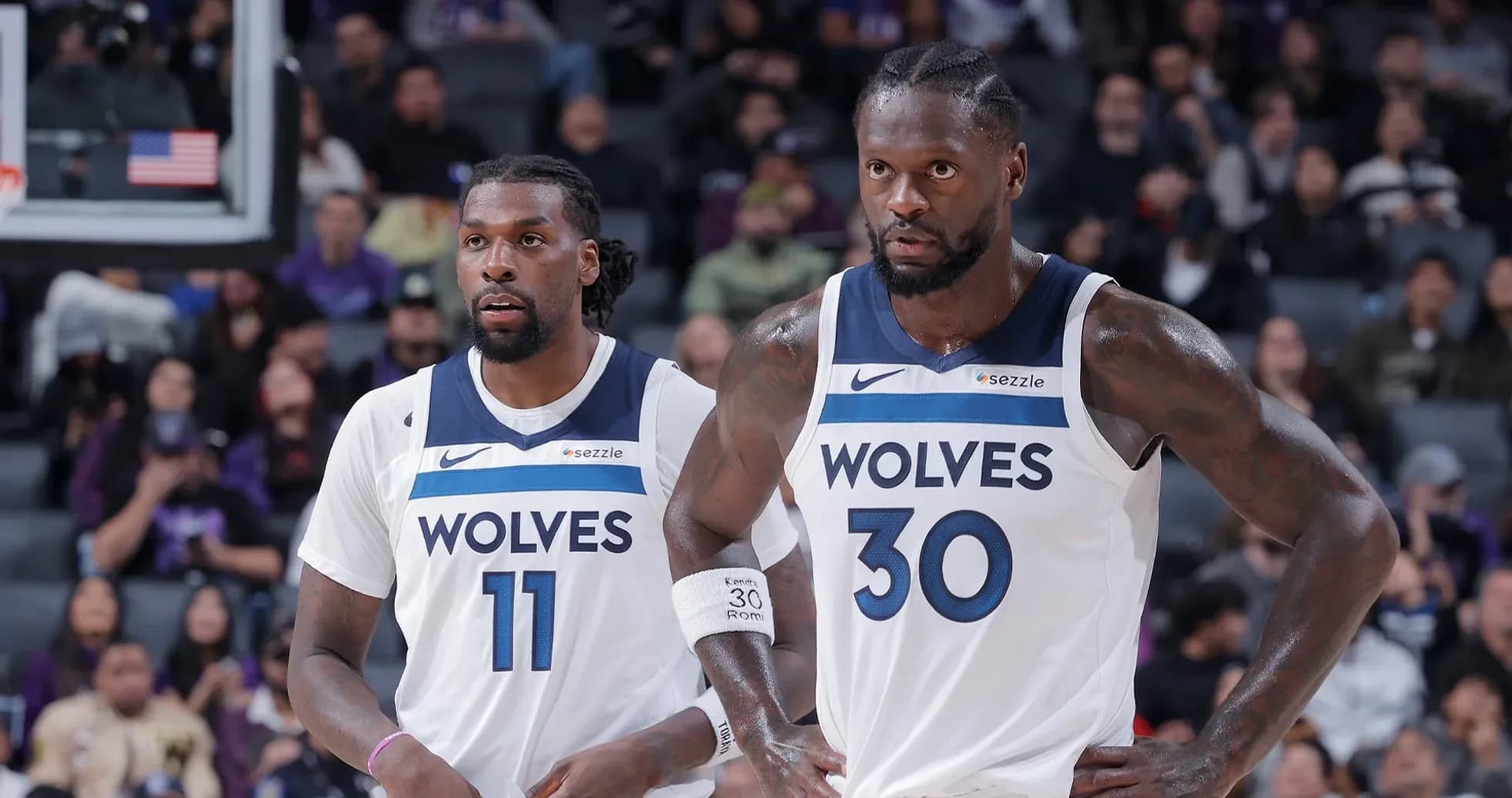
In Minnesota, he earned his money but not always his minutes, stuck behind Rudy Gobert and Julius Randle and capped at 26 per game last season. Even in that limited role, he delivered 13.6 points, 6.2 rebounds and 2.2 assists. Productive, but clearly constrained.
Charlotte changes everything.
The Hornets made size a priority this summer and watched Miles Bridges walk, leaving a big hole in frontcourt usage. Reid now walks into a depth chart that can realistically hand him 30-plus minutes a night for the first time in his career, with room to stretch his game and his volume.
The blueprint is already on record. Across 77 career starts, Reid has averaged 15.5 points, 7.1 rebounds, 2.0 assists, 1.8 threes, 1.1 steals and 1.2 blocks. That profile translates to roughly 33.5 High Score points per outing — before you even factor in a potential bump in touches and responsibility.
The key is the stocks. Steals and blocks drive this format, and Reid offers both while spacing the floor as a stretch big. On his ceiling nights, when the threes are falling and the defensive activity spikes, he can flirt with 40-plus High Score points.
With an ADP of 65 on Yahoo, he isn’t exactly hidden. He still looks underpriced for the combination of role, stat set and upside.
Julius Randle, Brooklyn Nets
The Timberwolves didn’t just clear a lane for Reid. They shipped out Julius Randle too, and Brooklyn looks ready to hand him the keys.
The Nets are building around Michael Porter Jr. and ushering in the next wave with rookie guard Mikel Brown Jr., but Randle arrives as the proven offensive engine. This is familiar territory. In 2022-23 with the Knicks, he carried a 29.5% usage rate and averaged 25.1 points, 10 rebounds and 4.1 assists. That line alone is worth roughly 43 High Score points per night, even before you add whatever he chips in defensively.
Minnesota never let him get back to that level of dominance, keeping his usage at or below 26.5%. Brooklyn has every reason to go the other way and lean heavily on his scoring and playmaking.
In a game where only your best performance of the week counts, Randle’s profile is almost unfair. A 30-15-6 type of explosion instantly becomes a weekly anchor, the kind of outing that can single-handedly tilt a matchup.
If he gets anything close to New York-level volume in this new Nets setup, he’s the sort of high-usage forward who can feel like a cheat code.
Andrew Wiggins, Miami Heat
Miami changed its entire identity by landing Antetokounmpo. Tyler Herro and a chunk of the Heat’s young depth went to Milwaukee, leaving a roster that now orbits Giannis and Bam Adebayo.
Davion Mitchell brings the table-setting and perimeter defense. Tim Hardaway Jr. and Klay Thompson will space the floor. Someone still has to live in the gap between the stars and the specialists.
That’s where Andrew Wiggins fits.
Even in a relatively muted role last season, with a 19.4% usage rate, Wiggins produced 15.4 points, 4.8 rebounds, 2.7 assists, 1.1 steals and 1.0 blocks — about 32 High Score points per game. Before that, he had cleared 20.9% usage every year, and at 24.5% two seasons ago, he averaged 18 points.
The steal-and-block combo is the quiet engine of his fantasy value here. Those 2.1 “stocks” a night pile up in this scoring system, and any uptick in usage as Miami’s third scoring option only sharpens his edge.
With an ADP of 110, Wiggins sits in that sweet spot: not flashy, not expensive, but perfectly positioned to outperform his draft slot.
Forward Sleepers
Jaime Jaquez Jr., Milwaukee Bucks
Jaime Jaquez Jr. has already ridden the NBA roller coaster once. Impressive rookie flashes, a sophomore dip, and then a strong rebound last season: 15.4 points, 5.0 rebounds and 4.7 assists in 28 minutes per game, on a sharp jump to 50.7% shooting from the field.
That resurgence made him a key piece in the blockbuster that sent Giannis to Miami.
Milwaukee now enters a new era with Tyler Herro as the primary scorer, Ryan Rollins alongside him, and a supporting cast featuring Kevin Porter Jr., Kyle Kuzma, Myles Turner and young pieces like Brayden Burries and Nate Ament. It’s a lot of moving parts, but what the Bucks badly need is a steady connector who can play, pass and compete on both ends.
Jaquez fits that description and should see plenty of floor time.
In this format, his 4.7 assists alone are worth 9.4 High Score points. He doesn’t rely on heavy three-point volume, which is a bonus here, as triples don’t carry their own category. Any growth in scoring and rebounding — both very much on the table with his likely role — stacks directly onto an already solid base.
If he holds the ball as often as expected, career highs across points, boards and assists are firmly in play.
Collin Murray-Boyles, Toronto Raptors
On paper, Collin Murray-Boyles still sits behind Jakob Poeltl. The veteran center is locked in through 2029-30 on a hefty deal and should open the year as the starter.
The reality in Toronto has been less stable.
Poeltl played just 46 games last season and has failed to clear 57 appearances in each of his three full seasons with the Raptors. Murray-Boyles stepped into that void and made his case, starting 22 times and averaging 9.1 points, 5.7 rebounds, 2.7 assists, 1.1 steals and 1.2 blocks.
That’s roughly 27 High Score points from a rookie, with about a quarter of that total coming from steals and blocks. For this scoring system, that’s exactly the kind of defensive activity you chase late in drafts.
There’s also a minutes vacuum to fill. Sandro Mamukelashvili’s 22 minutes per game are gone after his move to the Lakers, freeing up more frontcourt time. If Poeltl’s health issues resurface or Toronto leans younger, Murray-Boyles is poised to step straight into a bigger workload.
At an ADP of 122, he’s the kind of sleeper you stash and wait on — the payoff can be significant once the opportunity arrives.
Sandro Mamukelashvili, Los Angeles Lakers
Sandro Mamukelashvili finally got a real chance last season, and he made it count.
Before that year, he had never averaged more than 15.3 minutes per game. Toronto bumped him to 22 minutes across 80 games, and he responded with 11.2 points and 4.9 rebounds while shooting 52.3% from the field and 38.9% from three.
The Lakers noticed.
Needing size and shooting in a post-LeBron landscape, they handed him a four-year, $52 million deal. With James gone, the power forward spot is wide open next to Jake LaRavia, and another jump in playing time feels well within reach.
There is one important wrinkle in High Score: three-point shooting doesn’t get its own category. Mamukelashvili’s fantasy value here hinges less on his percentage from deep and more on the rebounds and defensive stats that come with the extra run.
If the minutes follow the money, those counting stats will rise. At an ADP of 114, he’s a late-round target who can quietly become a staple in lineups as the Lakers reshape their frontcourt identity.