
Fabregas the Architect: Como's Rise as a Talent Factory
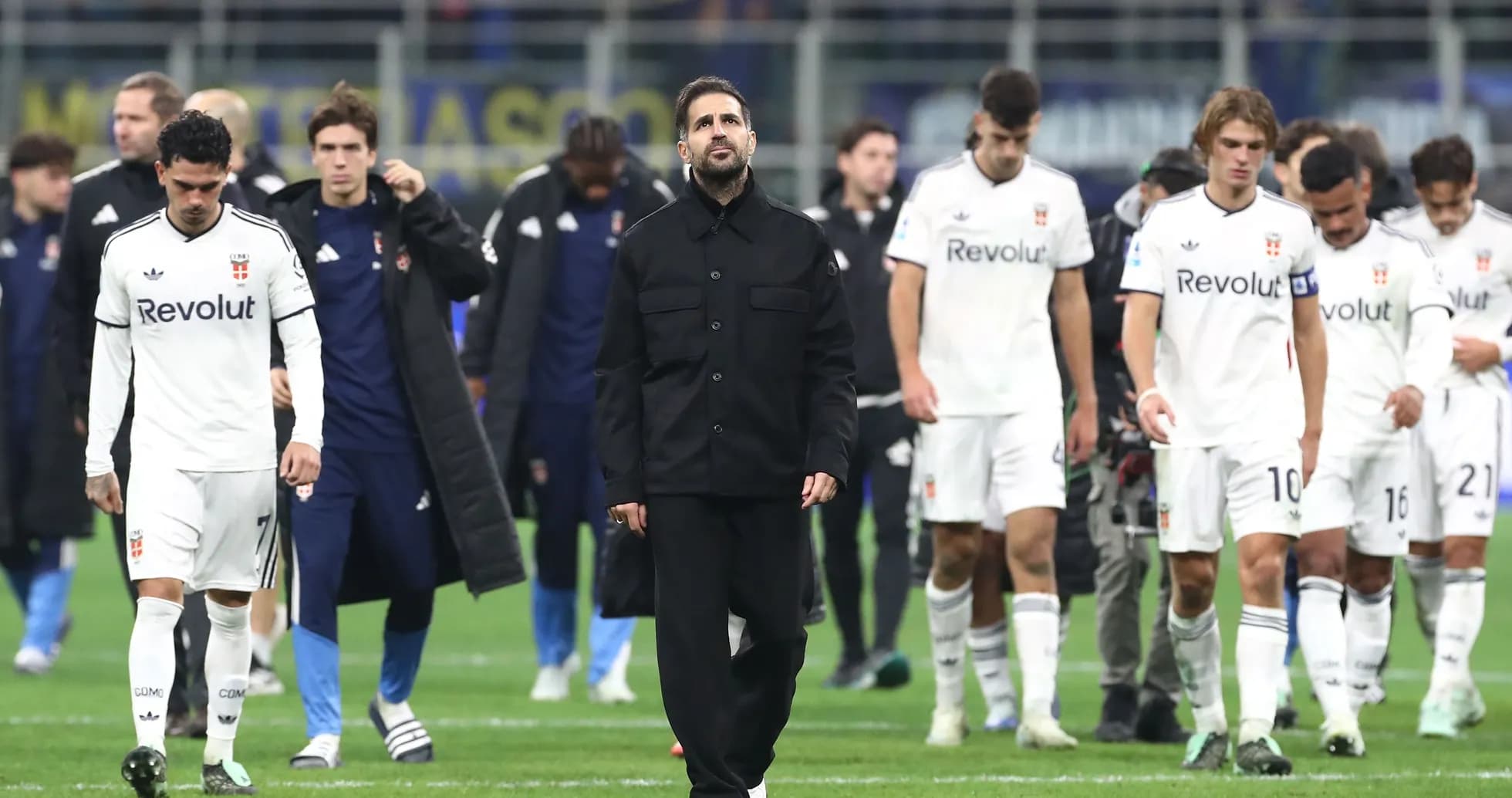
On the banks of Lake Como, a club once better known for its postcard setting than its player production has quietly become one of Europe’s sharpest talent factories. At the heart of it all stands Cesc Fabregas – not the metronomic midfielder of old, but a head coach reshaping careers with the same clarity he once used to split defences.
Two names tell the story best: Jacobo Ramon and Mattia Liberali. One left Real Madrid. The other walked away from a major Milan giant. Both gambled on Como. Both are now stepping into senior international camps with Spain and Italy. That is not a coincidence.
Leaving the giants, finding the mentor
Ramon and Liberali did what many young players talk about but rarely dare to do: they turned their backs on superclubs in search of real football and real responsibility.
Ramon, a Spanish centre-back, traded the comfort and prestige of Madrid for minutes, mistakes, and growth in Italy. Liberali, a 2007-born Italian midfielder, took the long road too, dropping into Serie B on loan in Calabria before returning to Como to fight for a place in Serie A and the UEFA Champions League.
The turning point for both? Fabregas.
The World Cup winner arrived not as a figurehead, but as a hands-on tactician with a clear idea of how he wanted his team to play – and how his players needed to think.
Ramon recalls that impact immediately. Cesc trusted him after his Madrid exit, laid out the plan, and made it obvious where the defender fit within it. The message was simple, the vision sharp. For a young player trying to rebuild his path, that clarity can change everything.
Inside the dressing room, Fabregas’ authority does not come from his medal collection alone. It comes from how he speaks. Ramon has highlighted that very point: the way Fabregas communicates grips both starters and substitutes. Everyone feels involved. Everyone feels needed. That is how you build a squad, not just a starting XI.
From Serie B grind to Champions League nights
Liberali’s leap has been even more dramatic. Not long ago, he was grinding through the physical, unforgiving rhythm of Serie B, learning the game in Calabria far from the spotlight. Now he is playing Serie A football and stepping into the Champions League under the lights.
That kind of transition can swallow a teenager whole. The pace is quicker, the spaces tighter, the stakes higher. But Liberali has not shrunk. He has grown.
Against Lens, in a statement European performance from Como, the young midfielder scored his first Champions League goal. It was more than a personal milestone. It was a marker of how far he has travelled in a very short time.
He has been open about the difficulty of that jump from the second tier to elite level. It was not easy. The intensity of Serie A and the Champions League is unforgiving. Yet he points directly to Fabregas as the figure easing that adjustment – a coach giving him belief, responsibility, and a defined role inside a “fantastic group”.
The reward? A dream week. Goal in Europe. Phone call from Roberto Mancini. A first senior Italy call-up at just 17, and the feeling that his career has just shifted onto a different track. For Liberali, it has been, in his own words, the best week of his life.
Building bodies, sharpening minds
Fabregas’ influence is not limited to tactics and confidence. It is physical, too.
Ramon has added six kilos of muscle since arriving in Italy, a deliberate transformation to withstand the rugged demands of Italian football without losing his timing in both boxes. He remains a defender with an eye for goal, but now he carries the frame to dominate duels and survive the grind of a long season.
That evolution has not gone unnoticed in Spain. Luis de la Fuente has handed the defender his first senior call-up, another sign that what happens at Como is resonating far beyond Serie A.
Liberali’s challenge is different. His game leans on creativity, awareness, and the courage to take risks between the lines. Under Fabregas, he is learning when to accelerate, when to pause, when to dictate. The physical step up is huge, but the tactical lessons may be even bigger.
Como’s quiet international revolution
The international break has thrown Como’s progress into sharp relief. Up to twelve players from the club are away with their national teams – an astonishing figure for a side that not long ago was fighting for relevance.
Among them are the headline stories: Liberali and Ramon, both breaking into the senior ranks for Italy and Spain. Alongside them stands another prodigy, 2009-born midfielder Riccardo Cassano, also receiving his first senior Italy call. That birth year alone tells you how aggressively Como are pushing the boundaries of what “ready” looks like.
Then there is captain Lucas Da Cunha, returning to the France setup after his first call-up last month. He will line up for Les Bleus in fixtures against Italy and Turkey, another endorsement of the environment being built at Como.
This is not a one-off spike. It is a pattern. A club with a clear identity, a coach with a defined philosophy, and a squad of young players accelerating their development at a pace that would be unthinkable on the fringes of Europe’s superclubs.
Fabregas, the coach
For years, Fabregas was seen as the on-pitch coach, the player who saw the game seconds before everyone else. At Como, that vision has moved from his boots to the touchline.
Ramon and Liberali both speak of maturity gained “by years” in a short span of time. They talk about daily work under a tactical maestro. The word “maestro” is not thrown around lightly in Italian football. It has to be earned.
The numbers – muscle gained, minutes played, international call-ups – tell part of the story. The rest is visible in how Como play: brave, structured, ambitious. Young defenders stepping into midfield. Midfielders demanding the ball in tight spaces. A group of players who look like they understand why they are doing what they are doing.
On the surface, it is a charming tale: a legendary midfielder reinventing himself in a lakeside town. Look closer, and it feels like something more serious. Como are not just enjoying a moment; they are building a model.
If this is what the early chapters of Fabregas the manager look like, what happens when these young internationals return from Spain, Italy, France camps with even more belief – and bring it all back to Lake Como?





