
Everton's Grealish Saga and Manchester United's Turmoil
The week’s Carabao Cup dust has barely settled and already the domestic game is bracing for another surge of drama. The calendar rolls on, the storylines don’t wait.
On Merseyside, Everton slipped into the quarter-finals with a composed win over a strangely flat Newcastle side. The result mattered, of course, but the real noise came from the teamsheet. No Jack Grealish. Officially, it was a “breach of club discipline”. Unofficially, it was a grenade lobbed into the news cycle.
David Moyes backed the club’s stance and refused to elaborate. No hints, no dressing-room leaks, just a firm line in the sand. Everton now head to Newcastle for Monday night, and the focus will be as much on the team coach door as the pitch. Does Grealish travel? Does he start? Or does this turn into a longer, messier saga?
Old Trafford, meanwhile, remains a theatre of unease. Last Friday, Michael Carrick delivered a six-minute monologue that felt part defence, part manifesto. It did little to steady his players. Bournemouth came to Manchester and tore United apart, a sobering dismantling that left more questions than answers about where this project is heading and who is really driving it.
Remarkably, Carrick is still in place. The board has held its nerve, at least for now, and the reward is a trip wrapped in nostalgia and regret. Chelsea v Manchester United used to be a collision that shaped title races and Champions League destinies. It still matters for the top-four picture, but the glamour has dulled. The stakes are high; the sheen is not. Two fallen heavyweights, still trading on old memories, trying to prove they belong in the new order.
Across the league, managers filed through their pre‑match press conferences, juggling injury lists and expectations. At Bournemouth, Marco Rose urged patience over Junior Kroupi. The young French forward, highly rated and finally back from a three‑month foot injury, has been eased in with late cameos against Manchester United and Aston Villa. Rose made it clear: no shortcuts, no risks. Kroupi’s talent excites him, but the priority is to build him up, not break him down.
Brighton have revenge on their minds. Knocked out of the Carabao Cup on penalties by Manchester City at the Etihad in midweek, they return to the same stadium chasing a different outcome. Fabian Hurzeler expects Chema Andres and Ferdi Kadioglu to be back after hip problems, with Charalampos Kostoulas also available again. Those are significant boosts for a side that wants to prove Wednesday night’s near-miss wasn’t a one-off. Pascal Struijk, a summer signing, remains out with a knock, but Hurzeler sounded confident he won’t be sidelined for long.
Not all the intrigue sits in England. In women’s football, Fifa’s grand talk of equality has met a familiar reality. Despite a record $15bn in revenue from the men’s World Cup, the governing body will not deliver equal prize money for the 2027 Women’s World Cup. Gianni Infantino had framed equality as an “ambition” and promised action, not just rhetoric. The women’s game listened. It is now being told to wait.
The gap between promise and practice is where frustration lives. Players and federations had hoped at least for parity on a per‑team basis. That hope has been parked. The money is there; the will, evidently, is not yet matching it.
On the continent, Manchester City’s women felt a different kind of sting. A late goal from Tara Elimbi Gilbert handed them a third straight draw in the Women’s Champions League league phase. Andrée Jeglertz’s side dominated but didn’t finish. They were punished. The result leaves City staring at the prospect of needing three wins from three to dodge the February play-off “punishment round”. It’s not a crisis, but it is a complication they could have done without.
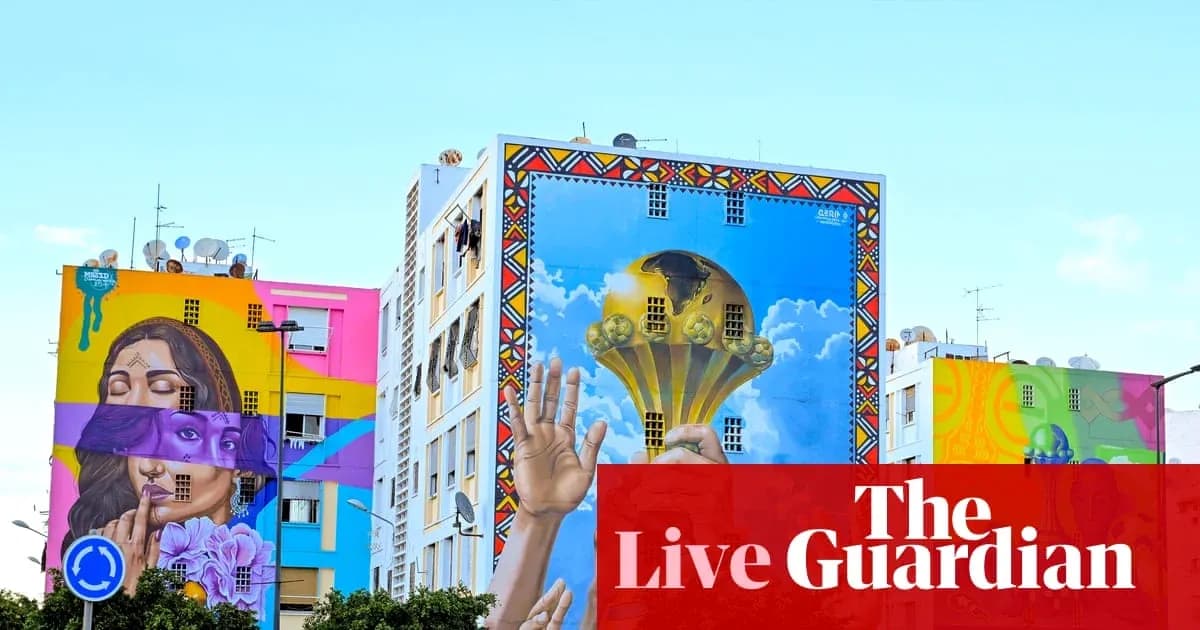
Beyond Europe, a seismic decision has reshaped the international calendar. The Africa Cup of Nations is going back to a two‑year cycle. Caf’s U-turn abandons the move towards a four‑year rhythm and restores Afcon as a biennial centrepiece. The reasoning is blunt: money and development.
Caf president Patrice Motsepe admitted the proposed Africa Nations League Pan‑African competition, intended as Afcon’s replacement, would not become financially viable quickly enough. Afcon, for all its scheduling battles with European clubs, remains the continent’s financial and competitive engine. It will now run in 2025, then in tournaments scheduled for 2028, 2031 and 2033, with the three‑year gap shaped around the 2030 World Cup.
Motsepe stressed the decision also factored in the interests of African players employed abroad. That line will not go down smoothly in some European boardrooms. Clubs already bristle at losing stars mid‑season; doing so every two years only sharpens the tension. Yet for African football, regular high‑level competition and reliable revenue streams are non‑negotiable if the game is to grow on its own terms.
And then there is South Korea, living through an autumn of discontent after a dismal World Cup. Coach Hong Myung‑bo has gone. KFA president Chung Mong‑gyu has also resigned. Parliamentarians have asked hard questions, and police have raided federation offices. This is not a routine reset; it is a full-scale reckoning.
At the centre of it all stands Son Heung‑min. Or used to. The Tottenham legend has long been the undisputed face of the national team, the man you build around, not debate. That status is under strain. As John Duerden reports, the conversation is shifting from how best to use Son to whether he should start at all. Once unthinkable, that question now hangs over a divided squad trying to work out what – and who – it wants to be.
So the weekend arrives with storylines stacked high: a star punished at Everton, a manager under siege at Manchester United, Brighton chasing payback, Caf redrawing Africa’s football map, Fifa falling short on its own promises, and a South Korean icon fighting for his place in a fractured side.
The fixtures will kick off as usual. The consequences will not be so routine.





