Ernest Udeh Jr.: The Old-School Big Man for the Cavaliers
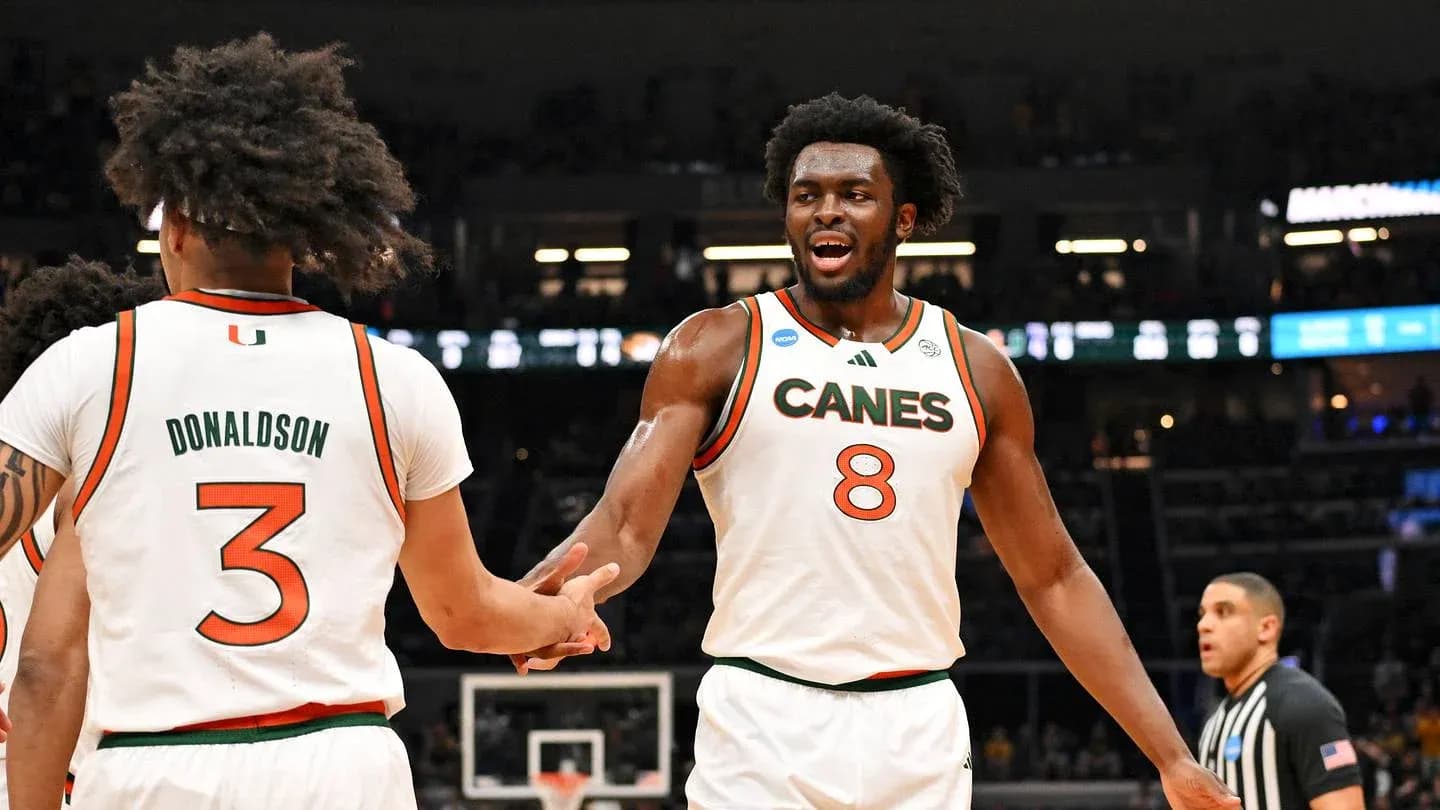
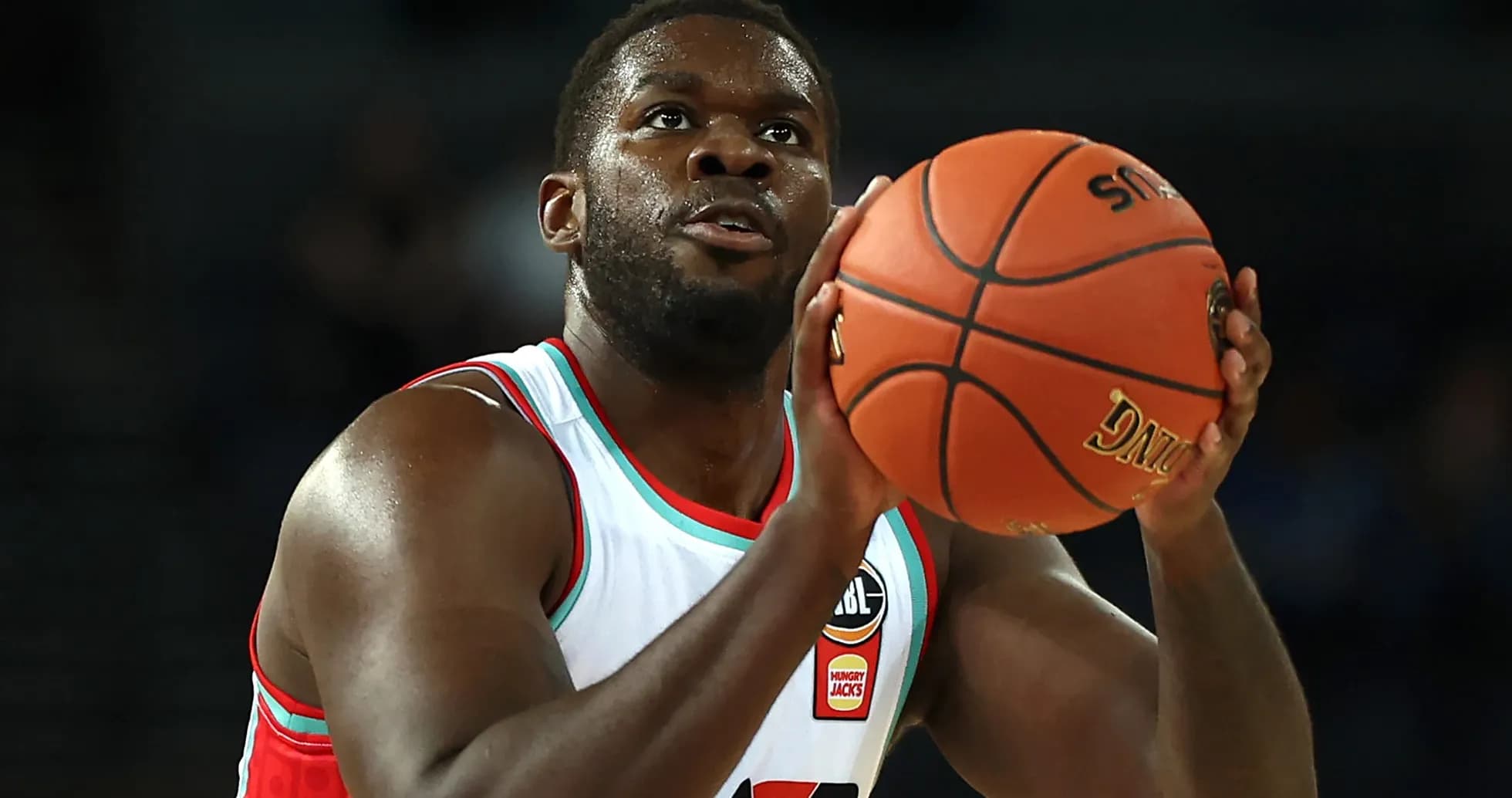
Ernest Udeh Jr. is the kind of big man who feels like a throwback in a league obsessed with spacing and step-backs. No frills, no stretch-five experiment, no illusion that he’s going to run offense from the elbow. He’s there to do two things: punish the rim and protect it.
For a team like the Cleveland Cavaliers, that simplicity might be exactly the point.
A Journeyman Who Found His Lane
Like current Cavalier Jaylon Tyson, Udeh took the long road to the pros. Three schools in four years, finishing at Miami (FL) in 2025-26. It wasn’t a star’s path. It was a survivor’s path.
He didn’t ride into the league on draft-night fanfare. He slipped through undrafted, then grabbed a two-way deal with Cleveland off the back of a solid NCAA Tournament run and steady production with the Hurricanes. Nothing glamorous. Just enough to make someone in an NBA front office say, “Let’s take a look.”
Las Vegas turned that look into a real investment. Udeh’s Summer League performance didn’t scream future All-Star, but it did something more practical: it justified the Cavs’ decision to bring him in and made the idea of a standard NBA deal feel less like a long shot and more like a timeline.
At 22, he’s already flashing the outline of a legitimate NBA big.
Old-School Game, Clear Identity
Udeh is unapologetically old-school.
He’s not a floor-spacer. He’s not a hub. You won’t run sets for him on the block and watch him survey the floor like a point center. He doesn’t need the ball much at all.
But give it to him at the rim and something violent usually happens.
Alley-oops. Put-backs. Posters. He plays above the iron and makes defenders think twice about contesting late. That’s the value: he doesn’t hunt points, but when the ball gets near the cylinder, he finishes with authority.
The numbers tell the story of a specialist. He averaged just four points per game in Summer League and six as a senior at Miami. Modest scoring, bordering on invisible in a box score. Yet that’s not where his case is built.
It’s on the glass and at the rim defensively.
Udeh pulled down nine rebounds per game over 28 minutes a night in college. Stretch that to an NBA per-36 pace and you’re looking at a double-digit rebounder. He tracks the ball well, carves out space, and treats missed shots like his personal property. For a second-unit big, that’s a real, bankable skill.
Then there’s the shot-blocking.
He swatted 2.8 shots per game in Summer League, turning the paint into a restricted zone in more ways than one. At Miami, he averaged 1.4 blocks over the full season, a quieter number but one that still underscored his instincts and timing. The rim is where he lives, and where opponents suffer.
Drop him into the G-League to start 2026-27 and he’s an immediate favorite to be one of the best shot-blockers in that competition. Cleveland doesn’t have much behind Thomas Bryant at the moment. That matters. Because when you look down a bench and see a 22-year-old big who can rebound, run, and erase shots, you start to think less about “project” and more about “option.”
The Numbers Game in Cleveland
The Cavs’ front office now has a classic roster puzzle on its hands.
How they move in free agency over the next few days for their final roster spots will dictate just how quickly Udeh’s status can change. If they don’t land another big, the door swings open a little wider for him.
On a two-way deal, Udeh can be active for up to 50 regular-season games. That flexibility is crucial. With the G-League season starting later than the NBA calendar, Cleveland can roll into opening nights with Ernest Udeh, Tristan Enaruna, and Riley Minix all active, testing combinations, gauging readiness, and buying themselves time.
The financial angle only sharpens his case.
Converting Udeh to a standard NBA contract at some point in the season would cost Cleveland less than bringing in an outside veteran on a minimum deal. For a team looking to fill out the back end of the roster without clogging the books, that’s not a small detail. It’s a strategy.
And it’s a strategy they’ve used before.
Dean Wade. Lamar Stevens. Craig Porter Jr. Nae’Qwan Tomlin. The Cavs have a track record of turning two-way bets into standard-contract value plays once the season starts and the picture becomes clearer. Those moves rarely make headlines, but they stabilize rotations, plug gaps, and occasionally uncover real contributors.
Udeh fits that mold almost perfectly.
He doesn’t need plays called for him. He doesn’t need the ball. He needs minutes, a defensive scheme, and guards who can throw a lob. Cleveland can offer all three.
So the question hanging over his 2026-27 campaign isn’t whether he belongs in the professional game. He’s already shown enough in Vegas and at Miami to answer that.
The real question is simpler, and more pressing for Cleveland: when the season settles and the Cavs look down their bench in search of size, energy, and rim protection, will they decide the cheapest answer is already wearing their jersey?