
Eddie Howe Emerges as Top Choice for Manchester United
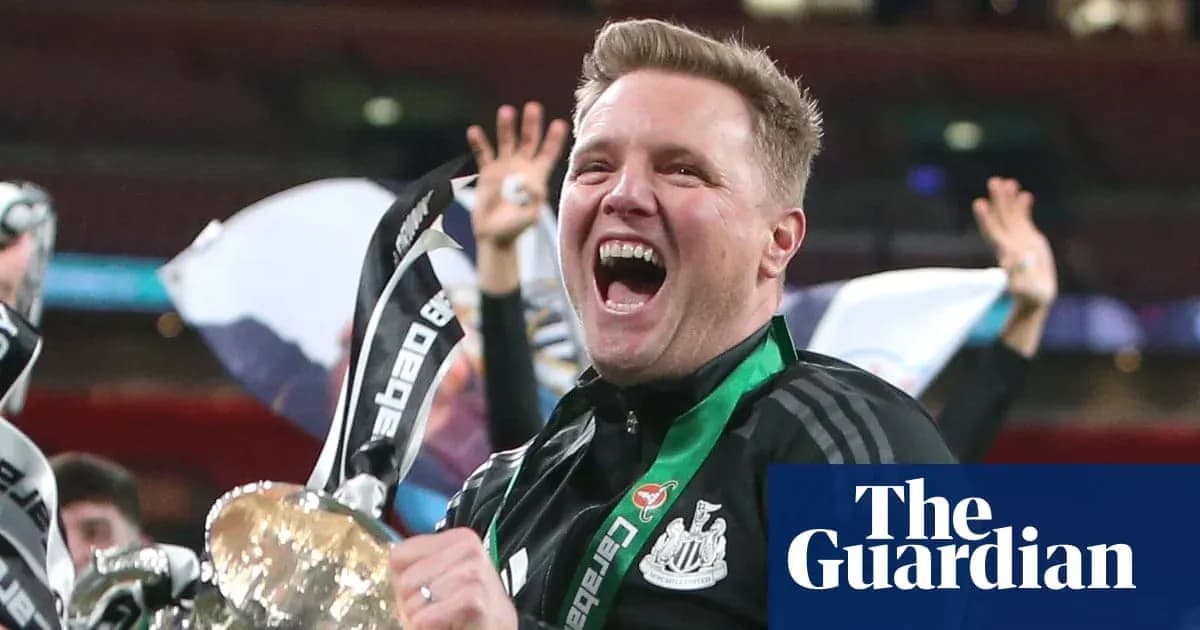
Eddie Howe has moved to the front of Manchester United’s managerial queue, with Jason Wilcox identifying the former Newcastle coach as his preferred successor to Michael Carrick if the club decide to act.
United’s director of football is understood to rate Howe’s body of Premier League work above that of other candidates. In a hierarchy now reshaped by Sir Jim Ratcliffe’s influence, that opinion carries real weight.
Howe on a break – but not out of the picture
Howe walked away from Newcastle in late July, opting for a break from the game after a demanding five-year spell on Tyneside. It was not a retirement. Those close to the situation believe he would give serious consideration to a return if United put an offer on the table.
The appeal is obvious. Howe knows the league, knows the scrutiny, and has already handled a high‑expectation, high‑investment project. For a United regime determined to look modern and strategic rather than nostalgic, he ticks the right boxes.
He also ticks a financial one.
Unai Emery, another coach admired within Old Trafford, is tied to a contract at Aston Villa that would cost around £20m in compensation to break. Howe, currently unattached, represents a far cheaper appointment at a time when United are already juggling squad rebuild costs and infrastructure plans.
A CV built on revival and return to the elite
Wilcox’s admiration is rooted in what Howe actually did at Newcastle.
He inherited a side in freefall from Steve Bruce in November 2021, winless in their first 14 league games of the season. Relegation looked less like a threat and more like a certainty. Howe flipped the mood and the numbers, driving Newcastle to 11th place with 12 wins in their final 18 matches.
From survival came ambition.
Newcastle’s long, painful wait for a domestic trophy ended under Howe in 2025 with the Carabao Cup, their first such success in 70 years. The club’s identity shifted from anxious and reactive to aggressive, front‑foot football, backed by a fanbase that rediscovered its voice.
He then dragged them back into the Champions League in 2023, ending a 20‑year absence from Europe’s top table, and qualified them again two seasons later. Sustained, not fluked.
Before that, Howe had already proved his resilience in the Premier League with Bournemouth, guiding them through five seasons at the top level from 2015. Survival there, amid limited resources and a tight stadium, required tactical flexibility and a sharp eye for improvement – qualities United’s new football structure has been desperate to embed.
Nagelsmann admired – but Wilcox’s voice grows louder
Howe is not the only name in the frame. Julian Nagelsmann, the former Germany and Bayern Munich coach, is highly regarded by Christopher Vivell, United’s head of recruitment. Nagelsmann’s reputation as a tactical innovator and builder of young teams appeals strongly to the data‑driven arm of the club’s new operation.
But influence at Old Trafford has shifted.
Wilcox’s relationship with Ratcliffe and his direct role in shaping football policy could tilt the balance. While Vivell’s opinion matters, the sense inside the club is that Wilcox’s call on the next manager may prove decisive.
Carrick under strain as results bite
All of this unfolds over Carrick’s shoulder.
The 45‑year‑old is enduring United’s worst start to a season since 1986. Two wins from 11 games have left his position exposed, the optimism that greeted his appointment replaced by a familiar, uneasy tension around Old Trafford.
For now, he stays. Carrick is expected to remain in charge for Sunday’s visit of Bournemouth and is scheduled to front his pre‑match press conference on Friday. Those commitments underline the club’s desire to avoid open panic.
But nobody inside United is blind to the numbers. The job is in the balance, and every dropped point tightens the frame around him.
A giant stadium vision amid uncertainty
While the dugout dominates the headlines, United are simultaneously trying to sketch out their future off the pitch.
The club has begun inviting supporters to give their views on the design of a proposed new 100,000‑seat stadium, a project that would reshape the matchday experience and the skyline around Old Trafford. Surveys will go out to season‑ticket holders, cup season‑ticket holders, executive club members, official members, hospitality buyers from the past three years and those on the season‑ticket waiting list.
It is a bold, expensive vision.
The contrast is striking: a club planning a colossal new home while still unsure who will lead the team out there. If Ratcliffe and his football department decide the Carrick era has run its course, the next man walking down that tunnel may well be Eddie Howe – and the decision could define whether United finally step into their new age or keep circling the same old doubts.





