Dwyane Wade on Fatherhood's Impact in the Locker Room
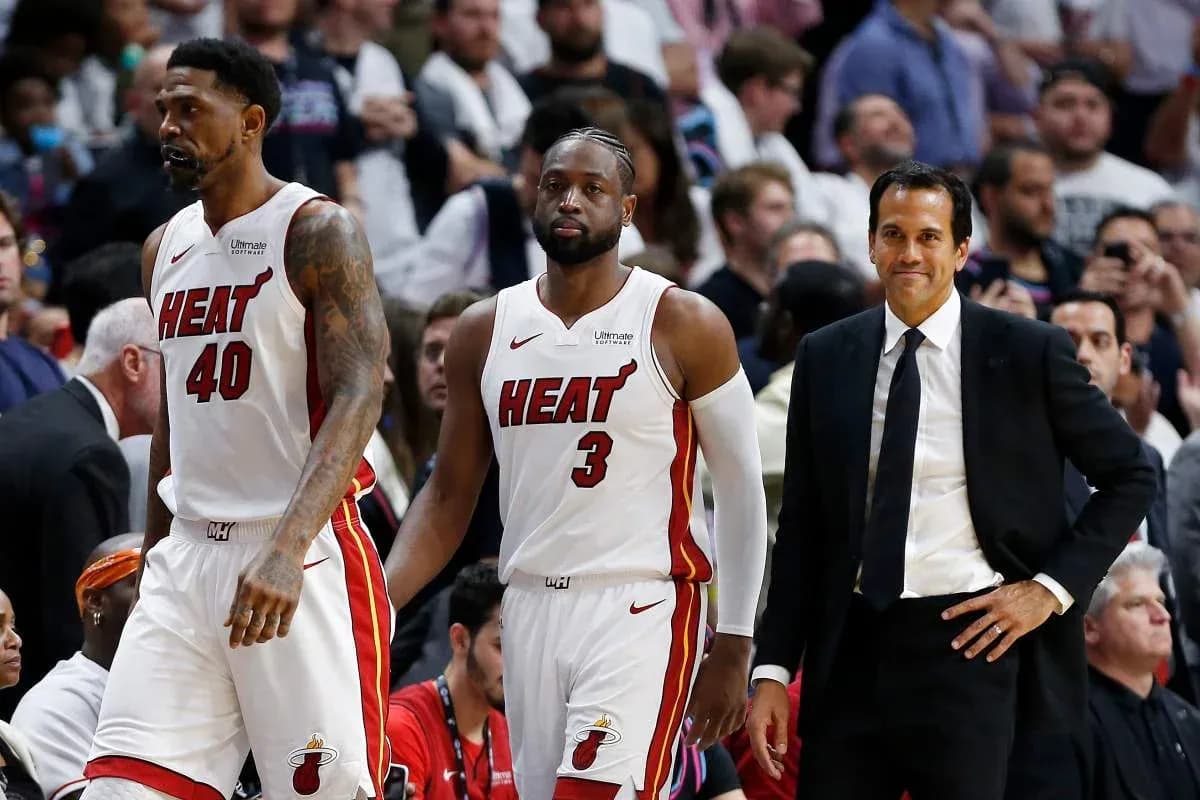
Dwyane Wade owns almost every meaningful title in Miami Heat history: three-time champion, Finals MVP, franchise icon. For years, he was also a product of the same hyper-masculine NBA locker rooms he now admits he had to unlearn.
That shift didn’t start with a social campaign or a public statement. It started at home, when his daughter Zaya came out as a trans woman — and Wade realized the soundtrack of his workplace suddenly hit very differently.
He described the moment his ears changed before his words did.
“Long story short, when everything happened publicly… with Zaya, before we came out and talked about Zaya, obviously, you know, in the locker rooms, I started to like become a little different because I started listening a little bit differently,” Wade said. “And I, you know, I realized that masculine, you know, toxic environment that, you know, that we that we grew up in.”
The jokes were the same. The culture was the same. Wade wasn’t.
Once his daughter’s safety and dignity were part of the equation, the casual shots at the LGBTQ community stopped sounding like background noise and started sounding like an attack. The Heat legend, who had long been one of the loudest voices in any room he walked into, found himself going quiet, walking out, opting out.
He no longer laughed. He no longer joined in. He removed himself when certain lines were crossed. The disconnect grew.
The NBA has never had an active player publicly come out during his career. Jason Collins waited until after retirement to share his story, a decision shaped in part by that same environment Wade was now questioning. For Wade, the conflict wasn’t theoretical anymore. It was personal.
Udonis Haslem Steps In
Inside that Heat ecosystem, one name has always carried weight alongside Wade’s: Udonis Haslem. The Miami native, undrafted and unshakable, shared a locker room with Wade for well over a decade. They were Pat Riley’s pillars, the living embodiment of “Heat culture.”
Haslem was also in on the jokes.
Wade noticed that too — and it started to sting. Not because Haslem was a teammate, but because he was family.
“I remember having a conversation with UD because he seen that I was like I wasn’t in on the jokes no more,” Wade recalled. “I wasn’t laughing. I was leaving out of the locker room when I would hear certain things or whatever. And I had to sit and talk to him about it because, you know, just like I was at one point, he was in on the jokes at the same time. And this was my brother. And I started feeling a way about his uses of words and his uses of, you know, different communities.”
That was the turning point. Not a team meeting. Not a memo. One hard conversation between two men who had gone through everything together on the court and were now being asked to grow off it.
From there, the tone inside the room began to shift.
“And from that conversation that him and I had, like he didn’t know, right? He didn’t know. And he eventually changed his thinking, his tone, his verbiage, and then his actions, right? And so like just the power of someone that he trusts to have a safe conversation with him in a safe environment.”
Haslem listened. He adjusted. The same edge that made him an enforcer under the rim now helped enforce a different kind of standard — one that made Wade feel his daughter would be respected, even in a space she might never see.
In Miami, “Heat culture” often gets reduced to conditioning drills, body fat percentages, and late-game toughness. But this was culture in its truest sense: what gets laughed at, what gets challenged, what no longer flies when someone you love is on the line.
Wade, now widely recognized as an LGBTQ ally, has been praised for the way he has supported Zaya in public. Inside the league, his push ran deeper. He wanted the NBA locker room — that famously unforgiving arena of machismo — to evolve once it collided with his reality.
He didn’t do it with a speech. He did it with a conversation that forced one of the toughest men in Miami Heat history to rethink what toughness actually looks like.