D’Tigress Struggles Against South Korea in World Cup Opener

Nigeria’s FIBA Women’s Basketball World Cup 2026 journey started with a jolt, not a statement.
At the Berlin Arena, the African champions were picked apart 99-81 by a sharp, disciplined South Korea side that punished every mistake and turned Nigeria’s ambition into a harsh lesson in execution.
From the opening minutes, the warning signs flashed. Nigeria were loose with the ball and late to close out on shooters. South Korea didn’t need a second invitation. They spread the floor, moved the ball with purpose and went to work from deep.
The numbers tell the story. South Korea hit 11 of their 28 three-point attempts. Nigeria managed six from 20. That gap from the perimeter became the fault line the game split along.
Leeseul Kang was the early dagger. Each time Nigeria looked ready to string together a run, she found space beyond the arc and buried another three. She finished with six triples, stretching D’Tigress’ defence to breaking point and forcing constant adjustments that never quite came off.
While Kang torched Nigeria from outside, Jiyun Park took command of the scoreboard. She led all scorers with 27 points, a constant presence and the calmest player on the floor whenever the game threatened to tilt.
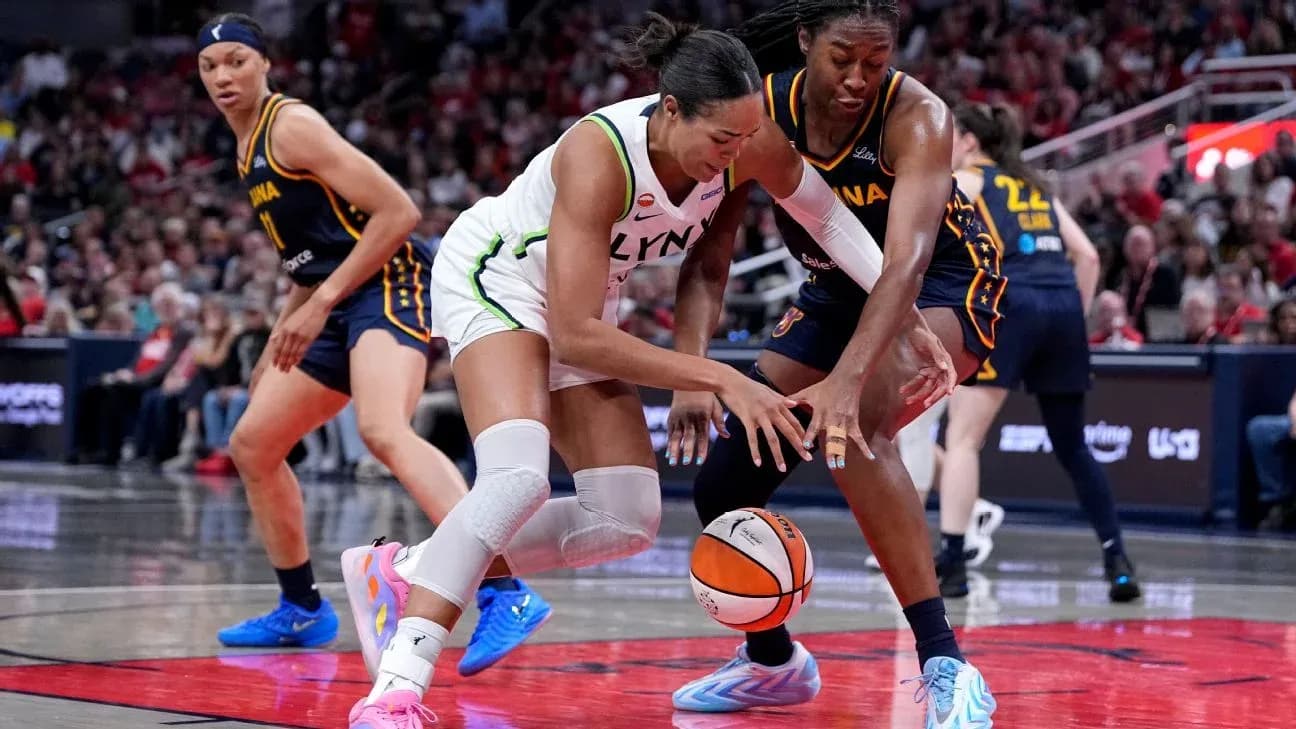
Nigeria had their own bright sparks. Amy Okonkwo refused to let the contest drift, attacking the rim, drawing contact, and keeping the scoreboard moving with a team-high 20 points. Inside, Murjanatu Musa battled relentlessly, hauling down a game-high 13 rebounds as she tried to drag D’Tigress into the fight on the glass.
But every time Nigeria found a foothold, they kicked it away with turnovers.
D’Tigress finished with 23 of them. South Korea had just 10. That 13-possession gap became a conveyor belt of fast breaks and open looks for the Koreans, who showed exactly what a composed backcourt and clear offensive structure can do against a team struggling to protect the ball.
Nigeria’s issues came in waves: careless passes on the perimeter, mishandled catches under pressure, miscommunication in transition. Each error was met with ruthless efficiency at the other end. The scoreline widened, the energy dipped, and the chase became more desperate.
There were flashes of resistance. Short bursts where Nigeria’s athleticism and size began to tell, where Okonkwo’s drives and Musa’s work on the boards hinted at a comeback. But the runs never lasted long enough. A turnover here, a wide-open Korean three there, and the momentum swung straight back.
South Korea didn’t just shoot well; they controlled the tempo. Their ball movement was crisp, their spacing intelligent, their decision-making assured. They kept Nigeria chasing, both literally and tactically, and that constant scramble took a visible toll as the minutes ticked away.
By the final quarter, the pattern was set. Nigeria pushed, South Korea answered. The African champions could cut into the lead in spurts, but they never truly threatened to flip the game on its head. The Korean discipline and shooting accuracy held firm until the buzzer.
For coach Rena Wakama, the diagnosis is brutally clear. Ball security must improve. Perimeter defence cannot afford another night like this. Allowing 11 threes and coughing up 23 turnovers is a combination that will wreck any World Cup campaign, no matter the talent on the roster.
There is no time to dwell. On Saturday at 1.15pm, D’Tigress face Hungary in what already feels like a pivotal Group B fixture. Another slip, and the margin for error in Berlin will vanish almost as quickly as it did in their opener.