Draymond Green's New Shooting Mandate: Kerr's Strategy for the Warriors
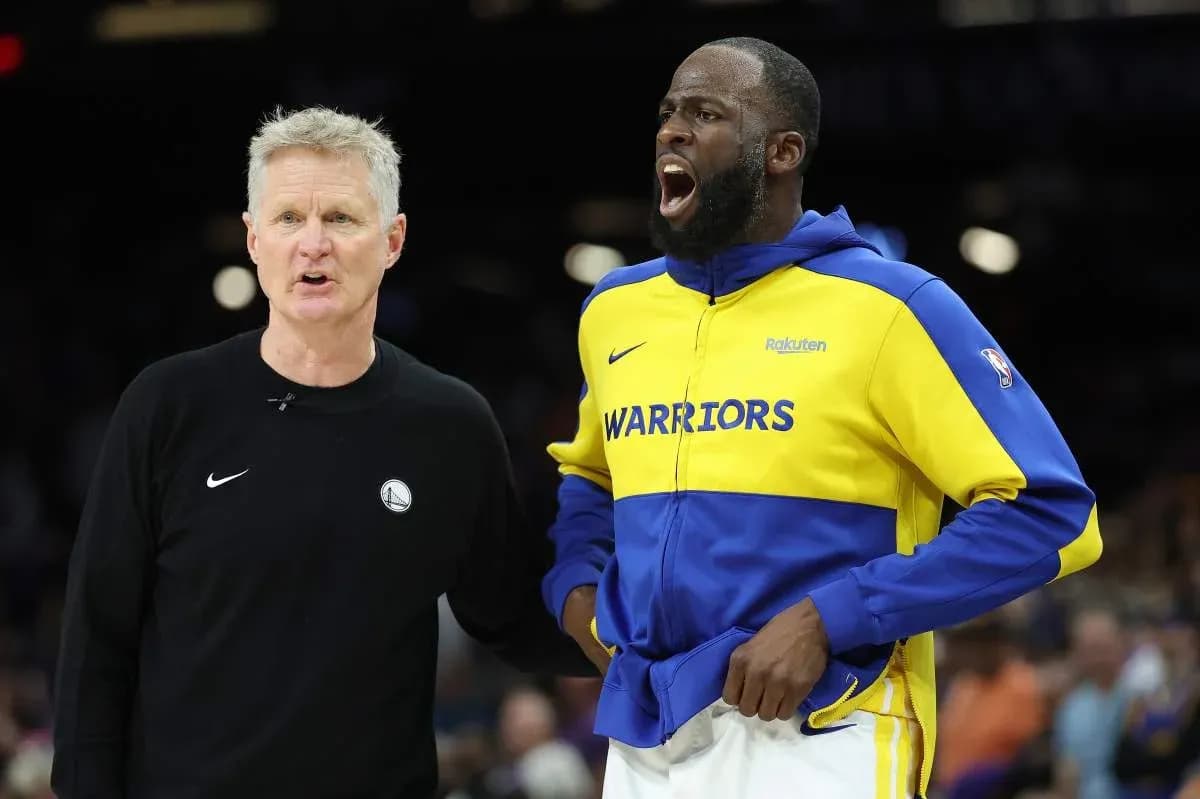
The Golden State Warriors are staring at one of their most uncertain seasons of the Stephen Curry era, short on top-end talent and margin for error. Steve Kerr’s response is blunt: the old rules are changing.
One of the biggest shifts lands squarely on Draymond Green’s shoulders — and in his shooting hand.
Kerr’s New Demand: Shoot It Or Sit With It
On the Tom Tolbert Show, Kerr laid out a simple, almost jarring directive for a player long known more for playmaking than perimeter scoring.
“We have to cut back on the turnovers. I want Draymond shooting the three when he’s open,” Kerr said. “When he shoots a three, he may not be a super high-percentage shooter, but possessions are good for us when he shoots.
“Because, number 1, it’s worth three. Number 2, we get offensive rebounds. Number 3, there’s a flow to the game that has to happen: if someone is open and they shoot it, the game keeps moving.”
That’s not a casual aside. That’s a philosophical reset.
For years, defenses have dared Green to shoot, sagging off him to swarm Curry with double teams and extra bodies. The pattern has become familiar: Curry draws two, sometimes three defenders, Green catches at the top of the arc, surveys, and often tries to thread a pass into traffic or initiate a dribble handoff. Beautiful when it works. Chaotic when it doesn’t.
Kerr wants to strip out that hesitation. If Green is open, the ball goes up. No overthinking, no extra pass into a crowd, no live-ball turnover fueling a fast break the other way.
It’s not just about the shot going in. It’s about what happens when it doesn’t.
An early three from Green pulls a big man away from the paint. A long rebound gives Golden State another crack at a scrambled defense. And most of all, it keeps the offense breathing. Kerr’s message is clear: the Warriors can’t afford possessions that stall while Green looks for the perfect read.
This is about math, rhythm, and survival.
A Contract Clock Ticking In The Background
All of this unfolds with a harsh reality humming in the background: this might be Draymond Green’s final season in a Warriors jersey.
Green signed a one-year extension this offseason worth just under $30 million. It bought Golden State time, not clarity. With the roster already top-heavy and the front office under pressure to inject fresh talent around Curry and Jimmy Butler, the chances of the Warriors paying anything close to that number again are slim.
For Green, the options are stark. Take a discount to finish his career where it started, or chase one more significant contract somewhere else next summer.
It’s not theoretical. Green has already admitted on a recent podcast that he came close to leaving for the Memphis Grizzlies a few years ago. The idea of him in another uniform isn’t some fantasy; it’s a path he’s considered before.
So this new three-point mandate carries weight beyond tactics. A strong season — more confident shooting from deep, fewer turnovers, his trademark elite defense — could be the difference between a soft market and a serious offer, whether from Golden State or another contender desperate for edge and IQ at power forward.
And waiting in the wings is Yaxel Lendeborg, the promising rookie the Warriors drafted as a potential heir to Green’s role. He’s not Draymond — nobody is — but his presence is a reminder: the franchise is planning for a future that might not include its emotional center.
Warriors Walking A Tightrope
The broader picture in Golden State is unforgiving. To even sniff the playoffs, so many things have to break right.
Curry has to stay on the floor after missing significant time last season. Kristaps Porzingis, whose skill set could unlock a new look for the offense, has to avoid the injury spells that have defined too much of his career. Butler must fight his way back from a torn ACL by midseason and not just return, but return at a high level.
Even if all of that happens, it still might not be enough.
That’s why Kerr is pushing for change from the rest of the roster. Players like Brandin Podziemski can’t simply run back last year’s script and expect the same roles. They’ll be asked to stretch their games, to take on new responsibilities, to live with mistakes made in aggression rather than passivity.
Green sits at the center of that shift. His willingness to let it fly from deep when defenses abandon him could reshape how opponents guard Golden State. If he refuses those shots, the Warriors shrink. If he embraces them, even at a modest percentage, the floor widens, the ball moves, and the offense has a chance to breathe.
The stakes are layered: a franchise trying to wring one more run out of its aging core, a head coach tweaking long-held principles, and a veteran star playing for both his legacy and his next contract.
Draymond Green has never been afraid of a challenge. This season, the challenge is simple to say and hard to live with: when you’re open, shoot — and let the future, in Golden State or elsewhere, be decided by what happens next.